Asia · Business
Philippines Keeps Rice Imports Open as El Niño Threatens 750,000-Ton Harvest Shortfall
Manila reverses last year's import suspension strategy, prioritizing supply security over domestic price support as climate pattern looms
KEY TAKEAWAYS
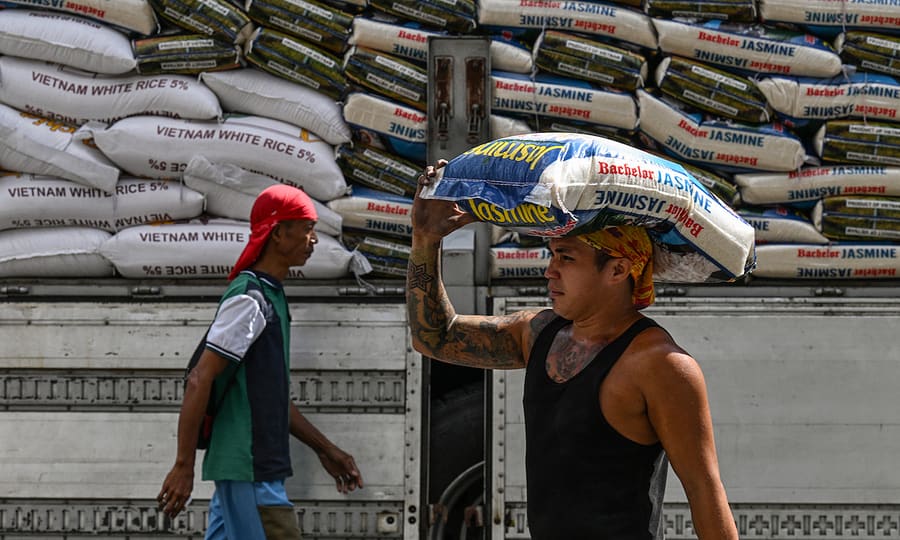
- ·The Philippines will maintain rice imports through 2026 as El Niño is forecast to cut paddy output by 750,000 metric tons, reversing last year's September-December suspension.
- ·Manila faces a structural 1.17 million-ton supply gap between domestic production and consumption, with the Philippines sourcing 45% of imports from Vietnam.
- ·The government will procure 500,000 metric tons of domestic paddy to cushion farmers while keeping import channels open to build reserves before the early 2027 harvest.
Policy Reversal Prioritizes Supply Buffers
Manila will keep its rice import channels open throughout 2026, a strategic shift from last year's September-to-December suspension that disrupted regional supply chains and forced exporters to pivot toward African and Middle Eastern buyers.
The Department of Agriculture announced Tuesday that the country expects paddy output to fall by approximately 750,000 metric tons as El Niño conditions intensify later this year, according to Agriculture Secretary Francisco P. Tiu Laurel Jr. The climate pattern typically brings drought conditions across Southeast Asia, reducing yields during critical growing periods.
The timing is particularly sensitive. The Philippines faces a structural supply gap, with domestic demand reaching 13.57 million metric tons in 2025 against local production of just 12.40 million tons, data from the agriculture ministry shows. The shortfall underscores the country's reliance on imports to meet consumption needs, especially ahead of the early 2027 dry-season harvest when reduced output is expected to bite hardest.
Balancing Farmer Income and Food Security
The government's approach this year reflects a recalibration between supporting domestic paddy prices and ensuring adequate rice reserves. Last year's import ban aimed to bolster farmer incomes during the main harvest season by limiting competition from cheaper foreign supplies. That policy created immediate complications for Vietnam, the Philippines' dominant supplier, which accounts for 45% of Manila's total rice imports.
Vietnamese exporters felt the impact directly. Delivery schedules collapsed, and companies scrambled to redirect shipments to alternative markets. One Dong Thap Province exporter noted that the predictability of continued imports this year simplifies contract negotiations for late-2026 deliveries, particularly for fragrant rice varieties that compete well on price and quality.
To cushion domestic farmers from sustained import competition, the National Food Authority has been directed to purchase 500,000 metric tons of paddy during this year's wet-season harvest. The procurement program aims to provide a price floor without shutting off external supply channels entirely.
Vietnam's Export Position
As of early August, the Philippines had imported 3.3 million tons of rice in 2026. Vietnam exported 5.5 million tons in the first seven months of the year, generating $2.64 billion in revenue, the Ministry of Agriculture and Environment reported. Volume edged up 0.5% year-on-year, though revenue declined 6.7%, reflecting softer global pricing.
Beyond the Philippines, China absorbed 19.1% of Vietnam's rice exports, with Ghana taking 9.6%. The diversification offers Vietnamese exporters some insulation from policy swings in any single market, though the Philippines remains the anchor customer.
El Niño episodes disrupt weather patterns across the Pacific basin, raising ocean temperatures and often triggering droughts in Southeast Asia while bringing heavy rainfall to parts of South America. For rice-dependent economies, the phenomenon compresses planting windows and stresses irrigation systems, particularly in rain-fed production zones.
Regional Implications
The Philippines' decision to maintain open import channels signals a broader regional tension between food sovereignty and supply security. Several Southeast Asian governments have experimented with import restrictions to protect farmer incomes, but structural deficits and climate volatility continue to pull policy back toward open trade.
For now, Manila is betting that building reserves before the next harvest cycle will prove more valuable than temporary price support. Whether that calculation holds depends largely on how severe the coming El Niño pattern becomes and whether domestic procurement programs can deliver meaningful income support without distorting the broader market.
Vietnamese exporters, meanwhile, are watching procurement volumes closely. Steady demand from the Philippines underpins contract planning for the second half of the year, but the memory of last year's abrupt suspension remains fresh. Diversification into African and Middle Eastern markets continues, even as the Manila channel stabilizes.
RELATED STORIES
Philippines Halts Meat Imports from Seven Middle East and Mediterranean Nations
Priyanka V. Rao · 3 min
San Miguel's Ramon Ang Takes Quarter Stake in Lopez Holding Company
Priyanka V. Rao · 5 min

Manila Eyes Nickel Processing to Escape China's Price Control
Priyanka V. Rao · 4 min

San Miguel's Ramon Ang Enters Lopez Family Holding Amid Boardroom Battle
Priyanka V. Rao · 3 min
Spot something wrong? Email editor@briefasia.com. We log every correction publicly.