Asia · Politics
Philippines Braces for Sustained Inflation Pressure as July Forecast Tops Target
The central bank expects consumer price growth to hold between 5.6 and 6.6 percent, driven by elevated fuel costs, electricity tariffs, and a weakening peso.
KEY TAKEAWAYS
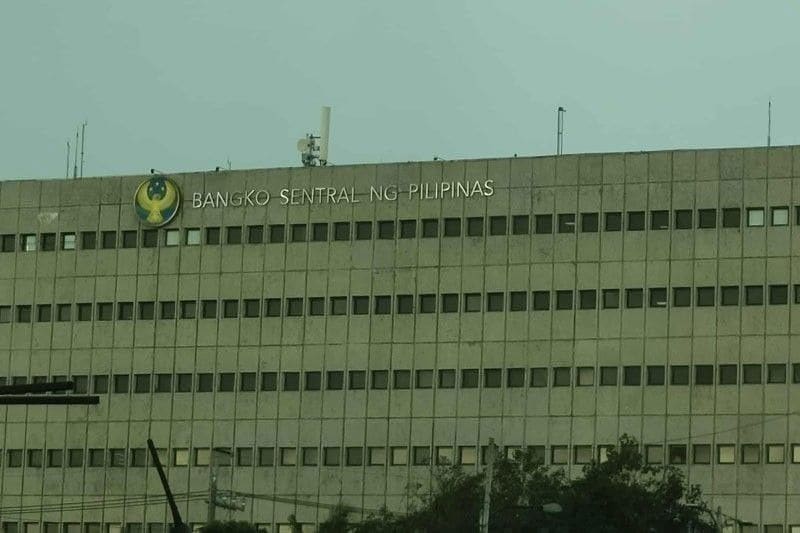
- ·The Bangko Sentral ng Pilipinas expects July inflation between 5.6 and 6.6 percent, above its three percent target, driven by fuel, electricity, and peso weakness.
- ·The central bank has raised rates by 50 basis points this year to 4.75 percent, with another 25-basis-point move possible in August if inflation risks intensify.
- ·Average inflation hit 4.8 percent in the first half, more than double the 1.8 percent pace last year, reflecting Middle East tensions and commodity price surges.
Inflation Holds Above Comfort Zone
Consumer price growth in the Philippines is set to remain stubbornly elevated in July, with the Bangko Sentral ng Pilipinas projecting inflation between 5.6 and 6.6 percent for the month. That range brackets the 6.4 percent recorded in June and keeps the reading well above the central bank's three percent target, even at the lower boundary.
The forecast underscores persistent upward pressure from domestic fuel prices, higher electricity rates, rising fish costs, and the peso's slide against a strengthening dollar, according to the central bank. Relief has come from key staples, including rice, meat, vegetables, and fruit, though not enough to offset broader cost increases.
Policy Reversal Gains Momentum
Inflation's resurgence has forced a sharp policy pivot in Manila. After holding rates steady through much of 2025, the Bangko Sentral ng Pilipinas delivered two consecutive 25-basis-point hikes in April and June this year, lifting the benchmark rate to 4.75 percent. The cumulative 50-basis-point increase marks the end of an easing cycle that had taken advantage of subdued price pressures last year.
Average inflation reached 4.8 percent in the first half of this year, more than doubling the 1.8 percent pace recorded in the same period of 2025. The acceleration reflects the spillover from escalating tensions in the Middle East, which have pushed up oil and commodity prices across global markets.
Governor Eli Remolona Jr. signaled earlier this month that the economy could absorb another 25-basis-point move, noting that real interest rates, adjusted for inflation, remain relatively low. More recently, he acknowledged the possibility of a larger 50-basis-point increase at the Monetary Board's August 27 meeting if inflation risks intensify, though he described that scenario as unlikely.
Data-Driven Decision Ahead
The July inflation print will serve as a critical input for policymakers weighing the need for further tightening. The central bank has pledged to remain vigilant and let incoming data on inflation and growth guide its next steps. It is also monitoring geopolitical developments in the Middle East closely, given their potential to amplify price and activity shocks.
The challenge for the Monetary Board is balancing inflation control against a backdrop of tepid economic momentum. Growth has lagged expectations this year, complicating the calculus around how much monetary restraint the economy can tolerate without stalling expansion further.
Structural Pressures Persist
Beyond the immediate drivers, structural factors continue to weigh on the inflation outlook. Electricity tariffs have climbed as generation costs rise, while the peso's depreciation has made imported goods and inputs more expensive. Fish prices have edged higher amid supply disruptions, adding to food basket costs even as rice and produce prices ease.
The currency's weakness reflects a broader regional trend, with the dollar strengthening on expectations of prolonged elevated rates in the United States. That dynamic has left emerging Asian central banks, including the Bangko Sentral ng Pilipinas, navigating a delicate balancing act between domestic price stability and external competitiveness.
The central bank's August decision will hinge not only on the July inflation figure but also on forward-looking indicators, including wage pressures, credit growth, and business sentiment. If price expectations begin to shift higher, the case for preemptive tightening strengthens, even at the risk of dampening near-term activity.
Manila's inflation trajectory mirrors challenges across Southeast Asia, where central banks are grappling with the legacy of pandemic-era stimulus, commodity price volatility, and the inflationary impulse from geopolitical instability. The region's policy divergence has narrowed as inflation has broadened, with rate hikes resuming in several capitals after extended pauses.
For now, the Philippines remains in tightening mode, with the July data set to determine whether that stance intensifies or holds steady through the second half of the year.
RELATED STORIES

Philippine Water Operator Earmarks $400 Million for Southeast Asia Expansion
Mariel D. Santos · 2 min
Philippine Manufacturing Expands at Fastest Pace Since 2016
Priyanka V. Rao · 3 min

Philippines Energy Budget Climbs 26% as Electric Vehicle Funding Surges
Priyanka V. Rao · 3 min
Philippine Stocks Edge Higher as Central Bank Signals Possible 2027 Rate Cuts
Priyanka V. Rao · 3 min
Spot something wrong? Email editor@briefasia.com. We log every correction publicly.