Asia · Business
Philippine Manufacturing Expands at Fastest Pace Since 2016
Purchasing Managers' Index climbs to 54.9 in August as output and new orders surge, signaling strongest sectoral growth in nearly a decade
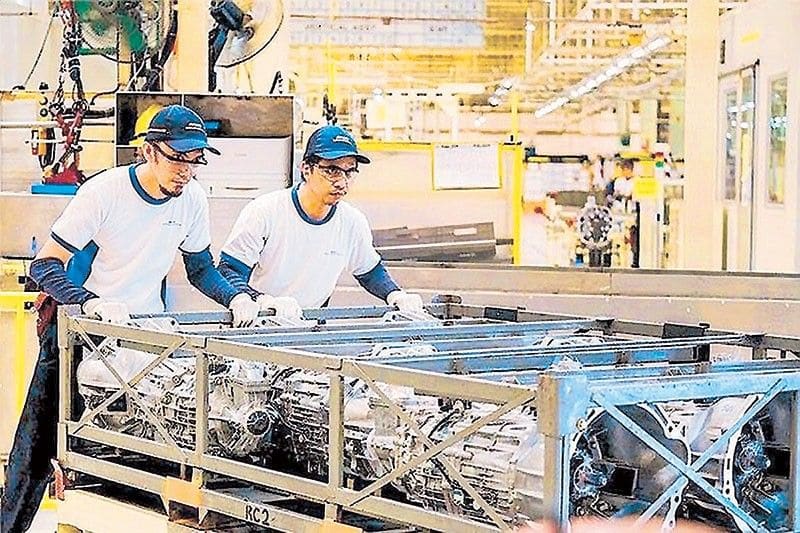
KEY TAKEAWAYS
- ·The Philippines' Purchasing Managers' Index reached 54.9 in August, the highest reading since December 2016, driven by strong output and new orders.
- ·Export orders returned to growth for the first time in six months, while manufacturers increased hiring at the fastest pace in 21 months.
- ·Business confidence surged to a 21-month high as input cost inflation moderated and firms cited expansion plans and new product lines.
Momentum Builds After Flat Quarter
The Philippines' manufacturing sector hit its highest growth rate in almost a decade during August, powered by stronger production volumes and renewed customer demand. The nation's Purchasing Managers' Index reached 54.9 last month, up sharply from July's 51.8, according to S&P Global. The reading represents the fourth consecutive monthly increase and marks the sector's best performance since December 2016, when the index touched 55.7.
The PMI tracks manufacturing health through surveys of approximately 400 producers, measuring new orders, output levels, workforce changes, supplier delivery times and purchasing activity. Any reading above 50 signals expansion compared to the prior month.
S&P Global Market Intelligence economist Maryam Baluch noted the sector rebounded from earlier sluggishness tied to Middle East tensions that had dampened activity during the second quarter. Output climbed at its fastest clip since 2016, she said, fueled by stronger demand conditions.
Order Books Fill as Exports Recover
New orders posted robust gains in August, supported by product launches, repeat customers and an expanding client base. International sales turned positive for the first time in half a year, with export orders rising after five months of contraction. The improvement in overseas demand added to domestic momentum, giving manufacturers clearer visibility on production schedules.
Firms responded by stepping up both purchasing and hiring. Input buying reached a six-month peak as producers stocked up to meet production requirements. Employment numbers climbed for the first time in five months, with workforce additions growing at the fastest pace in 21 months. The hiring push reflects manufacturers' confidence that current order strength will persist in coming months.
Cost Pressures Ease, Confidence Jumps
Input costs continued to rise in August, though at a slower rate than in July. Manufacturers reported higher expenses for energy, raw materials and logistics, but the pace of increase moderated. Output prices edged up modestly, marking the weakest inflation in the current six-month expansion sequence.
The easing of cost pressures lifted business sentiment sharply. Confidence for the year ahead surged to its highest level since November 2024. Producers expecting higher output over the next twelve months cited expansion plans, new product lines and fresh customer relationships as reasons for optimism.
Regional Context
The Philippine manufacturing rebound arrives as Southeast Asian factory activity shows uneven momentum. Vietnam and Thailand have posted steady PMI gains this year, while Indonesia's manufacturing has struggled with weaker domestic consumption. The Philippines' export recovery, particularly the reversal of six months of declining overseas orders, positions the country to capture a larger share of regional supply chain activity as global electronics demand stabilizes.
Manufacturers across ASEAN have grappled with elevated input costs and shifting trade patterns since 2024. The Philippines' ability to attract repeat business and expand its customer base suggests its cost competitiveness remains intact even as wages and energy prices climb. New product launches, a factor cited by survey respondents, also point to ongoing investment in capabilities beyond low-cost assembly.
The workforce expansion in August, the strongest in nearly two years, offers a tangible signal that factory owners see durable demand rather than a temporary spike. Employment growth had stalled earlier in 2026 as manufacturers worked through excess capacity and waited for clearer demand signals. The return to hiring, combined with increased purchasing activity, indicates producers are preparing for sustained order flow through year-end and into 2027.
Business confidence hitting a 21-month high underscores the sector's improved outlook. The confidence reading, derived from manufacturers' twelve-month forecasts, had been subdued through much of 2025 and early 2026 amid global uncertainty. The August jump suggests firms now see a path to growth that justifies capital and labor investments, a shift that could support broader economic momentum if sustained.
RELATED STORIES

Philippine Economic Zones Pull Record ₱216 Billion in Eight Months
Priyanka V. Rao · 3 min

Filipino Household Income Rose 16% but Spending Outpaced Gains
Mariel D. Santos · 3 min
Southeast Asian Factories Adopt Proximity Planning to Retain Workers and Investors
Lim Hui Ying · 3 min
Philippines Builds Twin Export Engine on Electronics and Workforce Scale
Priyanka V. Rao · 3 min
Spot something wrong? Email editor@briefasia.com. We log every correction publicly.