Finance · Markets
Philippines Gaming Regulator Reports Sharp Revenue Drop Amid Online Gambling Weakness
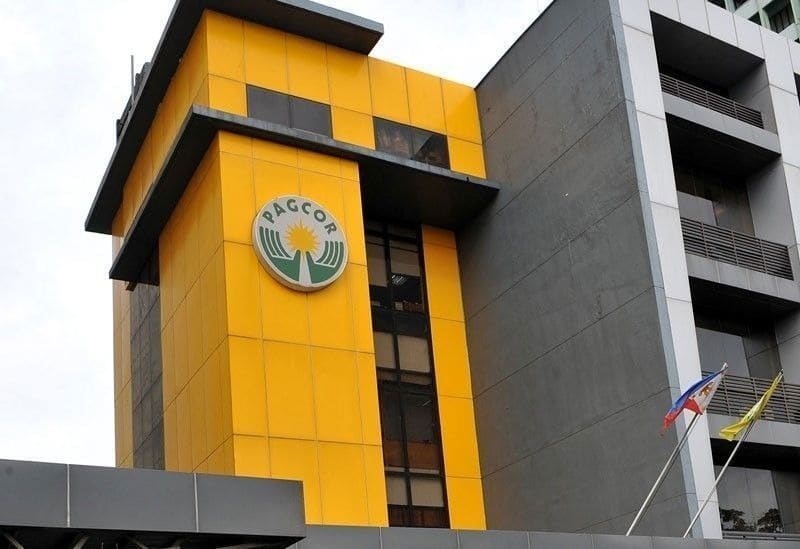
PAGCOR's first-half income fell 26.6% as inflation-squeezed bettors pulled back from electronic gaming platforms, while a Supreme Court ruling forced higher sports commission payouts
KEY TAKEAWAYS
- ·PAGCOR collected P43.32 billion in the first half of 2026, a 26.6 percent decline from P59.05 billion in the same period of 2025, driven by a 42 percent collapse in electronic gaming revenues.
- ·Net income plunged 85.3 percent to P1.58 billion as a Supreme Court ruling forced the regulator to raise remittances to the Philippine Sports Commission to five percent of gross income.
- ·Inflation linked to Middle East geopolitical tensions squeezed lower-income bettors, redirecting household spending from discretionary wagers to essential goods and fuel costs.
Gaming Operations Bear the Brunt
The Philippine Amusement and Gaming Corporation logged P43.32 billion in total revenue between January and June, a decline of 26.6 percent compared with P59.05 billion recorded in the same stretch of 2025. Gaming operations, the state regulator's core business, contributed P38.92 billion, down 27 percent year-on-year.
Electronic gaming channels drove the contraction. Revenues from eGames, eBingo, and bingo grantees slumped nearly 42 percent to P18.6 billion from P32 billion, according to PAGCOR chairman and CEO Alejandro Tengco. Licensed casino operations posted a 3.9 percent drop, while government-run casinos saw revenues slide 8.7 percent.
The shortfall marks one of the steepest half-year declines in recent memory for the regulator, which has historically relied on a stable stream of gaming income to fund social programs and infrastructure initiatives across the archipelago. The pullback in electronic gaming, which caters heavily to lower-income players, reflects broader consumer stress as household budgets tighten.
Inflation and Geopolitical Headwinds
Tengco attributed the revenue slump to persistent inflation linked to the Middle East crisis, which has driven up fuel and food costs across Southeast Asia. Filipino households in lower income brackets, who form the bulk of electronic gaming customers, have redirected spending toward essentials rather than discretionary wagers.
"Our first-half revenue results reflect the continuing impact of geopolitical tensions in the Middle East which dampened consumer spending during the first quarter and affected overall industry performance," Tengco said in a statement.
Although market conditions showed signs of improvement in the second quarter, volatility in global fuel prices remains a concern. Crude oil benchmarks have fluctuated sharply in recent months, complicating fiscal planning for governments and households alike. For PAGCOR, any sustained spike in energy costs threatens to further erode the discretionary income that fuels electronic betting activity.
The regulator's challenges mirror broader trends in the Philippine economy. Consumer price inflation, while moderating from earlier peaks, has remained elevated enough to crimp spending on non-essentials. Retail sales data and remittance growth have both softened, signaling that households are prioritizing basic needs over leisure and entertainment outlays.
Court Ruling Amplifies Bottom-Line Pressure
Net operating income fell 35.1 percent to P31.75 billion in the first six months, while net income plunged 85.3 percent to P1.58 billion. The dramatic drop in net income stemmed in part from a Supreme Court decision that reshaped PAGCOR's financial obligations to the Philippine Sports Commission.
The high court ruled that the gaming regulator must remit five percent of gross income to the PSC, replacing an earlier calculation method that had yielded smaller payments. Under the new formula, PAGCOR transferred P2.01 billion to the sports body between January and June, up nearly 59 percent from P1.26 billion in the same period of 2025.
The ruling underscores the regulatory and judicial risks facing state-owned enterprises in the Philippines, where policy shifts and legal interpretations can materially alter revenue flows. For PAGCOR, the higher remittance burden comes at an inopportune moment, coinciding with weakened top-line performance and narrowing operating margins.
Despite the income squeeze, the corporation said it channeled P30.16 billion into nation-building programs during the first half of 2026. Those funds typically support infrastructure projects, education initiatives, and social welfare programs managed by various government agencies. The ability to sustain such contributions will depend on whether gaming revenues stabilize in the second half.
Regional Context and Outlook
The Philippine gaming sector's struggles contrast with more resilient performance in neighboring markets. Macau's casinos have posted sequential gains as Chinese tourists return, while Singapore's integrated resorts have benefited from higher-spending visitors from across Asia. Cambodia and Vietnam continue to expand their casino footprints, targeting both regional and international players.
PAGCOR's reliance on electronic gaming, which skews toward domestic mass-market customers, makes it more vulnerable to local economic shocks than jurisdictions that draw heavily on international VIP segments. The regulator has limited ability to offset domestic weakness by tapping cross-border demand, a structural disadvantage in a region where capital flows freely and high rollers can choose from multiple destinations.
Tengco emphasized that the regulator remains focused on strengthening industry performance through sound regulation and stakeholder collaboration. Whether that will be enough to reverse the revenue slide depends on factors largely beyond PAGCOR's control, including the trajectory of inflation, fuel prices, and household income growth.
The second half of 2026 will test the regulator's ability to stabilize revenues and maintain its contributions to government coffers. Any further deterioration in consumer spending power, or additional policy changes that increase mandatory payouts, could deepen the fiscal strain. For now, PAGCOR's leadership is banking on improved market conditions and operational discipline to navigate a challenging environment.
What Comes Next
The gaming industry in the Philippines faces a delicate balancing act. On one hand, regulators and operators must contend with macroeconomic pressures that are unlikely to dissipate quickly. On the other, the government depends on gaming revenues to fund social programs and infrastructure at a time when other revenue sources remain under pressure.
PAGCOR's ability to adapt will hinge on whether it can diversify revenue streams, attract higher-margin customers, or find operational efficiencies that offset the decline in electronic gaming. The regulator has historically been slow to innovate, but the current downturn may force a strategic rethink.
For investors and policymakers watching the Philippine gaming sector, the first-half results serve as a reminder that even state-backed operators are not immune to consumer sentiment shifts and external shocks. The coming quarters will reveal whether the downturn is a temporary blip or the start of a more structural adjustment in how Filipinos engage with regulated gambling.
RELATED STORIES

PhilWeb Commits P4.23 Billion to JKS Tech in Cross-Investment Deal
Tran Quoc Bao · 4 min
Philippine Stocks Edge Higher as Inflation Cools to Five-Month Low
Jun-ho Seo · 3 min

Jollibee Shifts IPO Plans to Hong Kong After US Listing Target
Cheng Wei-Lun · 3 min

GCash Parent Mynt Clears Final Regulatory Hurdle for Manila IPO
Mariel D. Santos · 3 min
Spot something wrong? Email editor@briefasia.com. We log every correction publicly.