Asia · Business
Philippine Manufacturing Accelerates to 10.1% Growth on Fuel and Food Output
Volume of Production Index climbs faster than May's 9.1% pace, with petroleum refining and transport equipment leading the expansion
KEY TAKEAWAYS
- ·Philippine manufacturing output climbed 10.1% year-on-year in June, accelerating from 9.1% in May, with petroleum refining surging 84.5% and food production rising 3.9%.
- ·Twelve of 22 industry divisions posted annual gains, led by electronics, metals and pharmaceuticals, while paper, beverages and chemicals declined.
- ·Capacity utilization held steady at 78.9%, with 35% of firms operating at full capacity and no division running below 65%.
Petroleum and Food Drive June Expansion
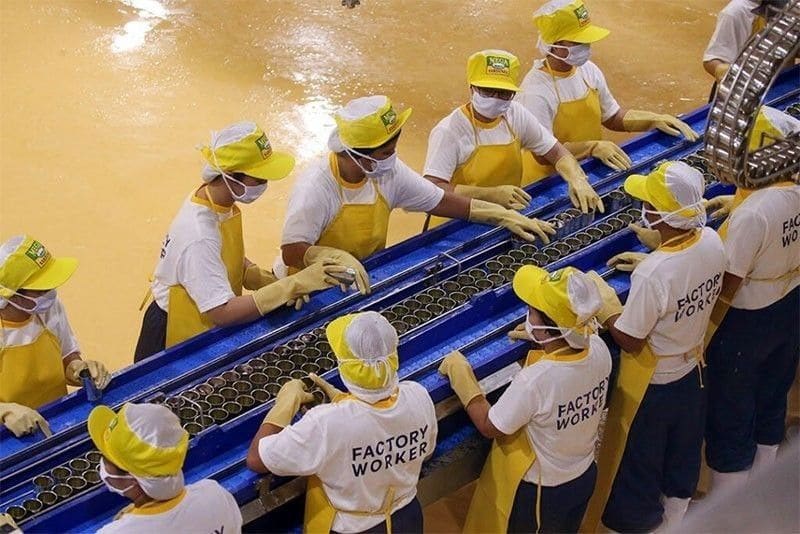
Philippine factory output expanded at a faster clip in June, posting a 10.1% year-on-year increase compared to the 9.1% gain recorded in May, according to the Philippine Statistics Authority. The Volume of Production Index, which tracks manufacturing activity across 22 industry divisions, also outpaced the 2.3% growth seen in June of the previous year.
Petroleum refining led the acceleration. The manufacture of coke and refined petroleum products surged 84.5% from a year earlier, up from May's already robust 73.3% increase. Food production gained momentum as well, rising 3.9% after a near-flat 0.02% uptick the month before. Transport equipment output swung to 4.9% growth after contracting 0.5% in May.
The data underscores a broad-based recovery in Southeast Asia's fifth-largest economy, where manufacturing accounts for roughly a fifth of GDP and absorbs a significant share of the workforce. Energy and food sectors remain sensitive to global commodity swings and regional supply-chain dynamics, making their combined strength a positive signal for domestic consumption and export competitiveness.
Twelve of Twenty-Two Sectors Post Gains
Beyond the headline drivers, twelve of the 22 industry divisions surveyed recorded annual increases in June. Computer, electronic and optical products posted gains, as did basic metals, furniture, rubber and plastics, and non-metallic mineral products. Pharmaceutical production, tobacco, leather goods and footwear, electrical equipment, printing, textiles and apparel all contributed to the overall uptick.
Seven divisions moved in the opposite direction. Paper and paper products declined, along with beverages, wood and bamboo articles, fabricated metal products, machinery and equipment, and chemicals. The mixed performance reflects divergent demand patterns, with export-oriented electronics and domestic-facing food sectors outperforming more capital-intensive and input-sensitive categories.
Capacity Utilization Holds at 78.9%
Manufacturing capacity utilization remained unchanged at 78.9% in June, matching the prior month's level. All 22 industry divisions operated above 65% capacity, the statistics agency noted. Tobacco products led at 82.8%, followed by coke and refined petroleum at 82.7% and machinery repair and installation at 82.5%.
Roughly 35% of respondents ran at full throttle, defined as 90% to 100% capacity. Another 40% operated between 70% and 89%, while the remaining quarter ran below 70%. The stable utilization rate suggests firms are neither overheating nor sitting on significant idle capacity, a sign that current demand aligns reasonably well with installed production capability.
Regional Context and Forward Indicators
The Philippines' manufacturing trajectory mirrors broader Southeast Asian trends, where electronics assembly, food processing and energy refining remain pivotal. Vietnam and Thailand have reported similar acceleration in mid-year factory output, driven by rebounding global trade and easing input-cost pressures. Indonesia's petroleum sector has also posted strong gains as regional refineries ramp up to meet seasonal fuel demand.
For Manila, sustaining double-digit growth will depend on external factors including commodity prices, U.S. and European demand for electronics, and regional competition for foreign direct investment in higher-value manufacturing. Domestic consumption, buoyed by remittances and a recovering services sector, provides a buffer, but export performance remains the swing variable for industrial momentum through year-end.
Investors will watch forthcoming monthly data for signs that the June pace can hold. A broader pickup in machinery and chemicals output would signal confidence in capital spending, while continued strength in food and consumer goods would reflect resilient household demand. For now, the numbers point to a manufacturing sector firing on multiple cylinders, with energy and essentials pulling hardest.
RELATED STORIES

Philippines GDP Growth Slows to 2.3 Percent, Lowest in 17 Years Outside Pandemic
Priyanka V. Rao · 3 min
Philippine Economy Slows to 2.3% Growth in Second Quarter
Priyanka V. Rao · 2 min
San Miguel's Ramon Ang Takes Quarter Stake in Lopez Holding Company
Priyanka V. Rao · 5 min

Manila Eyes Nickel Processing to Escape China's Price Control
Priyanka V. Rao · 4 min
Spot something wrong? Email editor@briefasia.com. We log every correction publicly.