Asia · Business
Philippine Food Processors Hunt for Ube Supply as Global Demand Surges
Exporters warn that raw material shortages and quality control gaps could cede market share to regional competitors as the purple yam gains traction worldwide
KEY TAKEAWAYS
- ·Philippine ube production fell 6.7 percent to 12,488 metric tons in 2025, constraining processors as global demand rises and exports reached $3.06 million last year.
- ·Researchers at the University of the Philippines-Los Baños identified ten high-yield varieties, including Villasis 2 at over 60 tons per hectare, and built DNA profiles to certify authenticity.
- ·A proposed law would declare ube a national priority crop, establish an industry council, and allocate 93 million pesos for production support and export promotion.
Supply Crunch Threatens Export Opportunity
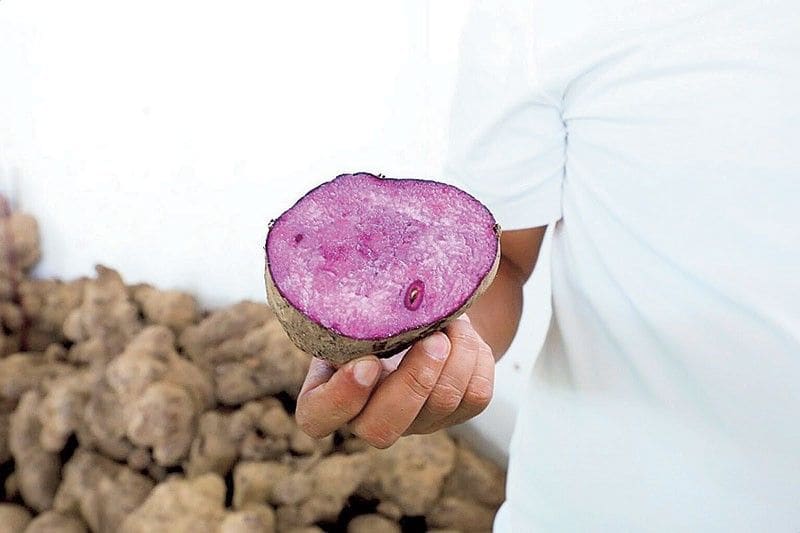
Philippine food processors are racing to lock in raw ube supplies as overseas appetite for the purple yam outpaces domestic production, threatening the country's ability to capitalize on a crop it has long claimed as its own.
The Philippine Food Processors and Exporters Organization said the nation's fundamental challenge is securing enough raw material to meet rising local and international orders. Ruben See, president of the trade group, said low supply risks pushing prices higher and eroding the Philippines' competitive position. The country produced 12,488 metric tons of ube in 2025, down 6.7 percent year-on-year, according to the Philippine Statistics Authority.
See warned that quality lapses could hand an opening to Southeast Asian rivals. Maintaining standards is essential to prevent buyers from shifting to alternative suppliers within ASEAN, he said.
The Department of Agriculture is backing tissue culture programs and community nurseries to lift output. Export shipments totaled $3.06 million last year, with the United States, United Kingdom, Italy, and Middle Eastern markets absorbing most of the volume, according to Department of Trade and Industry figures.
Researchers Map Ten High-Yield Varieties
Scientists at the University of the Philippines-Los Baños have isolated ten ube varieties from a field survey of 188 greater yam types collected across farms and gene banks nationwide. The research aims to give farmers access to cultivars that combine higher yields, flavor, aroma, and anthocyanin content.
One standout is Villasis 2, which delivers more than 60 tons per hectare. The traditional ube kinampay remains prized for its distinct flavor profile. Other varieties were selected for their anthocyanin concentration, the natural compound responsible for the yam's signature purple hue and antioxidant properties.
The research team deployed thousands of genetic markers to build DNA profiles for each variety. The resulting database is designed to support varietal identification and certification, ensuring farmers plant authenticated stock and exporters can guarantee provenance to overseas buyers, the Department of Agriculture said.
Legislative Push for National Framework
Leyte 4th District Representative Richard Gomez has filed House Bill 10225, the Philippine Ube Industry Development Act, which would designate ube as a national priority crop and establish a Philippine Ube Industry Council. The measure calls for coordinated support across research, production, processing, branding, and export promotion.
Gomez said the bill would channel government resources toward quality planting materials, post-harvest infrastructure, financing, quality standards, and market access. It also proposes geographic indication and certification systems to protect the authenticity of Philippine ube.
A National Ube Industry Development Program would bring together the Department of Agriculture, Department of Trade and Industry, Department of Science and Technology, local government units, and private stakeholders to drive productivity, innovation, and branding.
Federation and Funding in the Pipeline
The Department of Agriculture has called on ube stakeholders to form an ube federation to tighten coordination among producers, processors, and exporters. The federation's remit would include developing a standardized color classification, running marketing campaigns, securing intellectual property protections, and directing investment to production zones.
Agriculture Secretary Francisco Tiu Laurel Jr. said the agency is identifying high-export-potential crops to narrow the country's annual agricultural trade deficit, which exceeds $10 billion. The department plans to allocate approximately 93 million pesos to support root crop production and export promotion.
Tiu Laurel said global recognition of ube presents an opportunity to expand production, increase exports, and reduce the trade imbalance. The government's strategy hinges on scaling output while maintaining the quality benchmarks that have historically differentiated Philippine ube in premium markets.
RELATED STORIES
Philippines Milk Output Jumps 21% as Dairy Herd Expands
Mariel D. Santos · 3 min
Philippines Reopens Doors to Canned Pork Imports After Seven-Year Ban
Priyanka V. Rao · 3 min

Pay Fairness Does Not Equal Job Satisfaction in the Philippines
Priyanka V. Rao · 5 min

San Miguel Brings Urban Farming Model to Visayas After Luzon Success
Mariel D. Santos · 3 min
Spot something wrong? Email editor@briefasia.com. We log every correction publicly.