Finance · Fintech
Philippine Banks Queue for Apple Pay Access as Early Adoption Surges
Mastercard signals broader rollout by year-end as commuter rail pilots loom and card issuers report strong wallet registration numbers
KEY TAKEAWAYS
- ·Mastercard Philippines reports strong card registration volumes in Apple Pay's first week, with most domestic issuers expected to join by Q4 2026.
- ·BDO, BPI, and RCBC, which together hold over 8 million cards, are not yet supported in the initial four-bank launch cohort.
- ·A contactless fare pilot for Manila's LRT1 is in coordination with the Department of Transportation, with an announcement expected soon.
Registration Volumes Climb in Opening Days
The Philippines saw a sharp uptick in card enrollments during Apple Pay's first week in the market, according to Mastercard. Jason Crasto, country manager for Mastercard Philippines, told reporters that issuing banks have recorded registration volumes well ahead of internal projections. Users posted videos of contactless payments at quick-service restaurants and retail checkouts within hours of the service going live.
The early momentum is concentrated among four institutions: Chinabank, GoTyme Bank, Metrobank, and UnionBank. Three of those carry Mastercard-branded cards; GoTyme's eligible products run on Visa rails. Not every card from those issuers qualifies, and customers must verify product-level compatibility before attempting to add cards to the Wallet app.
That narrow launch window leaves the country's three largest card portfolios outside the initial cohort. BDO holds 3.9 million cards in force, BPI has 3 million in circulation, and RCBC maintains a portfolio of 1.49 million cards. None currently support Apple Pay.
Broader Rollout Targeted for Q4
Mastercard expects the participating roster to widen substantially before December. Crasto said the majority of domestic issuers are in technical integration and should activate support during the fourth quarter. He declined to name specific banks or provide a fixed calendar date.
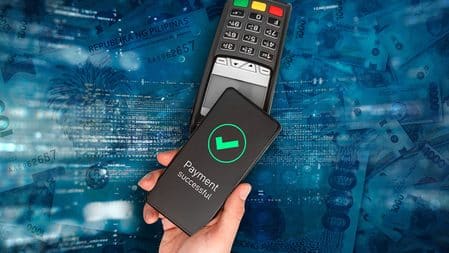
Apple Pay uses tokenization to replace card numbers during transactions. Users authenticate with Face ID, Touch ID, or a device passcode, then hold an iPhone or Apple Watch near a contactless terminal. The platform also integrates with in-app and web checkouts. Rewards programs, mileage accrual, and cashback tiers remain intact, and merchants do not receive the underlying card number.
To add a card, users open the Wallet app, tap the plus icon, and either scan the physical card or enter details manually. Banks may require a one-time verification step via SMS or mobile app. An Apple Account and biometric or passcode lock are mandatory.
Rail Transit Pilot in the Pipeline
Mastercard is coordinating with financial institutions and the Department of Transportation on a contactless fare system for the Light Rail Transit Line 1. If deployed, passengers would tap a bank card or payment device at turnstiles instead of purchasing single-journey tickets or topping up stored-value Beep cards.
Crasto said an announcement is imminent but offered no launch timeline. The pilot would mark the first large-scale transport application of open-loop payments in Metro Manila and could serve as a template for other rail lines operated by the DOTr.
QR Coexistence, Not Competition
Mastercard views the rapid spread of QR code payments as complementary rather than competitive. Crasto said the network welcomes any form factor that reduces cash reliance, noting that both card and QR channels align with the central bank's digitalization agenda.
The Bangko Sentral ng Pilipinas reported that digital payments accounted for 57.4 percent of retail transaction volume and 59 percent of value in 2024. The regulator has set a target of 50 percent digital penetration by volume, a threshold already exceeded in the latest full-year reading.
Crasto emphasized that the strategic priority is migration away from physical currency, regardless of whether consumers choose tap-to-pay cards, QR scans, or wallet transfers. The payment network does not see material cannibalization risk from competing digital modalities.
What Comes Next
Expansion to additional issuers will test whether the Philippines can sustain adoption rates once the novelty fades. The country has 19.8 million payment cards in circulation as of the most recent BSP tally, but smartphone penetration and iOS market share remain below regional peers such as Singapore and Hong Kong.
Transport pilots may prove more decisive. If LRT1 contactless fares launch without friction, pressure will mount on other rail operators and bus rapid transit systems to follow. Seamless commuter payments have historically driven contactless card adoption in markets from London to Tokyo, and the Philippines has the infrastructure density to replicate that trajectory in Metro Manila.
For now, the four participating banks are absorbing the bulk of onboarding volume. Whether that enthusiasm persists when BDO, BPI, and RCBC join the platform will offer a clearer signal of Apple Pay's staying power in Southeast Asia's second-largest smartphone market.
RELATED STORIES

Philippines Central Bank Fielded 120,000 Customer Disputes in 2025
Priyanka V. Rao · 3 min
Philippine SSS Net Income Falls 28 Percent as Pension Hike Drives Up Costs
Priyanka V. Rao · 2 min

US and Japan Stage First Joint Yen Intervention in 28 Years
Cheng Wei-Lun · 3 min
Philippine Equities Face Headwinds as Second-Quarter Growth Hits 17-Year Low
Priyanka V. Rao · 3 min
Spot something wrong? Email editor@briefasia.com. We log every correction publicly.