Technology · Dev
Paras Defense Bets $644 Million on India's First Major Chip Packaging Plant
Defense contractor's semiconductor unit targets Madhya Pradesh for OSAT facility as New Delhi pushes domestic chip supply chain
KEY TAKEAWAYS
- ·Paras Semiconductors will invest INR62 billion, about $644 million, to build a chip packaging and testing facility in Madhya Pradesh, one of India's largest private semiconductor commitments.
- ·The OSAT plant addresses India's reliance on Taiwan, Malaysia, and Vietnam for back-end chip production, a vulnerability in defense and electronics supply chains.
- ·Madhya Pradesh's land costs and power infrastructure have positioned the central state as an emerging semiconductor hub, competing with coastal manufacturing regions.
Defense Pivot to Silicon
Paras Defense and Space Technologies announced that its semiconductor arm, Paras Semiconductors, will invest INR62 billion - approximately $644 million - to build an outsourced semiconductor assembly and testing (OSAT) facility in Madhya Pradesh. The move represents one of the largest private commitments to India's nascent chip ecosystem and signals how defense manufacturers are diversifying into the semiconductor supply chain.
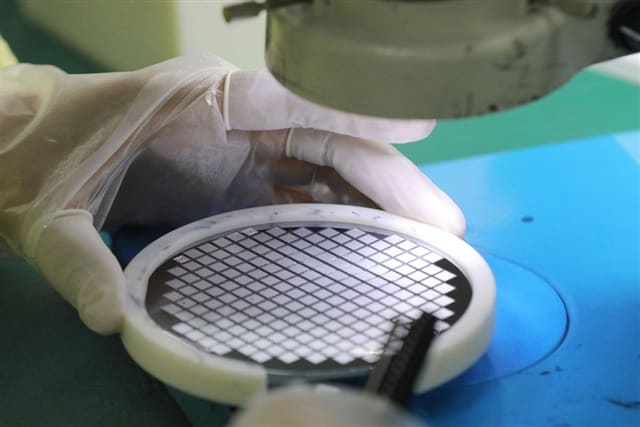
The facility will focus on packaging and testing, the back-end stages of chip production that India has prioritized as it seeks to reduce dependence on East Asian suppliers. Paras Defense, traditionally known for defense optics and space components, formed its semiconductor subsidiary to capture the intersection of national security priorities and electronics manufacturing incentives.
Why Madhya Pradesh
Madhya Pradesh, a landlocked state in central India, has emerged as an unexpected contender in the country's semiconductor race. State officials have rolled out land packages and power subsidies to attract chipmakers, competing with coastal manufacturing hubs like Gujarat and Tamil Nadu.
The Paras project will likely benefit from India's Modified Programme for Semiconductors and Display Fab Ecosystem, which offers fiscal support of up to 50 percent of project costs for OSAT ventures. New Delhi has approved several semiconductor proposals over the past two years, though most remain in early construction or planning phases.
Industry observers note that Madhya Pradesh's positioning offers logistical advantages for serving both northern industrial corridors and southern electronics clusters. The state's relatively lower land costs and available power infrastructure have made it attractive for capital-intensive projects, even as it lacks the established supply chains of more mature manufacturing regions.
India's OSAT Gap
India currently performs minimal semiconductor packaging and testing domestically, relying on facilities in Taiwan, Malaysia, and Vietnam for these critical steps. Establishing local OSAT capacity addresses a vulnerability in the electronics supply chain, particularly for defense and strategic sectors where Paras Defense operates.
The investment comes as global chipmakers reassess geographic concentration. Taiwan handles roughly 60 percent of the world's chip packaging, a concentration that has prompted governments from Washington to Brussels to incentivize alternative locations. India's large engineering workforce and growing electronics market make it a plausible candidate, though the country still lacks the specialized equipment suppliers and process expertise concentrated in East Asia.
Paras Semiconductors has not disclosed a timeline for the facility's commissioning or its target production capacity. OSAT plants typically require 18 to 24 months from groundbreaking to initial operations, assuming supply chains for advanced packaging equipment remain stable.
Defense Contractor Diversification
Paras Defense's entry into semiconductors reflects a broader pattern among Indian defense firms seeking to capitalize on government initiatives at the intersection of national security and industrial policy. The company supplies electro-optic systems and space-grade components, sectors where semiconductor shortages have constrained production.
By internalizing packaging and testing, Paras could secure supply for its own defense products while offering commercial OSAT services to India's growing electronics manufacturers. The dual-use model mirrors strategies employed by defense contractors in Israel and South Korea, where military and civilian semiconductor needs overlap.
The project's success will hinge on Paras Semiconductors' ability to attract process engineers and secure partnerships with equipment vendors. OSAT operations require precision tooling and cleanroom protocols that few Indian firms have mastered at scale, making technology transfer agreements and talent acquisition critical in the near term.
India's semiconductor ambitions have moved from policy announcements to concrete capital deployment, and the Paras investment adds momentum to a sector where execution has historically lagged intent. Whether Madhya Pradesh can deliver the infrastructure and workforce to support a $644 million chip facility will test the credibility of India's industrial decentralization push.
RELATED STORIES

Indian Chip Designer Eyes Millions in Local Wi-Fi Module Sales on CCTV Policy Push
Jun-ho Seo · 3 min
India's Semiconductor Suppliers Signal Real Construction Activity
Rajesh K. Iyer · 2 min
Indian AI Firm Commits $8 Billion to Nvidia Infrastructure Buildout
Priyanka V. Rao · 3 min
India's Semiconductor Push Extends to Supply Chains and Advanced Manufacturing
Priyanka V. Rao · 4 min
Spot something wrong? Email editor@briefasia.com. We log every correction publicly.