Sustainability · Energy
Pakistan's Solar Boom Creates Hundreds of Thousands of Jobs, Leaves Workers Exposed to Dangerous Heat
As nearly 20 percent of Pakistani households adopt solar power, the invisible workforce installing and maintaining panels faces extreme temperatures with minimal safety protections or legal recourse.
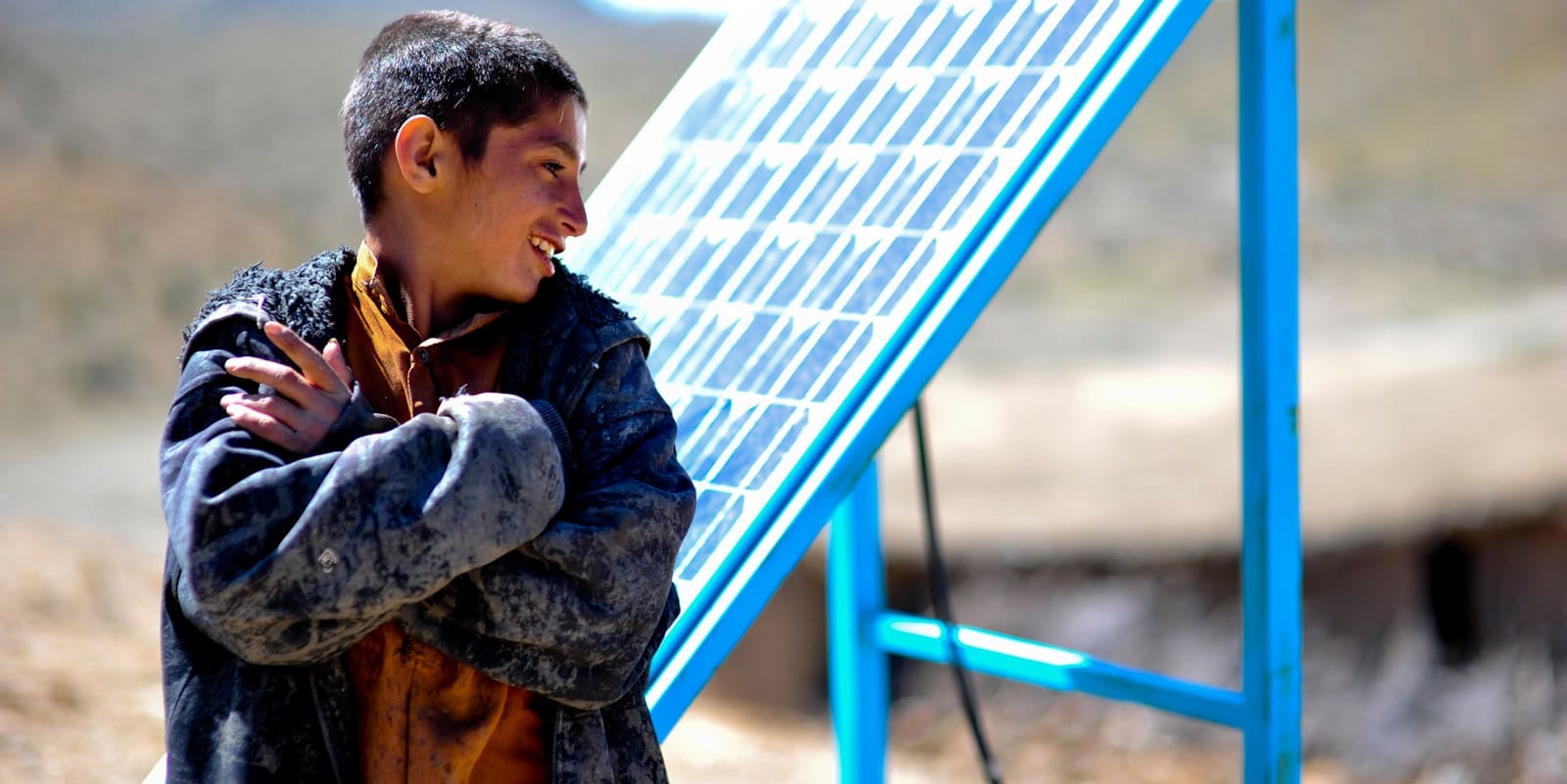
KEY TAKEAWAYS
- ·Pakistan avoided over $12 billion in oil and gas imports by February 2026 through solar adoption, with nearly 20 percent of households now using solar power and the industry creating an estimated 500,000 jobs since 2017.
- ·Solar panel installers and cleaners routinely work during peak heat hours between noon and 2 p.m. without adequate protective equipment, facing risks including heat stroke, dehydration, and long-term UV exposure that increases skin cancer risk.
- ·Pakistan's recently approved Occupational Safety and Health Code for construction covers solar installation workers and sets legally binding standards, though implementation challenges remain for informal sector laborers.
The Human Cost of Clean Energy
Abdul Rehman remembers the dizziness vividly. Working on Karachi rooftops at midday last summer, cleaning solar panels under the unforgiving sun, the 33-year-old felt his body shutting down from dehydration. The experience forced a reckoning: no employer would protect him, so he would have to protect himself.
Rehman now refuses daytime jobs, scheduling panel cleaning between 4 p.m. and midnight instead. But he knows most workers in Pakistan's booming solar sector lack that luxury. Young men streaming into cities from rural areas accept whatever hours customers demand, often working through the most dangerous heat of the day.
Pakistan's solar expansion has been remarkable. By February 2026, the country avoided more than $12 billion in oil and gas imports, with projections showing another $6.3 billion in savings by year's end, according to the Secure Energy Project. Nearly one in five Pakistani households now uses solar power in some capacity, data from Ember and Renewables First shows. The country's 21 percent electricity demand growth over two years was met entirely by distributed solar generation.
This transformation created an estimated 300,000 direct jobs and 200,000 indirect positions between fiscal years 2017 and 2025, primarily in engineering, procurement and construction, Renewables First reports. Yet the manual laborers and technicians who physically install, maintain and clean these systems remain largely invisible in official statistics, working conditions and policy discussions.
Work Without Protection
Most solar panel cleaners in Karachi receive time slots between 9 a.m. and 6 p.m., with each household job taking roughly an hour. That schedule inevitably places workers on exposed rooftops during peak heat, when temperatures can become life-threatening.
Muhammad Asif, 32, migrated from South Punjab to work in a household in Karachi's Defence Housing Authority neighborhood. His employer added solar panel cleaning to his duties after having him observe a professional cleaner. Asif considers himself fortunate; his employer insists he work after 5 p.m. He keeps a large handkerchief dampened with water on his head when evening temperatures remain high.
Ali Habib, whose company Shama Solar provides end-to-end photovoltaic services in Punjab, says his firm has guidelines against daytime cleaning when panels generate maximum energy. The company encourages workers to wear protective equipment including boots and helmets, with the headgear providing some heat protection. Installation work follows a pattern of indoor tasks like wiring during hot daylight hours, with rooftop panel mounting scheduled for evening.
But tight project schedules and seasonal demand patterns complicate safety efforts. Nadeem Nawaz, a project manager at Shama Solar, notes that installation work surges after April, pushing more technicians onto rooftops during the hottest months. Workers fall ill from heat and dehydration regularly, requiring hospital visits or time off. Some refuse to wear thick safety gloves because the aluminum panel frames become too hot to touch, even though bare hands risk burns.
Farooq Tariq, president of the Haqooq Khalq Party and a human rights advocate, sees the pattern repeatedly. Workers clean panels between noon and 2 p.m., the most dangerous hours, because they need income and lack bargaining power.
Medical Risks Beyond Heat Stroke
Doctors treating workers describe immediate dangers including heat stress, severe dehydration and electrolyte imbalances that can prove fatal. Asiya Shahab, who operates medical camps serving less affluent communities in Karachi and surrounding areas, says death remains a real possibility for workers laboring in extreme conditions.
The long-term health consequences may prove even more serious. UV radiation intensifies when workers install panels during peak sun hours, with rays bouncing off light-colored rooftops. Exposure can cause sunburn in ten minutes, leading to premature skin aging and eye conditions including cataracts and photokeratitis, Shahab explains.
Maryum Nouman, head of medical oncology at Dow Comprehensive Cancer Care Centre in Karachi, points to cumulative DNA damage from UV exposure. The radiation causes mutations in tumor suppressor genes while impairing the skin's immune surveillance, significantly raising the risk of basal cell carcinoma, squamous cell carcinoma and melanoma among workers with prolonged occupational sun exposure.
The World Health Organization and International Labour Organization estimated in 2023 that nearly one-third of non-melanoma skin cancer deaths result from working under the sun. French protective equipment provider Oteplace recommends renewables workers use wide-brimmed hats, UV-rated sunglasses and specialized evaporative vests that can be soaked for cooling. Pakistani solar workers rarely have access to such gear.
A Legal Gap
Pakistan's Occupational Health and Safety Act of 2018 broadly covers workplace hazards affecting worker health and welfare but does not explicitly address heat stress. Implementation remains weak for solar technicians and cleaners, according to Tariq.
Zehra Khan, general secretary of the Home Based Women Workers' Federation, emphasizes that solar laborers remain legally invisible. Without formal recognition, workers who suffer heat-related illness or other job hazards have no systems for treatment support or compensation. The lack of data on their numbers and details excludes them from policy discussions and labor agreements. Khan argues that all solar supply chain workers, from installers to those handling earthing systems, should be registered with social security organizations like the Sindh Employees' Social Security Institution or Employees' Old Age Benefit Institution.
One potential shift comes from Pakistan's recently approved Occupational Safety and Health Code of Practice for the construction sector, which establishes legally binding standards grounded in international norms. The International Labour Organization confirmed the code uses broad language covering all electrical system equipment, including solar installations. Rabia Razzaque, senior programme officer for the ILO in Pakistan, noted that key provisions include fall protection, electrical safety, ergonomic object handling, protective equipment requirements and emergency preparedness for physical, electrical, chemical and environmental hazards.
The code extends to construction workers in the informal economy, potentially offering long-term support to solar installation workers. Yet as Pakistan's solar capacity continues expanding, the gap between the industry's celebrated environmental benefits and the conditions facing its workforce remains stark. The workers enabling the country's clean energy transition continue laboring in conditions that threaten both immediate survival and long-term health.
RELATED STORIES
South Asia Loses 31 Million Full-Time Jobs Annually to Extreme Heat
Priyanka V. Rao · 3 min
Saudi Arabia, Turkey, and Pakistan Sign Trilateral Defense Pact in Makkah
Priyanka V. Rao · 3 min

Pakistan Secures Access to $10 Billion US Currency Facility After Iran Diplomacy
Rajesh K. Iyer · 3 min
Gwadar's Fishing Communities Face Livelihoods Crisis as Port Expansion Accelerates
Priyanka V. Rao · 4 min
Spot something wrong? Email editor@briefasia.com. We log every correction publicly.