Sustainability · Climate
South Asia Loses 31 Million Full-Time Jobs Annually to Extreme Heat
New data reveals workers forfeit up to 24 workdays a year, while regional GDP faces a 7 percent drop by 2050 without adaptation measures
KEY TAKEAWAYS
- ·South Asia is losing the equivalent of 31 million full-time jobs annually due to extreme heat, with outdoor workers forfeiting 24 workdays and 8.5 percent of income each year.
- ·Regional GDP could contract by nearly 7 percent by 2050 without adaptation measures, the steepest projected productivity decline for any emerging market region.
- ·Heat early warning systems in Indian cities return roughly $50 for every $1 spent, yet labor laws across South Asia still lack temperature thresholds or recognition of heat-related occupational illnesses.
The Human Cost of Rising Temperatures
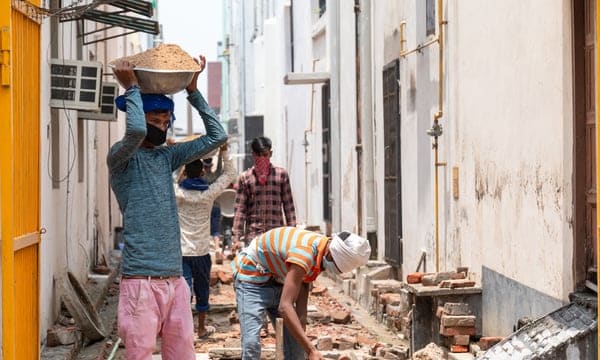
Extreme heat is no longer just a climate concern for South Asia. It has become a direct drag on incomes, productivity, and growth across the region's most populous cities. Outdoor workers in construction, road laying, and brickmaking are losing roughly 24 workdays each year to heat exposure, translating to an 8.5 percent drop in annual income. Indoor laborers in garment factories and food packaging facilities fare only slightly better, forfeiting 14 days and 4.5 percent of their earnings.
The data comes from household surveys conducted in Bangladesh and India, where informal workers comprise the bulk of urban labor forces. In Bangladesh, 175 households engaged in construction, rickshaw pulling, and manufacturing reported that illness and reduced output during heat spells were the primary drivers of lost workdays. The country is losing approximately 0.9 percent of GDP to these disruptions alone, a figure that climbs when factoring in kidney-related ailments linked to chronic dehydration.
India faces an even steeper bill. A survey of 538 informal worker households in Ajmer, Delhi, and Agra found that heat-related kidney problems and diminished work capacity are costing the economy $78 billion in lost wages, equivalent to 1.99 percent of 2024 GDP. Outdoor workers in these cities lose an average of $151 annually, while indoor workers forfeit $89.
A Regional Productivity Crisis
The World Bank projects that rising temperatures will reduce labor productivity in South Asia by 11 percent below baseline levels by 2050, the largest estimated decline for any emerging market region. The region is already shedding the equivalent of 31 million full-time jobs annually due to extreme heat, affecting workers in Bangladesh, Bhutan, India, the Maldives, Nepal, and Sri Lanka. Without adaptation measures, South Asia's GDP could contract by nearly 7 percent by mid-century.
Even cities at higher elevations are not spared. In Kathmandu, 85 percent of surveyed workers reported wage losses and rising healthcare costs tied to extreme heat. In Delhi, laborers risk being sent home without pay when heat slows output and production targets slip. Sri Lanka lost $10.87 billion in 2023 alone due to reduced work hours.
The problem extends beyond the workplace. Many informal workers return from hot construction sites or factory floors to homes with tin roofs, single fans, and frequent power cuts, leaving no opportunity to recover. Across South Asia's megacities, slum dwellings built with substandard materials and minimal ventilation trap heat, compounding the stress. Workers report low mood, mistakes on the job, anxiety, irritability, and difficulty sleeping.
Infrastructure Under Strain
Heat is not only reducing productivity in existing work but also discouraging the investment needed to create new jobs. In New Delhi, 90 percent of street vendors reduced working hours during the summer of 2025, while 72 percent lost perishable stock to heat damage. Power outages intensify the crisis. When temperatures exceed 40 degrees Celsius, outages in India increase by 20 to 50 percent, with duration rising proportionally. Without intervention, cooling could account for 45 percent of India's peak electricity load by 2050, up from 10 percent in 2016.
The World Bank estimates that 120 million people in India, Bangladesh, and Nepal now live in locations where outdoor heat stress exceeds theoretical coping limits for at least one month each year. Yet the report also highlights that heat early warning systems in Indian cities return roughly $50 for every $1 spent, suggesting that preparedness and response measures at the subnational level can protect residents and sustain local economies during the hottest months.
Policy Gaps Remain
India recently added heat waves to its list of natural calamities, enabling access to funds for disaster mitigation. Heat wave projects are now eligible under disaster mitigation funds, and the government is preparing a policy framework for relief assistance through state and federal disaster response mechanisms.
However, a critical gap persists. Labor laws in South Asian countries do not set temperature thresholds for safe work, nor do they recognize heatstroke or kidney disease as occupational illnesses warranting compensation. Advocates are calling for heat protection at work to become a binding legal requirement, a step that could benefit the entire South Asian workforce as the region grapples with accelerating warming trends.
RELATED STORIES

Ralph Lauren Surpasses Revenue Expectations on Asian and North American Demand
Priyanka V. Rao · 2 min
Dhaka's Informal Workers Face Health and Income Losses as Urban Heat Intensifies
Priyanka V. Rao · 4 min
China's Electric Truck Exports Surge as Fuel Costs Rise Across Asia
Cheng Wei-Lun · 3 min
Bangladesh's Jute Mandate Fails to Displace Plastic in Packaging
Priyanka V. Rao · 5 min
Spot something wrong? Email editor@briefasia.com. We log every correction publicly.