Technology · AI
Naver's AI Factory With Nvidia Targets First Revenue in 2027
South Korea's internet giant plans phased capacity rollout starting at 55 megawatts, scaling to 200 MW by 2028 as regional AI infrastructure race intensifies
KEY TAKEAWAYS
- ·Naver expects its AI factory joint venture with Nvidia to begin commercial operations in the first half of 2027, starting with 55 megawatts of computing capacity and scaling to 200 MW by 2028.
- ·The facility positions Naver in Asia's intensifying race for AI infrastructure, with phased expansion designed to test demand and pricing before committing to gigawatt-level capacity.
- ·Success hinges on securing anchor tenant commitments, maintaining GPU supply access, and achieving utilization rates above 70 percent to justify capital expenditure amid falling compute prices.
Revenue Timeline Set for AI Infrastructure Play
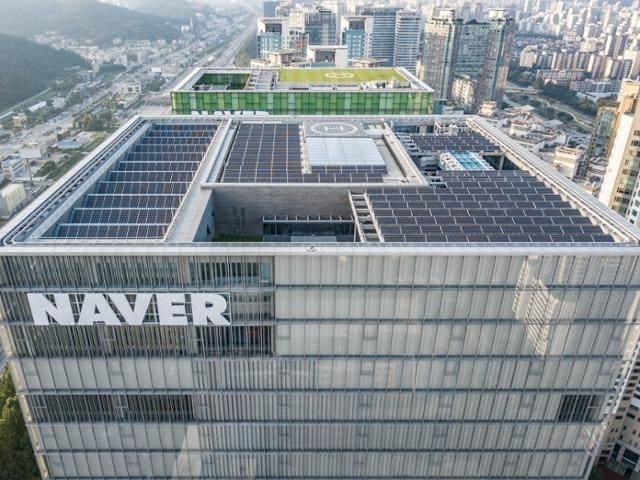
Naver expects its artificial intelligence factory partnership with Nvidia to start generating revenue in the first half of 2027, according to CEO Choi Soo-yeon during the company's second-quarter earnings call Friday. The facility will provide large-scale computing capacity for AI workloads, entering commercial service with 55 megawatts of initial capacity.
The South Korean internet platform operator has mapped out an aggressive expansion schedule. Capacity will double to 100 MW by the end of 2027, then reach 200 MW in 2028. The company disclosed plans to eventually scale the infrastructure to gigawatt-level capacity, though it did not specify a timeline for that milestone.
Asia's Computing Arms Race
The announcement positions Naver in a regional battle for AI infrastructure dominance as demand for training and inference capacity outpaces supply across Asia. Singapore, Tokyo, and Seoul have emerged as competing hubs for hyperscale data centers, driven by enterprise adoption of generative AI and government incentives for domestic computing sovereignty.
Nvidia's participation signals the chipmaker's deepening engagement with Asian cloud providers beyond its traditional hyperscaler clients. The company has pursued similar factory partnerships in Japan and is reportedly in discussions with operators in India and Indonesia, aiming to replicate the model that pairs its GPU architecture with local capital and market access.
Naver's phased rollout strategy reflects both capital discipline and supply chain realities. Securing sufficient high-bandwidth memory and advanced cooling systems for 200 MW of AI-optimized infrastructure requires lead times measured in quarters, not weeks. The 55 MW starting point allows the company to test demand elasticity and pricing models before committing to full buildout.
Business Model and Margin Questions
Details on the factory's go-to-market approach remain sparse. Naver has not disclosed whether it will sell raw compute by the rack, offer managed AI services, or pursue a hybrid model. Pricing will likely hinge on whether the company targets domestic enterprises, regional startups, or competes directly with AWS and Google Cloud for hyperscale inference workloads.
The venture's margin profile will depend heavily on utilization rates and energy costs. South Korea's industrial electricity prices are competitive by regional standards, but AI workloads generate heat densities that demand expensive liquid cooling. Naver will need sustained utilization above 70 percent to justify the capital expenditure, particularly as newer GPU generations from Nvidia render older silicon economically obsolete within three to four years.
Investors will watch whether Naver can secure long-term capacity commitments from anchor tenants before the 2027 launch. Pre-sold contracts would de-risk the rollout and provide revenue visibility, but also constrain the company's ability to capture spot-market premiums during periods of tight supply.
Strategic Rationale for Naver
The AI factory represents a departure from Naver's core search, e-commerce, and messaging businesses. Management appears to be betting that owning infrastructure will provide a competitive moat as the company scales its own large language models and competes with Kakao and international players for Korea's enterprise AI market.
Vertical integration into compute capacity could also insulate Naver from pricing volatility in third-party cloud services. If the company's internal AI products consume a significant portion of the factory's capacity, the venture functions as a cost center with strategic value rather than a standalone profit engine.
The gigawatt ambition, however, suggests Naver envisions the factory as a revenue business in its own right. Reaching that scale would place the facility among the largest AI-focused data center clusters in Asia, rivaling installations planned by Chinese cloud operators and Japan's sovereign compute initiatives.
Execution Risk and Competitive Pressure
Naver's timeline assumes stable access to Nvidia's latest GPU generations, uninterrupted construction schedules, and no major shifts in regulatory or energy policy. Any delay in chip supply or permitting could push revenue realization into late 2027 or beyond, compressing the window to capture first-mover advantage.
Competition is also accelerating. Kakao has signaled interest in expanding its own cloud infrastructure, while global hyperscalers continue to add capacity in Seoul and Busan. If market prices for AI compute fall faster than Naver can reduce its cost base, the factory's economics could deteriorate before reaching breakeven.
The company's ability to execute on the phased expansion will serve as a bellwether for broader corporate investment in AI infrastructure across Asia. Success would validate the factory model and likely trigger imitators; failure would reinforce the dominance of incumbent cloud providers and cast doubt on the viability of regional challengers.
Naver's stock closed flat Friday following the earnings call, suggesting investors are waiting for more granular financial guidance before pricing in the factory's contribution. The company has not disclosed total capital expenditure for the project or expected payback period.
RELATED STORIES
LG Uplus Hits Record Quarterly Profit as AI Data Centers Offset Revenue Dip
Cheng Wei-Lun · 3 min
South Korea Mobilizes Conglomerates for Humanoid Robot Push
Cheng Wei-Lun · 3 min
SK Hynix Eyes Stake Sale in $3 Billion China Packaging Facility
Cheng Wei-Lun · 2 min

Seoul Rejects Profit-Sharing Pressure on Samsung and SK Hynix
Cheng Wei-Lun · 3 min
Spot something wrong? Email editor@briefasia.com. We log every correction publicly.