Perspectives · Analysis
Nam Long Hands the Helm to Its Capital Strategist: Nguyen Thanh Huong Named Acting Group CEO
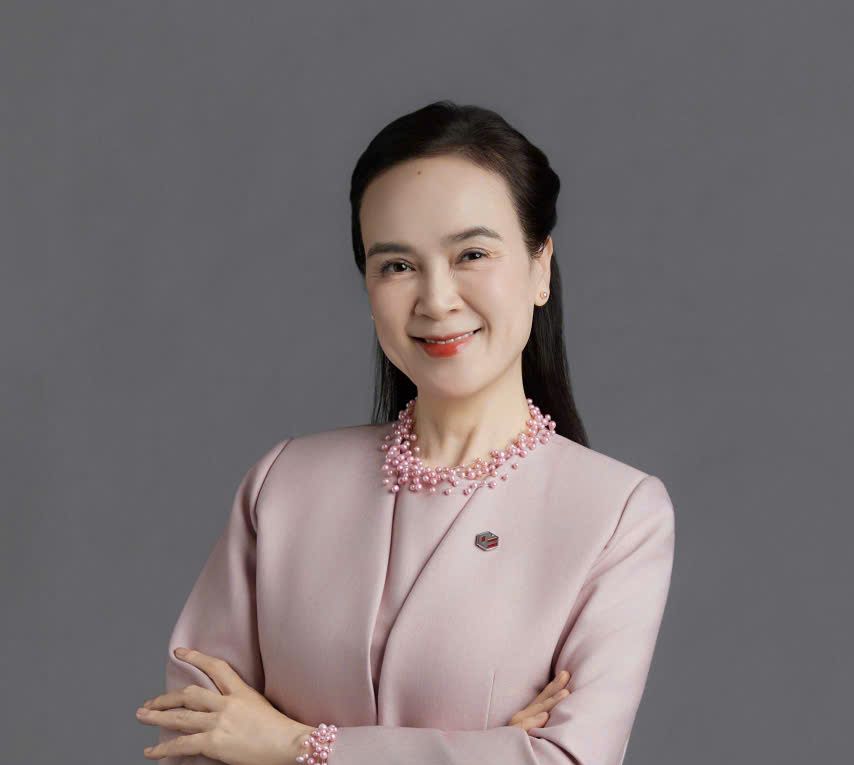
Nam Long Group (HOSE: NLG), one of Vietnam’s longest-established listed property developers, has appointed Ms. Nguyen Thanh Huong as Acting Group Chief Executive Officer, effective 28 July 2026. The move places a career capital-markets and investment specialist (the executive credited with driving the group’s international partnerships, including with Japanese investors) at the head of a developer entering a new phase of its 2030 strategy. For a market where access to capital increasingly separates the developers who build from those who wait, the choice of leader is itself a signal.
KEY TAKEAWAYS
- ·Nam Long has named capital strategist Nguyen Thanh Huong Acting Group CEO from 28 July; outgoing chief Lucas Loh stays on the board while founder-chairman Nguyen Xuan Quang directly steers land and urban development.
- ·The pick tells the market where the next phase will be won: recycling capital through project-level partnerships with Japanese investors, the playbook behind the Tokyu Izumi City deal and a four-year-high 2025 profit.
- ·What to watch: whether Acting becomes permanent, whether the Japanese-partnership pipeline accelerates, and how the chairman-CEO dual structure performs on the road to 2030.
A swift, orderly transition
The appointment follows the resignation of Mr. Lucas Ignatius Loh Jen Yuh, submitted on 27 July 2026 and approved by the Board of Directors of Nam Long Investment Corporation. Mr. Loh will formally step down as Group CEO and the company’s second legal representative on 1 September 2026, but will remain with the group as a Member of the Board of Directors, an arrangement that preserves continuity at governance level while handing day-to-day command to Ms. Huong from 28 July.
Chairman Nguyen Xuan Quang said the Board would work closely alongside the new Acting Group CEO to execute the group’s development strategy, strengthen competitiveness, and create sustainable value for shareholders, customers, and stakeholders. During the transition, Mr. Quang will also directly steer the group’s core urban and housing development business in his capacity as Chairman of the Members’ Council of Nam Long Land (NLL).
The structure is worth noting: strategy and land development anchored by the founder-chairman, group operations and capital strategy led by an investment professional. It is a division of labour, not a caretaker arrangement.
Thirty years across finance and real estate, on both sides of the table
Few executives in Vietnam’s property sector have seen the capital cycle from as many angles as Ms. Nguyen Thanh Huong. Across a career spanning more than three decades, she has held senior leadership roles (including Chief Executive Officer, Chief Strategy Officer, and Chief Investment Officer positions) at some of the largest names in Vietnamese and international finance: Vingroup, Sovico Group, SSI, and HSBC.
Her track record bridges operating leadership and institutional finance. At Vingroup, she served in group management as Deputy CEO overseeing the VinMart retail business and led Vinpearl Air. At Sovico Group, she was Vice President of Financial Services. At SSI, Vietnam’s leading securities house, she headed investment banking as Managing Director. Her professional focus reads like a checklist of what a Vietnamese developer needs in 2026: equity fundraising at group and project level, private equity, M&A, restructuring, and investor relations.
Her relationship with Nam Long itself is long-standing. She first served as the group’s Chief Investment Officer from 2014 to 2018, covering investment and investor relations, and returned as Group CIO in January 2024. In that role, the company says, she made her mark driving international investment cooperation, most visibly with Japanese partners, a pillar of Nam Long’s development model for over a decade.
The Japanese-capital playbook, and why it matters now
The clearest recent illustration of that playbook came in the fourth quarter of 2025, when Nam Long completed the divestment of a 15 per cent stake in its Izumi City project in Dong Nai to Japan’s Tokyu Corporation, a transaction that contributed significantly to the group’s full-year result, according to reporting by Vietstock and Tuoi Tre.
The numbers frame the moment Ms. Huong inherits. For 2025, Nam Long reported net revenue of VND 5,645 billion and net profit attributable to parent shareholders of VND 701 billion, up 35 per cent year-on-year, the group’s highest in four years, and precisely on the target approved by its Annual General Meeting. Full-year presales reached approximately VND 12,000 billion, driven by key projects including Southgate (Waterpoint), Nam Long II Central Lake in Can Tho, and Akari City. (Figures are drawn from the company’s published financial statements as reported by Vietnamese financial media; presales are company-reported.)
Behind those results sits a strategy Nam Long has run longer than most of its peers: co-developing large integrated townships with international, particularly Japanese, capital partners such as Hankyu Hanshin Properties, Nishi-Nippon Railroad, and now Tokyu. In a market where domestic credit for developers remains selective and bond refinancing is still working through its cycle, the ability to recycle capital through project-level partnerships is arguably the most valuable capability a Vietnamese developer can have. Appointing the executive who structures those deals to run the entire group tells the market where Nam Long believes its next phase will be won.
What to watch
Three questions will define the early read on Ms. Huong’s tenure. First, whether the Acting title converts to a permanent mandate, and on what timeline the Board intends to decide. Second, whether the group’s international partnership pipeline accelerates under a CEO whose core discipline is dealmaking; further project-level transactions with Japanese or regional investors would be the natural early evidence. Third, how the dual structure (Chairman Quang steering land and urban development, Ms. Huong running the group) performs in practice as Nam Long pushes toward its stated ambition of becoming a leading integrated urban developer by 2030.
Nam Long describes itself as a group with more than 33 years of history, 11 townships, a clean land bank exceeding 681 hectares, and homes delivered to over 31,000 Vietnamese families, company figures that underline the scale now under Ms. Huong’s management.
Vietnam’s property recovery is increasingly a story about capital discipline as much as land. In choosing its new chief executive, Nam Long appears to have reached the same conclusion.
Appointment details are drawn from Nam Long Group’s announcement of 28 July 2026 and reporting by Vietstock, Fili and 24hMoney; financial results are from the company’s published statements as reported by Vietstock and Tuoi Tre; career history is per the company’s announcement and Ms. Huong’s public professional profile. Company-reported figures are identified as such in the text.
RELATED STORIES

Vietnam's Offshore Oil Find Tests Hanoi's Will Against Beijing
Priyanka V. Rao · 5 min

Nguyen Dang Quang and the long, quiet path to mastery
Manh Khang · 7 min
The pianist who goes looking for forgotten music
Manh Khang · 8 min
Vietnam Pursues Deeper Capital Market Ties with London
Tran Quoc Bao · 3 min
Spot something wrong? Email editor@briefasia.com. We log every correction publicly.