Finance · Banking
MUFG Earnings Surge as Rising Rates Lift Japan's Banking Sector
The megabank's quarterly profit exceeded analyst expectations, driven by stronger lending income amid higher domestic borrowing costs and robust corporate demand
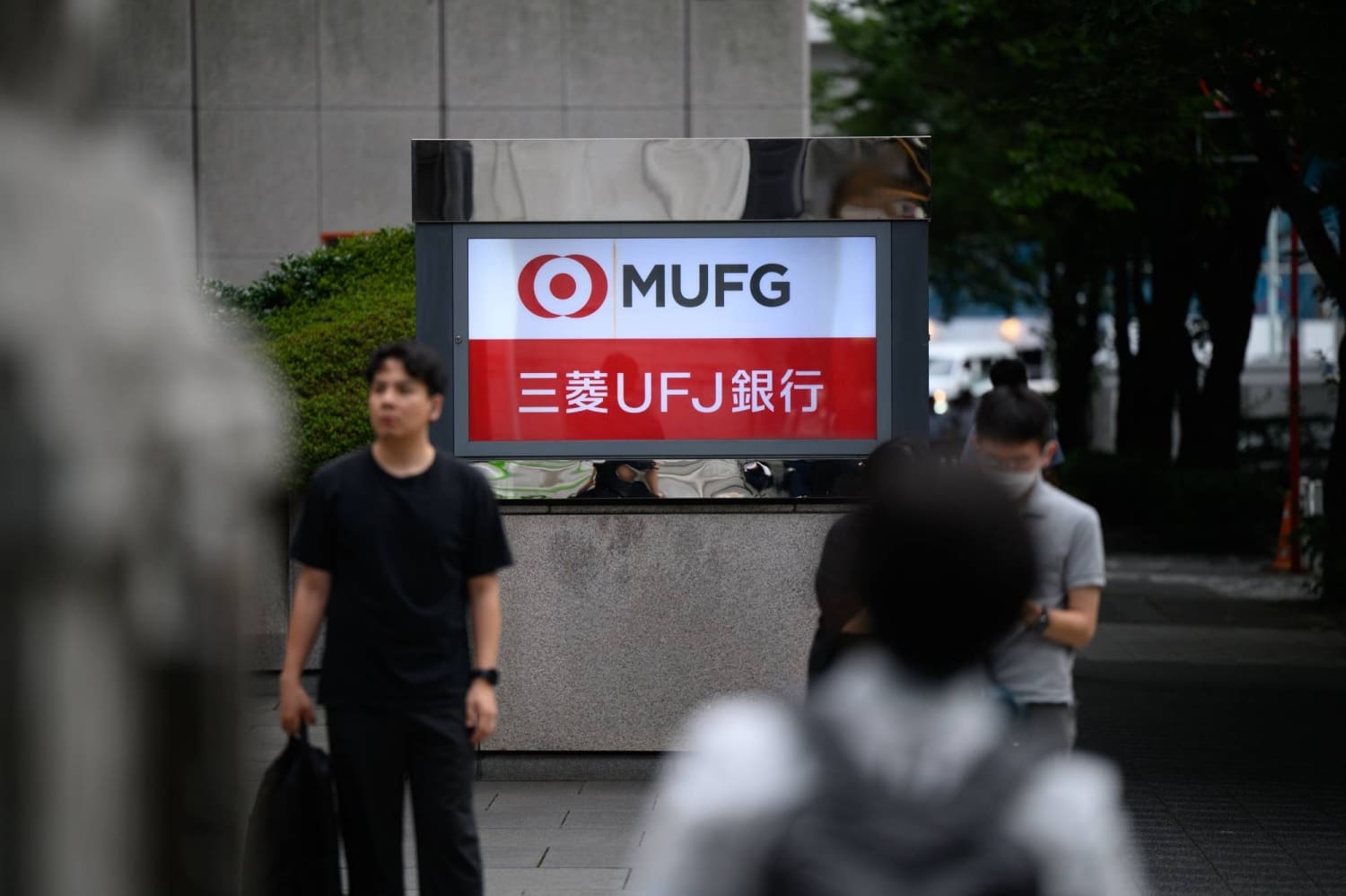
KEY TAKEAWAYS
- ·Mitsubishi UFJ Financial Group quarterly profit surpassed analyst expectations, driven by higher lending income as domestic interest rates rise and corporate loan demand remains robust.
- ·The results complete a strong earnings quarter for Japan's major banks, which are benefiting from improved net interest margins after years of ultra-low and negative rate policies.
- ·Sustained corporate borrowing despite higher costs signals resilience in Japan's credit markets, providing banks with both margin expansion and volume stability.
Lending Income Drives Performance
Mitsubishi UFJ Financial Group posted quarterly earnings that surpassed market forecasts, propelled by increased lending income as Japan's domestic interest rates climb and corporate borrowing remains strong. The results mark the conclusion of a particularly robust earnings season for Japan's major banking institutions.
The megabank's performance reflects the changing dynamics in Japan's financial landscape, where decades of ultra-low and negative interest rates have given way to a gradual normalization. Higher borrowing costs have begun translating into improved net interest margins for lenders, a shift that had eluded Japanese banks for years.
MUFG's lending division benefited from sustained demand across corporate segments, with businesses seeking capital for expansion, equipment upgrades, and working capital needs. The combination of higher rates and steady loan volumes created favorable conditions for revenue growth in the bank's core lending operations.
Rate Environment Reshapes Revenue Mix
The uptick in domestic interest rates has fundamentally altered the revenue equation for Japan's banking sector. For years, compressed margins forced institutions to rely heavily on fee-based services, overseas operations, and cost-cutting measures to maintain profitability. The current rate trajectory has reintroduced traditional lending as a more attractive profit center.
MUFG's quarterly results underscore this transition. As the Bank of Japan continues adjusting its monetary stance away from ultra-accommodative settings, commercial banks are recapturing pricing power they had surrendered during the long era of negative rates. The shift is particularly pronounced in corporate lending, where larger ticket sizes amplify the margin improvements.
The bank's performance also highlights the resilience of loan demand despite higher borrowing costs. Japanese corporations, buoyed by improving economic conditions and supply chain recalibrations, have maintained their appetite for credit. This combination of rate-driven margin expansion and volume stability has proven especially potent for earnings growth.
Sector-Wide Momentum
MUFG's results arrive as the final piece in a strong quarterly showing across Japan's major banking groups. Rival institutions have similarly reported improved profitability tied to the evolving interest rate landscape, signaling a sector-wide inflection point after years of margin compression.
The broader banking sector has capitalized on the normalization of monetary policy, with lenders across asset tiers benefiting from the repricing of loan portfolios. Regional banks, which had struggled more acutely under negative rates due to limited overseas diversification, have also seen meaningful relief as domestic lending economics improve.
For MUFG, the quarter's outperformance relative to analyst estimates suggests the bank is effectively navigating the transition. Its diversified business model, spanning retail banking, corporate finance, trust services, and securities operations, provides multiple channels through which to capture the benefits of a healthier rate environment.
Outlook and Strategic Positioning
The sustainability of this earnings momentum will hinge on the trajectory of Japan's monetary policy and the durability of corporate loan demand. While the Bank of Japan has signaled a measured approach to further rate adjustments, the direction of travel appears set toward continued normalization, barring significant economic disruptions.
MUFG's ability to sustain lending income growth will depend on maintaining loan quality as rates rise and ensuring that higher borrowing costs do not dampen corporate investment appetite. The bank's large corporate client base and established relationships position it to weather potential headwinds, though credit risk management will become increasingly important as the cost of capital climbs.
The strong quarterly performance also provides MUFG with additional flexibility to invest in digital infrastructure, expand fee-generating businesses, and pursue strategic initiatives that extend beyond traditional lending. As Japan's banking sector emerges from the long shadow of ultra-low rates, institutions with scale and diversification stand to capture disproportionate benefits.
The quarter's results confirm that Japan's major banks are entering a new phase, one where core lending operations can once again serve as reliable profit engines rather than margin drains requiring offset through ancillary revenues.
RELATED STORIES

Japan's Central Bank and Markets Diverge on Rate Hike Trajectory
Aiko Nakamura · 3 min

Bank of Japan Prepares Third Rate Increase in Ten Months
Aiko Nakamura · 3 min

Japan's Megabanks Launch Digital Services to Capture SME Business
Aiko Nakamura · 3 min

Malaysian Ringgit Gains Ground as Markets Anticipate Fed and BOJ Rate Moves
Tran Quoc Bao · 2 min
Spot something wrong? Email editor@briefasia.com. We log every correction publicly.