Technology · Products
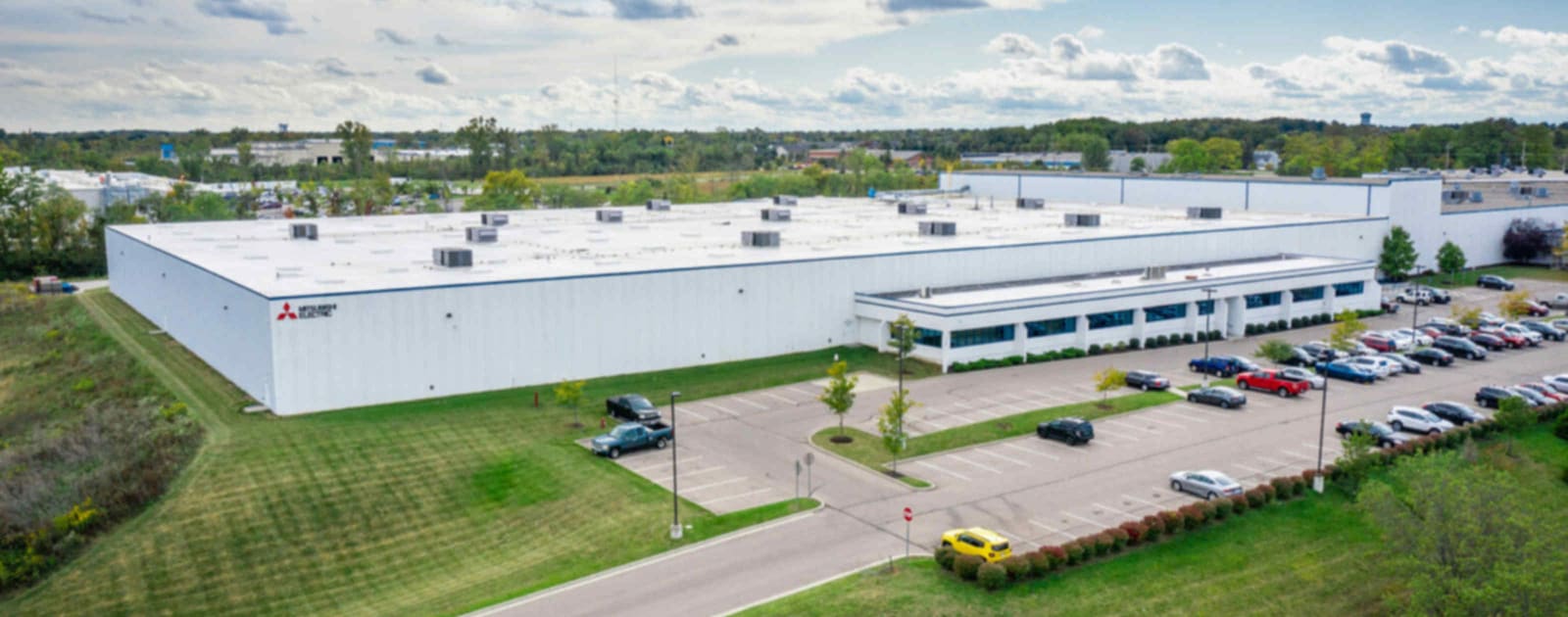
Mitsubishi Electric Shifts Data Center Cooling Production to US
Japanese manufacturer will repurpose Ohio automotive plant as AI infrastructure demand accelerates across North America
KEY TAKEAWAYS
- ·Mitsubishi Electric will repurpose part of an Ohio automotive plant to produce air conditioning and water cooling systems for US data centers driven by AI demand.
- ·The move reflects Asian manufacturers establishing local production as AI infrastructure creates urgent demand for high-capacity thermal management equipment.
- ·Domestic cooling capacity may ease procurement bottlenecks that have delayed data center commissioning as lead times stretched beyond a year.
Manufacturing Pivot in the Rust Belt
Mitsubishi Electric will convert a section of its Ohio automotive parts plant to manufacture air conditioning and water cooling systems for data centers, according to the company. The shift marks a strategic pivot toward local production as AI infrastructure projects multiply across the United States.
The Japanese manufacturer's decision reflects a broader pattern among Asian industrial firms repositioning supply chains closer to their largest growth markets. Data center operators have been scrambling to secure cooling capacity as power-hungry AI workloads push thermal management requirements beyond what traditional HVAC systems can handle.
The AI Infrastructure Bottleneck
Cooling has emerged as a critical constraint in the AI data center buildout. Modern AI accelerators and GPU clusters generate heat densities several times higher than conventional server racks, forcing operators to adopt liquid cooling architectures that were once niche technology reserved for supercomputing installations.
The US market has become particularly acute. Hyperscalers and enterprise clients are racing to bring new AI-capable facilities online, but thermal management infrastructure has struggled to keep pace with compute deployment timelines. Supply chain lead times for specialized cooling equipment have stretched from months to over a year in some cases.
By establishing domestic production, Mitsubishi Electric positions itself to serve this demand with shorter delivery cycles and lower logistics costs. The Ohio facility's proximity to major data center corridors in the Midwest and Mid-Atlantic offers geographic advantages that imports from Japan cannot match.
Asia's Industrial Response
Mitsubishi Electric's move follows similar investments by other Asian manufacturers eyeing the same opportunity. Japan's Daikin has announced plans for a research and development hub in India focused on data center cooling technology. TDK recently acquired a US maker of cooling components for AI infrastructure in a deal valued at up to $400 million.
The competitive intensity underscores how data center cooling has transformed from a commodity business into a strategic sector. Equipment that was once purchased on price is now evaluated on thermal efficiency, modularity, and ability to scale with rapidly evolving chip architectures.
Asian firms hold significant intellectual property and manufacturing expertise in precision cooling systems, built over decades supplying automotive, industrial automation, and consumer electronics sectors. That capability is now being redeployed toward a market where thermal performance directly impacts the economics of AI model training and inference.
Implications for the Supply Chain
The shift to local production carries implications beyond Mitsubishi Electric's own revenue. It signals that Japanese and broader Asian manufacturers see the US AI infrastructure boom as durable enough to justify fixed capital investment rather than serving the market through exports alone.
For data center operators, the arrival of additional domestic cooling capacity may ease procurement bottlenecks that have delayed facility commissioning. More suppliers with US manufacturing footprint also reduces exposure to tariff risk and shipping disruptions that have periodically disrupted cross-Pacific supply chains.
The Ohio plant conversion also highlights how legacy industrial facilities can find new life in the AI era. Automotive parts manufacturing shares some process similarities with precision HVAC production, making the repurposing economically viable in ways that greenfield construction might not be.
As AI workloads continue migrating from pilot projects to production scale, the infrastructure layer supporting them is becoming its own growth sector. Mitsubishi Electric's manufacturing decision reflects a calculated bet that this demand curve has years, not quarters, left to run.
RELATED STORIES

Minebea Mitsumi Halts Acquisitions to Prioritise AI Component Demand
Cheng Wei-Lun · 3 min
China Imposes Anti-Dumping Measures on Japanese Semiconductor Chemical Imports
Jun-ho Seo · 3 min
Japan's Property Firms Pivot to Data Centre Build-Out
Aiko Nakamura · 3 min

Fujitsu to Exit Commodity Hardware as AI Shifts Production Strategy
Aiko Nakamura · 4 min
Spot something wrong? Email editor@briefasia.com. We log every correction publicly.