Real Estate · Proptech
Japan's Property Firms Pivot to Data Centre Build-Out
Real estate developers in Japan are ramping up data centre projects as cloud demand and AI workloads drive infrastructure investment across the archipelago.
KEY TAKEAWAYS
- ·Japanese real estate developers, including Daiwa House Industry, are deploying modular data centres in prefectures such as Fukushima to meet cloud and AI infrastructure demand.
- ·High electricity costs and grid constraints require developers to negotiate power agreements in advance, with some co-investing in renewable energy to secure supply.
- ·Demand is driven by data localisation rules and enterprise cloud migration, with lease terms of seven to fifteen years offering predictable returns compared to office assets.
Developers Turn to Digital Infrastructure
Japanese real estate developers are accelerating investments in data centre projects, responding to rising demand for cloud computing capacity and artificial intelligence infrastructure. Companies traditionally focused on commercial and residential property are now allocating capital to digital infrastructure, a shift that reflects changing tenant priorities and the search for higher-yielding assets.
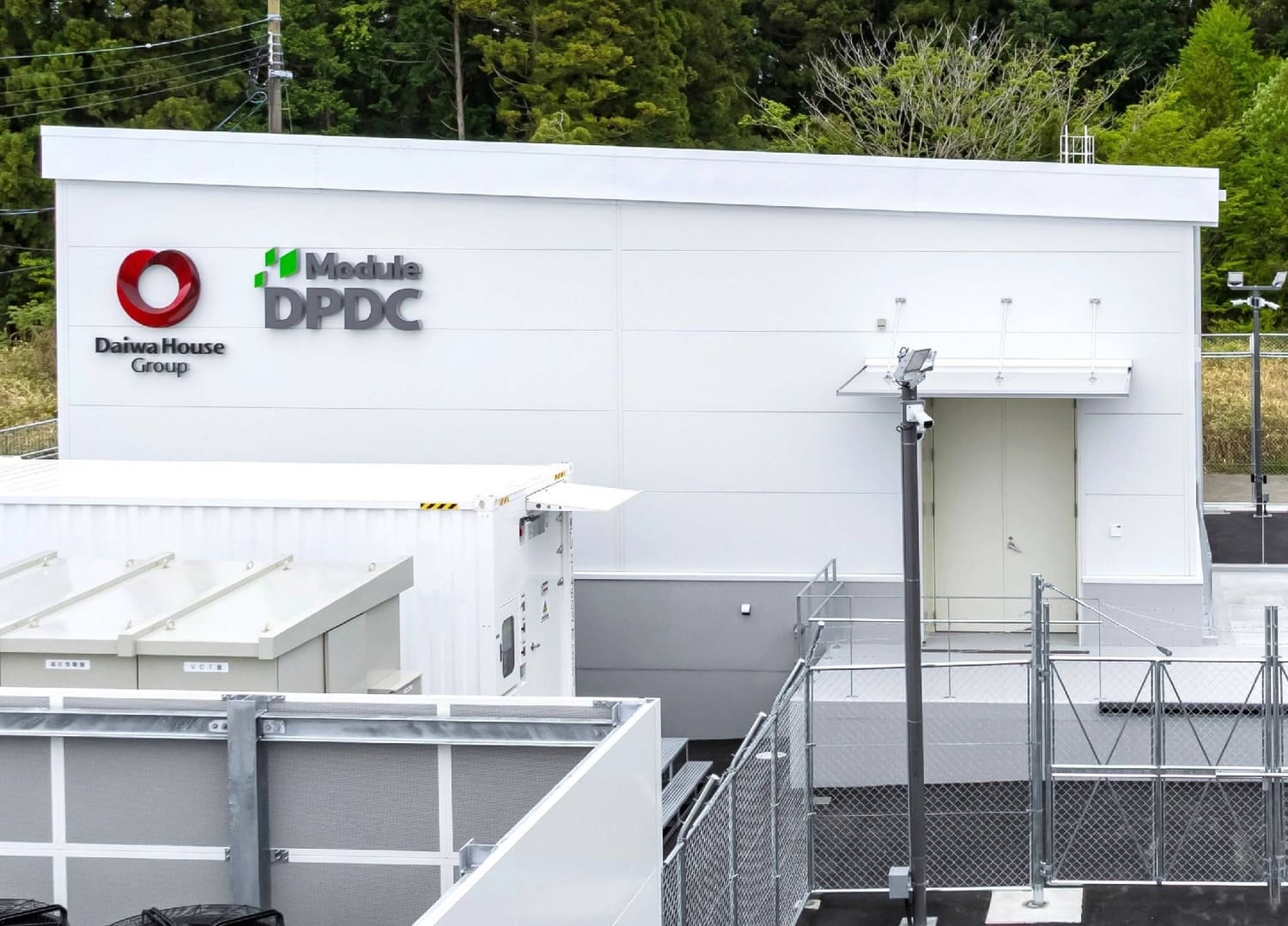
Daiwa House Industry has deployed modular small-scale data centres, including a facility in Okuma, Fukushima Prefecture. The modular approach allows for faster deployment compared to conventional build-to-suit construction, a timeline advantage that matters in a market where hyperscalers and enterprise clients are competing for rack space. Fukushima's positioning reflects a broader trend: developers are looking beyond Tokyo's saturated inner wards to secondary markets where land costs are lower and power infrastructure can be secured more reliably.
The move into data centres is not confined to Daiwa House. Across Japan's property sector, firms are evaluating sites that combine proximity to fibre backbone routes with access to stable electricity supply. That calculus has drawn attention to industrial zones and redevelopment areas in prefectures such as Ibaraki, Chiba, and Gunma, where land parcels are large enough to accommodate the cooling systems and backup generators that data centres require.
Power and Policy Constraints
Japan's power grid presents both opportunity and constraint. Electricity costs remain higher than in competing markets such as Singapore or Australia, and the retirement of nuclear capacity after 2011 has tightened supply in some regions. Developers entering the data centre business must negotiate power purchase agreements well in advance, and in some cases are co-investing in renewable energy projects to secure long-term offtake.
Government policy is cautiously supportive. Japan's Digital Agency has identified data sovereignty and edge computing as strategic priorities, and local governments in less densely populated prefectures are offering tax incentives to attract facility investment. Yet permitting timelines can stretch, particularly for projects that require upgrades to local substations or new transmission lines.
Tenant Demand and Lease Economics
Demand is being driven by a mix of domestic enterprises moving workloads off legacy on-premises systems and international cloud providers expanding their regional footprint. Japan's data localisation norms, which require certain categories of personal and financial data to remain within national borders, have made in-country data centre capacity a compliance necessity rather than a convenience.
Lease structures in the Japanese data centre market differ from those in commercial office. Contracts typically run seven to fifteen years, with tenants responsible for fit-out of their caged areas and often for a share of utility costs. Developers prize the longer lease terms and the creditworthiness of anchor tenants, which can include financial institutions, telecommunications carriers, and subsidiaries of US and Chinese technology firms.
What Comes Next
The pipeline of announced projects suggests that Japan's data centre supply will grow substantially over the next three years. Whether that supply will outpace demand depends on the trajectory of AI model training, which remains concentrated in a handful of markets, and on the pace at which Japanese enterprises migrate to hybrid cloud architectures.
Real estate developers are wagering that digital infrastructure will deliver more predictable returns than speculative office development in a country where office vacancy rates have crept upward and demographic decline weighs on residential demand. For now, the data centre bet is one of the few growth stories in Japan's property sector, and developers are moving quickly to secure sites before land prices in target prefectures rise further.
RELATED STORIES
China Imposes Anti-Dumping Measures on Japanese Semiconductor Chemical Imports
Jun-ho Seo · 3 min

Honda and Nissan Align on Software-Defined Vehicle Development
Cheng Wei-Lun · 2 min

Yen Climbs to Eight-Month High as Rate Hike Expectations Shift Sentiment
Jun-ho Seo · 3 min
Japan Tightens Oversight of Cross-Border Lending to Shadow Banks
Aiko Nakamura · 2 min
Spot something wrong? Email editor@briefasia.com. We log every correction publicly.