Perspectives · Analysis
Who Cuts the Nation’s Dress
Across Southeast Asia, the garment that says us has often been drafted by a foreign hand. Vietnam’s case ran differently, and the difference has a name.
KEY TAKEAWAYS
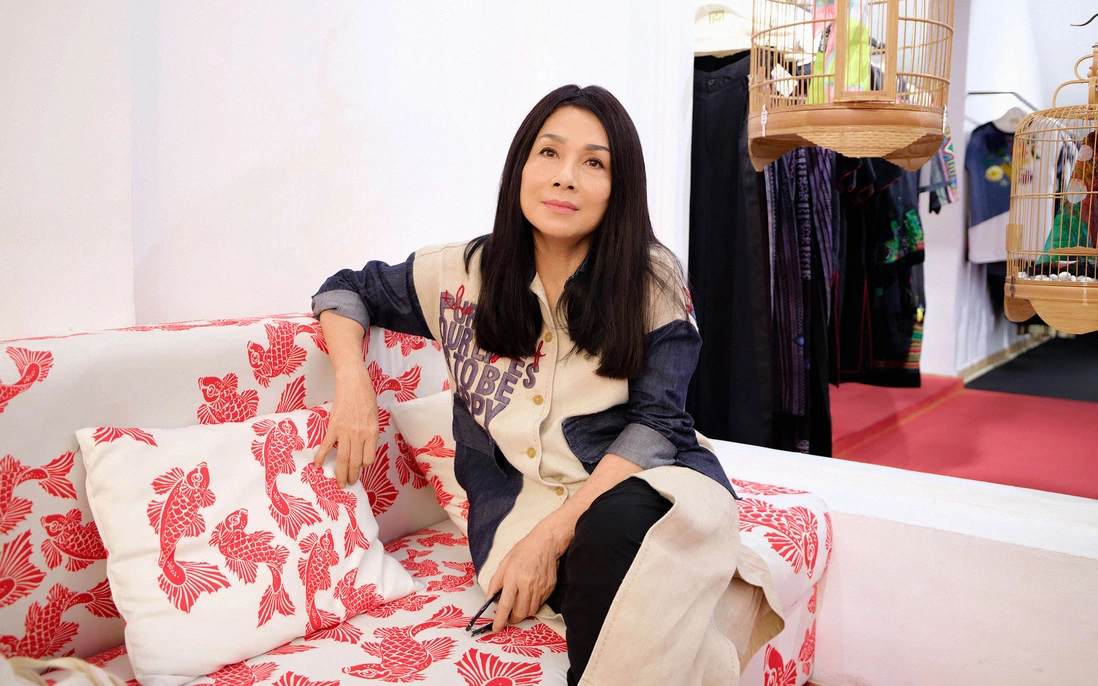
- ·Minh Hạnh designed the áo dài uniforms of Vietnam's national carrier, hand-tailored for the 21 leaders at the 2006 Hanoi APEC summit and put on an industrial line to standard sizes for Vietnam Airlines in 2015, a national garment cut by a Vietnamese woman rather than, as with Thailand's and Singapore's, by a Paris house.
- ·Her defining first was placing the brocade of Vietnam's ethnic minorities onto the áo dài and taking it abroad, from a Kyoto temple to Rome, turning rural, largely female weaving regions into named, traceable production rather than folklore.
- ·Behind it is her argument that Vietnam has one of the world's largest garment industries but not a fashion industry, because the value lies in owning the cloth, technique and name, and the near-term test she points to is whether the Vietnamese silk worn at the 2027 APEC summit on Phú Quốc arrives with a geographical indication or certificate of origin.
The hand on the scissors
IN 1960, Thailand discovered it had no national dress. A 1941 decree had put the country into Western clothing, and as Queen Sirikit prepared for a state tour of the United States and fifteen European capitals, Thai women had nothing equivalent to the sari or the kimono to wear. She assembled historians and advisers, worked back through court textiles and photographs of royal women taken between 1850 and 1925, and standardised eight styles known as Chut Thai Phra Ratcha Niyom. Supporting her on that tour were the Paris house of Pierre Balmain and the embroiderer François Lesage.
Eight years later the same house cut the sarong kebaya for the cabin crew of Malaysia-Singapore Airlines, the uniform that would become the Singapore Girl. Balmain was considered the right choice partly because he had dressed the Thai queen, which was taken to mean he understood the region. Nearly sixty years on, that kebaya is substantially unchanged, and is still tailored individually to each crew member.
This is a fact about Southeast Asia that is rarely stated plainly. A number of garments now treated as national identity were shaped, to one degree or another, in a Paris atelier.
Vietnam ran differently. The áo dài uniform of the national carrier was designed by a Vietnamese woman. And she did not stop there.

The first brocade
In 1989 the first Miss Áo Dài contest in Saigon marked the garment’s revival after nearly two decades of standing still. Out of that revival, histories of the áo dài record two distinct schools of reform. One is the painted áo dài, begun by the artist Sĩ Hoàng in 1989. The other is the brocade áo dài, made by Minh Hạnh, dated to 1990.
That second date deserves a pause. Brocade was not a fashion material then. It was a souvenir sold to tourists in Sa Pa, an object in an ethnography museum, a thing filed under folklore. Putting it on the body of an áo dài, in a country just out of scarcity and hungry for imported cloth, was a proposal almost nobody wanted to hear. The industry rewarded resemblance, and she went the other way.
Seven years later two áo dài won her the New Designer Award at the Makuhari Grand Prix in Japan. It was her first international competition, and what followed mattered more than the prize: the organisers invited her to show one hundred pieces from a collection called Tradition and Future at Kiyomizu-dera in Kyoto. She was the first foreign designer to present a collection at that temple.
Choosing Kyoto, and choosing a temple over a runway, is worth reading closely. Japan is the strictest country in Asia about traditional dress, and it is also the country buying Vietnamese silk to make kimono. Bringing a brocade áo dài there was not a request for recognition. It was placing Vietnamese cloth beside Japanese cloth in a space where both had to keep equally quiet.
Vietnamese reference works on the history of the garment credit her since then with making Vietnamese brocade known internationally through her áo dài collections. The claim needs stating at its correct size. The áo dài had travelled before, carried by women diplomats from the middle of the twentieth century, carried by the diaspora, and in 1992 shown for three months at the Wing Luke Museum in Seattle. The first that belongs to her is not taking the áo dài abroad. It is putting the brocade of Vietnam’s ethnic minorities onto the áo dài, and taking that abroad.
The distinction matters because the second is far harder. A plain silk áo dài read overseas as national dress. A zèng áo dài forces the viewer to ask where the cloth came from, who wove it, and how. It pulls an entire production region into the frame.
Eight months, and seven days
In March 2015 Vietnam Airlines put new cabin uniforms on trial flights from Hanoi to Ho Chi Minh City and on to Japan, Korea, Australia, Britain, France and Germany. Seven days, to collect passenger opinion. The detail that mattered was not the gold and jade colours the country argued about for weeks. It was a line of technical description: for the first time, the áo dài was being sewn on an industrial line, to standard sizes.
Until then the áo dài was made to measure. One body, one set of measurements, one tailor. Putting it on a line moves it out of craft and into mass production, with a size chart, tolerances, repeatability, and a fabric specification meeting aviation requirements for flame resistance and static.
The reaction was loud. Supporters said the cut was more practical, narrower in the trouser, shorter in the panel. Critics said the colours were washed out, the line stiff, and the reform had cost the garment its traditional shape. The designer was Minh Hạnh. The gold and jade version is still flying.

Nine years earlier the same person had done nearly the opposite. In November 2006, twenty-one leaders of the Pacific economies stepped onto the summit photograph stage in Hanoi in áo dài and khăn đóng, the folded turban of the Vietnamese scholar. She spent eight months on it. Silk woven with lotus, cut to each wearer’s measurements, in five colours, with five fastenings for the five Confucian relationships and a turban folded into the shape of the character for person. None of it was visible on television.
Eight months for twenty-one garments. Then seven days of trial flights for a line producing thousands to a size chart. Two poles of the same trade, and one pair of hands. Singapore still holds the first pole, tailoring each kebaya individually. She is the first in the region to push a national garment to the second, and she took the hit for it.
Zero
In 2017, at Vietnam Fashion Week, she said something people in her position generally do not. On the world map of silk, Vietnam is at zero. A shopper in Hanoi looking for real Hà Đông silk will come home empty-handed and will probably be sold something woven in China, while the best Vietnamese silk goes to Japan and Italy to become kimono.
She was, at the time, a board member of the national textile and apparel association.
The distinction underneath that remark is the one almost every account of Vietnamese fashion blurs. Vietnam has a garment industry, among the largest on earth. It does not really have a fashion industry. The first sells labour and runs on other people’s cloth, other people’s designs and other people’s labels. The second requires owning the material, the technique, and the name on the fabric. The distance between them is not aesthetic. It is the share of value a country keeps.
Thailand understood this in 1960. The Sirikit tour did not only produce eight styles of national dress. It put Thai silk on the world map, and the cloth for those garments was drawn from weaving regions across the country through a crafts foundation the queen herself established. The dress is the visible part. The material regions are where the money is made.
Why is it that Vietnamese people will not recognise these places as beautiful until foreigners come and praise them?
Why is it that Vietnamese people will not recognise these places as beautiful until foreigners come and praise them? - Minh Hạnh, 2019, on an international fashion house filming an advertisement in Vietnam, quoted in Tuổi Trẻ
Orders, not compliments
After 2017 her runway changed function. It stopped being a place to display finished clothes and became something closer to a public purchase order.
Raw silk from Nam Cao. Silk from Bảo Lộc and Nha Xá. Hemp woven by Hmong women. Sedge from Kim Sơn. Conical hats from Phú Gia. And zèng, the beaded brocade woven by Tà Ôi women in A Lưới, its patterns held in memory and passed from mother to daughter.
Twenty years ago, brocade in Vietnam was a souvenir sold to tourists. Putting it into a serious collection was regarded as a step backwards, a failure to understand the market. She did it before anyone called it sustainability, and she did it by living for extended periods with ethnic minority communities, studying their culture and dress before working out how to bring it into contemporary use. The objective she set herself was livelihood: that the women who do the weaving come to see an income inside the cultural value they already hold.
In A Lưới, natural dyeing and low-volume weaving were never a strategy. They were the only available method. It is only now, with European luxury building a vocabulary around sustainability and traceable provenance, that the method has acquired a price. A technique becomes valuable at the exact moment it starts being assessed against criteria drafted somewhere else.
Fifteen countries borrow the cut
In April 2021 the courtyard of the Văn Miếu, Vietnam’s temple of literature, was lit by thousands of lanterns. The programme was called Our Áo Dài, and its theme was the world inside the Vietnamese áo dài. On the runway that night were collections depicting fifteen countries. Around the same time she spoke of a plan, with other designers, to make one hundred áo dài representing one hundred world cultures, to be received by the Vietnamese Women’s Museum.
-400x300.jpg?prefix=brief-asia)
This is worth pausing on, because it runs against almost everything a country normally does with its national dress.
The usual move is to carry the garment abroad and invite people to admire it. That is the posture of the exhibitor. She did something else: she kept the cut of the áo dài intact and let other cultures step inside it. France, Japan, Spain, each with its own story, told on a Vietnamese structure. In that posture the garment is no longer the object on display. It is the frame in which others are displayed. Only the host can issue an invitation.
Two years later, in Rome, she repeated the move at diplomatic scale. The opening collection drew on Italian heritage, was executed on Vietnamese silk, and was shown inside a Roman market two thousand years old. Not Vietnam brought over for Italians to look at. Vietnamese cloth used to retell the Italians’ own story.

Set beside the opening of this article, the move carries a different weight. Thailand’s national dress was shaped with the support of a Paris house. Singapore’s kebaya was cut by a Paris house. Both succeeded magnificently, and both are stories of an Asian culture interpreted by a European hand. The áo dài runs the other way: its cut held by a Vietnamese woman, made in Vietnamese cloth, and opened by her for Europe to step into. People call this cultural diplomacy. More precisely, it is a question of who is standing in the host’s position.
First through the door
The reliable way to measure a person’s effect on a culture is to ask what would not exist without them.
The first fashion page in the Vietnamese press would not exist. She built it at a women’s newspaper during the subsidy era, cutting the clothes, drawing the technical sheets, taking the photographs, using colleagues from the newsroom as models because there were none. The country’s first fashion centre, in 1992, was hers to build. The competition that produced Vietnam’s first generation of professional designers, in 1999, was hers to co-create, and that cohort included Công Trí. She ran the national fashion design institute from 2000 to 2009, and served as senior artistic adviser to the Huế Festival programmes from 2002 to 2015.
That is not a list of achievements. It is a list of infrastructure. In a country with no fashion press, no buyers and no schools worth the name, one person did the work of a system, and did it first, which means without anyone to ask.
The cost of that position sits in her reputation. In Vietnam she is known as difficult. She has refused work she considered a dilution. She has been publicly severe with younger designers, particularly those chasing a quick position as the Asian version of a European house. And she stood alone through the 2015 attacks without withdrawing the design and without apologising, saying only that judgements of beauty depend on where you stand, and that the red uniform before hers had also been attacked when it was new.
There is a further layer, less often stated. Handloom weaving in Vietnam is almost entirely women’s labour, and has historically been accounted closer to housework than to manufacturing. What she has done across thirty years is move that labour out of the folklore category and into the production category, with the village, the material and the technique named. The most accurate description of her influence is not a woman at the top of an industry. It is a woman who keeps directing institutional attention, and institutional money, back towards the women at the bottom of it.
The contradiction, and the evidence from Bangkok
The hardest part of her record sits here. She wants legal heritage status for the áo dài, because without it there is no basis on which to stop people wrecking the garment. But recognition requires definition, and definition fixes a form. The áo dài has been reformed more or less continuously for a century, from the five-panel áo ngũ thân to the Lemur cut of the nineteen thirties to the raglan sleeve. A rule written in 1930 would have banned the version now called traditional. And the person asking for protection is the author of the most argued-about reform in Vietnamese public life.
The Thai case answers most of that objection. Chut Thai Phra Ratcha Niyom was not an inherited heritage picked up off the shelf. It was designed, in 1960, by a research team, from photographs and court textiles, for a diplomatic tour. It is younger than the raglan áo dài. It now stands as the uncontested national dress of Thailand and is on its way to inscription as intangible cultural heritage of humanity. Designed and heritage are not opposites. What they require is research behind them and an institution willing to take responsibility.
Read in that light, her answer is simpler than it looks. Argument is not evidence of vandalism. Argument is the mechanism by which this garment has reformed itself for a hundred years. What she wants codified is not a silhouette but a legal floor beneath the argument, so that it happens on some basis other than social media at Tết.
One detail rarely noticed shows the position is not merely rhetorical. The industrial design library of Vietnam’s National Office of Intellectual Property holds an áo dài design registered in Minh Hạnh’s name. While calling on the state to build a legal frame for the garment, she had already stepped into the frame that exists, an instrument most of the Vietnamese design trade has never used. Demanding a law is easy. Demanding a law and registering first is the mark of someone who understands the tool she is arguing about.
The position remains contestable. A badly placed legal framework can freeze the thing it means to save, and plenty of countries keep a national dress without legislating one. But it is a considered position rather than a reflex, and it comes from the only person in Vietnam who has stood on both sides of the reform trial, once as defendant and since as prosecutor.
Who pays, and the regional route
The practical question is who gains and who loses if her argument wins.
The clearest gain sits with the material regions. Each name on that list is a production cluster, mostly female, mostly rural. Cloth with a name, an origin and a certificate sells at a different price from anonymous cloth. That is the whole content of the shift from garment industry to fashion industry, translated into household income. The cost falls on manufacturers running on cheap imported fabric, and on consumers in the short term, because traceable silk is dearer than silk of unknown origin. There is no version of this transition in which everybody wins, and an article claiming otherwise would be an advertisement.
The region has already supplied a model Vietnam has not used. In December 2024, at the committee session in Asunción, the kebaya was inscribed on the Representative List of the Intangible Cultural Heritage of Humanity through a multinational nomination led by Malaysia with Brunei, Indonesia, Singapore and Thailand. Five countries shared a garment rather than fighting over it. Ikat, batik and brocade cross borders far more easily than the claims made on them.
In November 2027 Vietnam hosts APEC for the third time, on Phú Quốc. Twenty-one leaders again, another photograph, another garment. Bảo Lộc silk has already appeared twice in APEC leaders’ week, in 2006 and 2017.
At the third, the thing worth watching is not the cut. It is whether the silk arrives with a geographical indication or a certificate of origin attached. Anyone can check that, in about fifteen months.
The keeper of the cut
In Kyoto she set a piece of Vietnamese brocade down in the courtyard of a Japanese temple. At the Văn Miếu she lent the shape of the áo dài to fifteen countries. In Rome she used Vietnamese silk to retell the story of Italy. Three times, the same move, and it is a move only someone standing in the host’s position can make: opening the garment for others to step into without losing its cut.
That requires something rarer than talent. It requires certainty. You have to know precisely which part may not be touched before you can afford to be generous with the rest. She knows, because she spent thirty years locating that part in places her own industry could not be bothered to look: a loom held taut by a weaver’s waist in A Lưới, a tray of silkworms in Bảo Lộc, a woman’s hand carrying a pattern that was never written down.
Nothing on that road came easily. It began with putting a cloth dismissed as a tourist souvenir onto the body of the national dress, at a moment when the whole country wanted imported fabric. It ran through public attacks she absorbed without withdrawing a design and without apologising. It ran through a statement, made in the most crowded room available, that repudiated her own industry’s account of itself. Nobody takes that road to be liked.
What she won is not the honours, though the honours are there, from Paris, Fukuoka, Bangkok and Rome. What she won is standing: the right to say which cloth is Vietnam’s, and to say it where it has to be heard. A country does not come by that right automatically. Someone has to go and take it, usually one person, usually a long way ahead of everyone else’s understanding of why.
On Phú Quốc in 2027 there will be another photograph, and someone will be wearing Vietnamese silk. If that silk can say its own name without anyone explaining it, the credit belongs to a woman who spent a working life making sure it still existed, and still had one.
Sources and method
This article draws on published sources and not on a direct interview with the subject. The 2015 Vietnam Airlines uniform details, including the first industrial-line production of the áo dài to standard sizes and the 3 to 9 March trial flights, follow VietnamNet and Pháp Luật Thành phố Hồ Chí Minh. The designer’s response follows June 2026 reporting marking fifty years of the airline’s uniforms.
The account of Chut Thai Phra Ratcha Niyom, including the 1960 context, the eight styles and the roles of Pierre Balmain and François Lesage, follows The Nation Thailand, Khaosod English and material from the Queen Sirikit Museum of Textiles on Google Arts and Culture. The Singapore Airlines sarong kebaya follows BiblioAsia, published by the National Library Board of Singapore, and the Roots.gov.sg heritage portal. The December 2024 inscription of the kebaya follows Malaysian and Singaporean reporting from the Asunción session.
The 1990 dating of the brocade áo dài and the division into two schools of reform after 1989 follow Giáo dục và Thời đại and Vietnamese reference works on the history of the garment. The New Designer Award at the Makuhari Grand Prix and the hundred-piece programme at Kiyomizu-dera follow the designer’s published biography and Vietnamese press. The 1992 Wing Luke Museum exhibition in Seattle follows RFA. The registered áo dài design in the designer’s name follows an article published by Vietnam’s National Office of Intellectual Property.
The 2017 silk remarks follow Thể thao và Văn hóa, Vietnam News Agency. The 2019 quotation follows Tuổi Trẻ and is rendered from the Vietnamese without strengthening. The record of Bảo Lộc silk at two APEC leaders’ weeks follows Tuổi Trẻ. The account of work with ethnic minority communities follows Phụ Nữ Việt Nam. The Our Áo Dài programme of 9 April 2021 at the Văn Miếu, with collections depicting fifteen countries, follows Quân đội nhân dân. The plan for one hundred áo dài representing one hundred cultures follows Dân trí. Brief Asia does not assert that the designer was the first to take the áo dài abroad, because the public record shows it travelled earlier by several routes. The full source ledger sits in the accompanying editorial dossier. The Vietnamese edition is published as Người Đàn Bà Giữ Sợi.
RELATED STORIES
Tokyo's Currency Intervention Reveals Deeper Policy Failures
Anand Sundaram · 5 min

South Korea's Economic Weight Class Shift Demands Regional Recalibration
Cheng Wei-Lun · 5 min

Washington's Coming Compromise on Strait of Hormuz Transit Fees
Rajesh K. Iyer · 5 min
Indonesia's Education Budget Versus Free Meals: A Necessary Line
Siti Nuraini · 5 min
Spot something wrong? Email editor@briefasia.com. We log every correction publicly.