Perspectives · Analysis
Indonesia's Education Budget Versus Free Meals: A Necessary Line
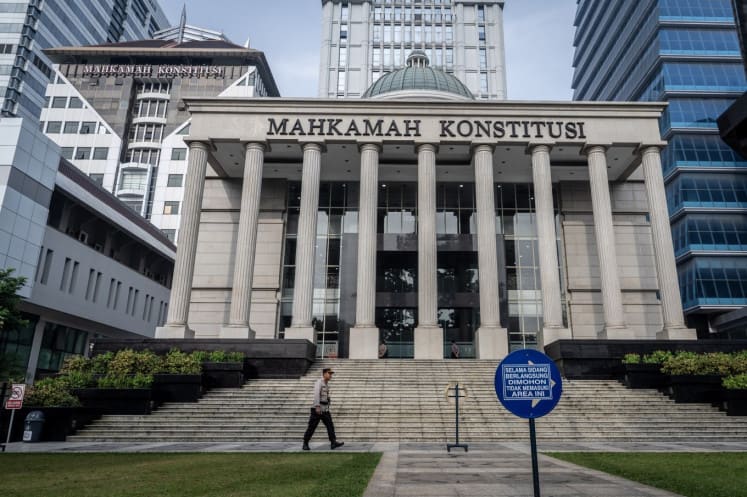
Constitutional Court ruling forces Jakarta to rethink how it funds social programs without cannibalizing core education spending
KEY TAKEAWAYS
- ·Indonesia's Constitutional Court ruled the free nutritious meal program cannot be funded from the national education budget, protecting the constitutional 20 percent spending floor.
- ·The decision forces Jakarta to identify alternative funding, with options including dedicated budget lines, scaled-back coverage, or broader tax reform to expand fiscal space.
- ·The ruling signals stronger judicial scrutiny of creative accounting and reinforces fiscal transparency, a positive indicator for investors monitoring Indonesia's budget discipline.
- ·Southeast Asian governments face similar pressures balancing populist programs with fiscal sustainability, but Indonesia's constitutional rigidity around education spending creates unique constraints.
A Fiscal Red Line
Indonesia's Constitutional Court delivered an unambiguous verdict last week that reverberates far beyond the courtroom. The judges ruled that the government's flagship free nutritious meal program cannot be funded through the national education budget. On the surface, it reads like bureaucratic housekeeping. In reality, the decision exposes a deeper tension in how Southeast Asia's largest economy allocates scarce public resources and whether populist campaign promises should take precedence over statutory spending mandates.
The ruling matters because it forces Jakarta to confront a question it has largely dodged: how to pay for expensive social programs without quietly raiding budgets earmarked for other critical functions. Education spending in Indonesia already operates under tight constraints. The constitution mandates at least 20 percent of the national budget go toward education, a floor designed to prevent chronic underinvestment in human capital. When the free meals program began drawing from that same pot, the court essentially said the government was playing accounting games, mixing apples and oranges to mask the true cost of a new entitlement.
The Free Meals Gambit
The free nutritious meal program is ambitious. It aims to provide hot, balanced meals to millions of schoolchildren across an archipelago of more than 17,000 islands, targeting malnutrition and improving attendance rates in one stroke. The political appeal is obvious. For a government eager to demonstrate tangible benefits to voters, a plate of rice and protein delivered daily is far more visible than incremental improvements in teacher training or curriculum reform.
But visibility does not equal fiscal sustainability. The program requires significant recurring expenditure: procurement, logistics, kitchen infrastructure, quality control, and monitoring. Funding it from the education budget was never a long-term solution. It was a shortcut, one that allowed the government to launch a marquee initiative without the politically uncomfortable task of either cutting spending elsewhere or raising new revenue. The Constitutional Court has now closed that shortcut.
The immediate consequence is a budgetary hole. Without access to education funds, the administration must identify an alternative funding stream. Options are limited. Indonesia's tax-to-GDP ratio hovers around 10 percent, among the lowest in the region, leaving little room for new spending without structural tax reform. Reallocating funds from other ministries invites fierce resistance. Borrowing more adds to a debt load that, while manageable, is growing. Each path forward involves trade-offs the government would prefer to avoid.
What the Court Really Said
The Constitutional Court's reasoning hinges on legal clarity, not nutritional policy. The judges did not question the merit of feeding schoolchildren. They questioned whether doing so qualifies as an education expense under the law. The distinction matters because it preserves the integrity of constitutionally mandated spending floors. If the education budget becomes a catch-all for any program that tangentially involves children or schools, the 20 percent mandate loses meaning. Infrastructure, teacher salaries, textbooks, and digital learning tools all compete for the same finite pool. Adding free meals to that competition squeezes everything else.
This ruling also sets a precedent. It signals that the court is willing to scrutinize creative accounting when it undermines statutory budget protections. That could have implications for other programs that straddle multiple budget categories. Health initiatives run through education channels, social assistance bundled with infrastructure projects, and employment schemes disguised as regional development funds may all face closer legal scrutiny. The court has effectively raised the bar for fiscal transparency.
Regional Context and Fiscal Discipline
Indonesia is not alone in grappling with the cost of social programs. Across Southeast Asia, governments are under pressure to deliver visible benefits while maintaining fiscal discipline. Thailand's populist subsidies, the Philippines' conditional cash transfers, and Vietnam's public service expansions all test the limits of state budgets. What distinguishes Indonesia's situation is the constitutional rigidity around education spending. That rigidity, intended to protect investment in human capital, now forces a more honest conversation about priorities and trade-offs.
The ruling also arrives at a moment when Indonesia is trying to position itself as a stable, investment-grade economy attractive to long-term capital. Fiscal credibility matters. Foreign investors and multilateral lenders watch how governments manage competing demands on the budget. A court decision that enforces spending discipline, even when politically inconvenient, sends a reassuring signal. It suggests that institutions can still function as checks on executive overreach, and that the rule of law extends to public finance.
The Path Forward
The government now has three broad options. First, it can create a dedicated budget line for the free meals program, funded through a transparent allocation that does not encroach on education, health, or infrastructure. This is the cleanest solution, but it requires either new revenue or explicit cuts elsewhere. Second, it can scale back the program, targeting only the most vulnerable populations rather than universal coverage. This preserves fiscal space but dilutes the political impact. Third, it can attempt another workaround, perhaps routing funds through local governments or off-budget vehicles. This risks another legal challenge and further erosion of fiscal transparency.
The most likely outcome is some combination of the first two. A scaled-back program with a dedicated funding line, paired with promises to expand coverage as revenues grow, allows the government to save face while complying with the court order. It also buys time to pursue broader tax reform, something Indonesia has discussed for years but never fully implemented. Expanding the tax base, improving collection efficiency, and closing loopholes would provide the fiscal headroom needed to fund ambitious social programs without cannibalizing education or infrastructure.
Lessons in Fiscal Honesty
What the Constitutional Court has done, intentionally or not, is force a reckoning. Populist programs are easy to launch and hard to fund sustainably. When governments try to finesse the funding question through creative accounting, they undermine both fiscal discipline and the programs themselves. The free meals initiative is worthwhile. But it deserves its own budget line, its own funding source, and its own accountability mechanisms. Hiding it within the education budget was always a temporary fix, and the court has now made that explicit.
For investors and policymakers watching Indonesia, the ruling is a positive signal. It demonstrates that institutions can still constrain executive discretion when fiscal integrity is at stake. It also highlights the challenge ahead: Indonesia needs to modernize its revenue system if it wants to fund the social programs its population expects. The education budget can only stretch so far. Free meals, like any other public good, require honest funding and transparent trade-offs. The Constitutional Court has made sure of that.
RELATED STORIES

When Permits Become Patronage: Indonesia's Mining Sector Tests the Rule of Law
Rajesh K. Iyer · 7 min
Indonesia's Economic Census Becomes Strategic Tool for Private-Sector Growth
Siti Nuraini · 5 min
Indonesia Nominates Destry Damayanti as First Female Central Bank Chief
Priyanka V. Rao · 3 min
Indonesia Tightens Central Control Across Financial, Fiscal, and Data Institutions
Priyanka V. Rao · 3 min
Spot something wrong? Email editor@briefasia.com. We log every correction publicly.