Asia · Business
Metro Shuts Singapore Department Stores After 69 Years
The Indonesian-founded retailer will close its last two large-format outlets at Paragon and Causeway Point as it pivots to smaller concepts.
KEY TAKEAWAYS
- ·Metro will close its final two Singapore department stores at Paragon and Causeway Point after their leases expire, ending a 69-year retail presence.
- ·The retailer operated 11 outlets at its peak in the early 2000s and is pivoting to smaller formats, pop-ups, and specialty concepts.
- ·Weak sales and inflationary pressures contributed to Metro's losses, prompting a strategic shift away from large-format retail models.
The End of an Era
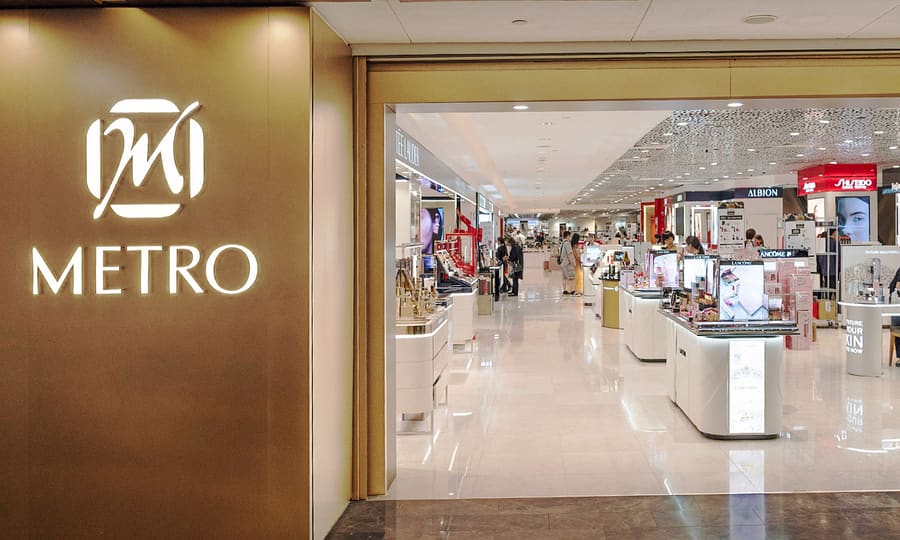
Metro, one of Singapore's oldest department store operators, will shut its remaining two large-format outlets when their leases expire, marking the end of a retail chapter that began in 1957. The company disclosed in a Singapore Exchange filing that it is closing the Paragon and Causeway Point stores following a strategic review of its retail operations.
The closures leave Metro without any traditional department stores in the city-state. At its peak in the early 2000s, the retailer operated 11 outlets across Singapore. The company did not specify exact closure dates for either location.
Founded by Indonesian businessman Ong Tjoe Kim, Metro opened its first store in Surabaya in 1953 before launching Singapore operations four years later. The brand has been a fixture in the Lion City's retail landscape for nearly seven decades.
Pivot to Flexibility
Metro announced it is evaluating smaller-format stores, multi-specialty concepts, curated retail experiences, and pop-up initiatives to replace its traditional model. The company is in discussions with current landlords and other property owners about introducing these new formats.
Group chief executive Yip Hoong Mun said the strategy aims to meet evolving customer expectations while providing greater flexibility to introduce new brands and partnerships. The shift reflects broader changes in retail consumption patterns across Asia's developed markets, where consumers increasingly favor convenience and experience over large-format browsing.
Metro is finalizing the rollout timeline and assessing financial implications, which it cannot yet quantify. The company does not anticipate material effects on net assets or earnings per share for the fiscal year ending March 31, 2027.
Market Pressures
The decision comes as Singapore's retail sector grapples with subdued consumer sentiment. Metro cited inflationary pressures and weak sales at both Paragon and Causeway Point in its March results presentation. The underperformance at these locations contributed to group revenue declines and another year of losses for the retailer, which also operates a property business.
CapitaLand Integrated Commercial Trust, which acquired Paragon on July 1, said it plans to reconfigure parts of the mall currently occupied by Metro. The real estate trust intends to strengthen the tenant mix and introduce new retail concepts in those spaces.
Regional Retail Recalibration
Metro's exit from department stores mirrors a wider retreat of legacy retail formats in Southeast Asia. Rising rents, e-commerce competition, and shifting shopper preferences have compressed margins for operators reliant on large floor plates and broad merchandise assortments.
Singapore's retail real estate market has seen landlords increasingly favor experiential tenants, food and beverage operators, and pop-up concepts over anchor department stores. The trend accelerated after pandemic-era disruptions forced retailers to reassess their physical footprints.
For Metro, the move represents an acknowledgment that the traditional department store model no longer aligns with how Singaporeans shop. The company's online platforms have also underperformed, according to its recent financial disclosures.
The retailer's property business may provide a cushion as it navigates the transition. Metro has not detailed which assets or locations it will target for its new retail concepts, leaving open questions about how quickly it can deploy capital into formats that resonate with today's consumers.
As one of Singapore's longest-running retail names bows out of department stores, the shift underscores how even established operators must adapt or risk obsolescence in Asia's fast-changing consumer markets.
RELATED STORIES
Vietnam Draws $7.5 Billion From Singapore in Seven Months
Priyanka V. Rao · 3 min

Singapore Eyes Global Investment Court as UN Talks Near Final Stage
Priyanka V. Rao · 3 min
Singapore Inflation Climbs on Power Tariffs, Stays Below Forecasts
Lim Hui Ying · 5 min
Singapore Economists Lift 2026 Growth Outlook to 5% as Chip Exports Surge
Priyanka V. Rao · 3 min
Spot something wrong? Email editor@briefasia.com. We log every correction publicly.