Real Estate · Land
McDonald's Sells Nearly Half Its Hong Kong Property Portfolio in Sluggish Market
Fast-food chain offloads 11 shops for over HK$900 million despite retail real estate downturn, with stable tenancy and prime locations driving investor interest
KEY TAKEAWAYS
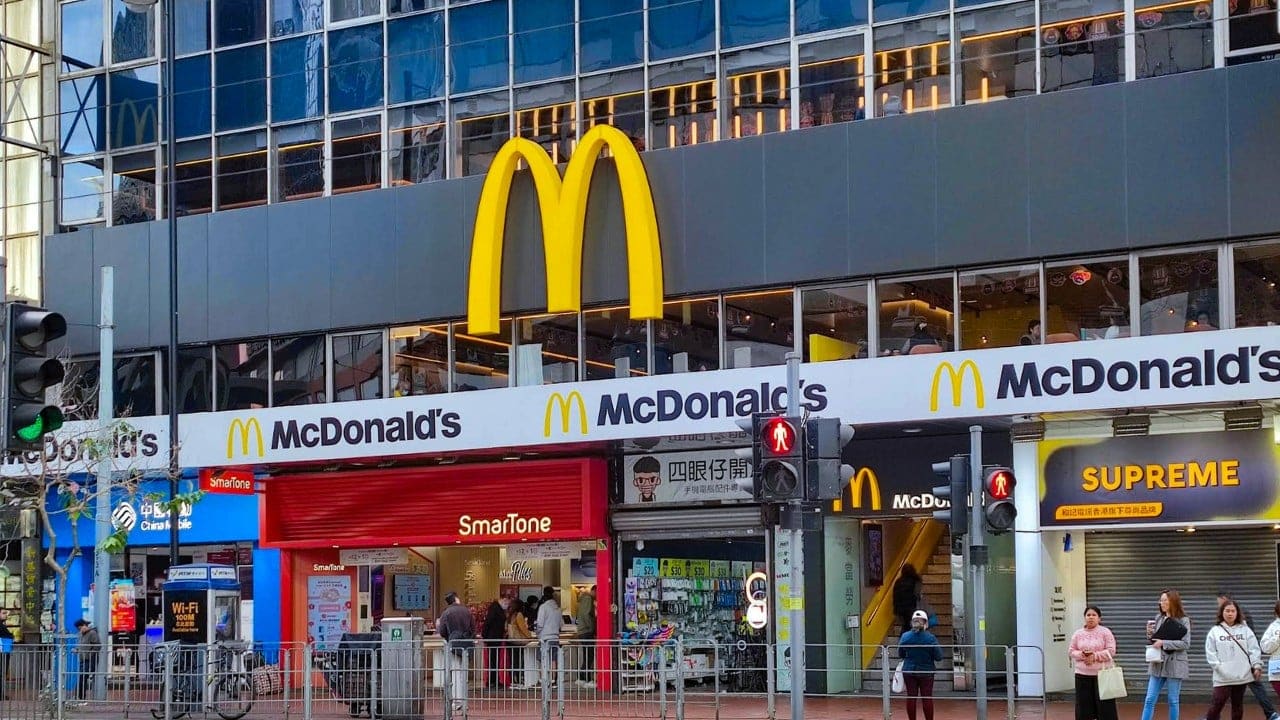
- ·McDonald's has sold 11 of its 23 self-owned Hong Kong shops for over HK$900 million since July 2024, nearly half the portfolio originally valued at HK$3 billion.
- ·The properties attract buyers with stable tenancy, prime locations in high-traffic areas, and predictable cash flows despite Hong Kong's weakest retail property market in decades.
- ·The remaining 12 outlets will be sold in phases, testing whether investor demand persists as economic conditions shift and less central properties come to market.
Strong Sales Amid Market Weakness
McDonald's has successfully sold nearly half of its Hong Kong property holdings despite one of the weakest retail real estate markets the city has seen in decades. The fast-food operator launched a disposal plan in July 2024 for all 23 self-owned shops, initially valued at approximately HK$3 billion (US$382 million), according to McDonald's. Since then, the company has offloaded 11 properties for more than HK$900 million.
The sales come at a time when Hong Kong's retail property sector faces significant headwinds. Transaction volumes have slumped, and valuations have declined as consumer spending remains subdued and tourism recovery continues to lag expectations. Yet McDonald's managed to attract buyers willing to pay premium prices for assets tied to the global brand.
What Sets These Assets Apart
The appeal of McDonald's properties lies in several factors that distinguish them from typical retail real estate. Most critically, the outlets come with an established, creditworthy tenant already in place. McDonald's operates on long-term leases with predictable cash flows, a feature that resonates strongly with investors seeking stability in uncertain times.
Location quality also plays a decisive role. McDonald's shops occupy high-traffic sites in densely populated residential areas, transport hubs, and commercial districts across Hong Kong Island, Kowloon, and the New Territories. These are not marginal retail spaces vulnerable to shifting foot traffic patterns. They represent proven locations with decades of operating history.
The transaction structure itself offers advantages. Buyers acquire both the real estate and a sitting tenant with brand recognition and operational track record. This eliminates the uncertainty and vacancy risk associated with repositioning empty retail units, a challenge that has plagued landlords across Hong Kong's struggling shopping districts.
Pricing and Buyer Profile
While McDonald's has not disclosed individual transaction prices, market participants note that yields on these assets remain compressed relative to broader retail property benchmarks. Buyers appear willing to accept lower initial returns in exchange for tenant quality and location security.
The buyer pool has included family offices, private investors, and smaller institutional players seeking Hong Kong exposure without taking on development or leasing risk. For these groups, McDonald's outlets represent a rare opportunity to acquire stabilized, income-producing assets with minimal management burden.
The HK$900 million in proceeds from 11 shops suggests an average price near HK$82 million per property, though individual valuations vary widely based on size, location, and lease terms. The original HK$3 billion portfolio valuation implies an average of roughly HK$130 million per shop, indicating McDonald's may be selling smaller or less central locations first while retaining flagship sites for later phases.
Broader Market Context
The success of McDonald's disposal program stands in sharp contrast to conditions across Hong Kong's retail property sector. Vacancy rates in secondary shopping streets have climbed, and landlords have been forced to offer rent concessions to retain tenants. Major retail landlords have reported declining rental income, and transaction activity for traditional shop space has slowed to levels not seen since the global financial crisis.
Tourism, a key driver of retail demand, remains below pre-pandemic levels. Mainland Chinese visitors, who once powered luxury and mid-market retail sales, are spending less per trip and increasingly favor experiences over shopping. This shift has left landlords with excess supply and limited pricing power.
Against this backdrop, assets with locked-in tenants and predictable income streams command a scarcity premium. McDonald's outlets, with their operational resilience and brand strength, offer a hedge against the uncertainties facing landlords dependent on discretionary retail spending.
What Comes Next
McDonald's plans to continue disposing of the remaining 12 properties in phases, according to market sources. The pace and pricing of future sales will test whether investor appetite persists as economic conditions evolve. If the initial tranche achieved better-than-expected pricing, McDonald's may accelerate the timeline. Conversely, any deterioration in Hong Kong's economic outlook could prompt the company to pause and reassess.
For investors, the remaining portfolio represents a finite pool of stabilized assets in a market where such opportunities are scarce. The question is whether demand will hold as the most attractive properties are sold and buyers are left with outlets in less central locations or with shorter remaining lease terms.
The broader implication for Hong Kong's retail property market is less clear. McDonald's success may reflect the unique characteristics of its assets rather than a broader recovery in investor sentiment. Until vacancy rates decline and rental growth resumes, the city's retail real estate sector will likely remain under pressure, with only the most defensible assets able to command premium pricing.
RELATED STORIES
McDonald's Unloads Hong Kong Retail Assets at Premium Amid Market Freeze
Priyanka V. Rao · 3 min
Abandoned Cinema on Hong Kong's Peng Chau Island Heads to Auction at $1 Million
Cheng Wei-Lun · 3 min

Hang Lung Properties Appoints Toys 'R' Us Asia Chief as New CEO
Cheng Wei-Lun · 3 min
Hong Kong Data Centre Rates Climb 90 Percent as Mainland AI Players Expand
Cheng Wei-Lun · 3 min
Spot something wrong? Email editor@briefasia.com. We log every correction publicly.