Real Estate · Land
Hang Lung Properties Appoints Toys 'R' Us Asia Chief as New CEO
Leo Tsoi, who previously led Starbucks China, will take the helm at the Hong Kong developer as it navigates mainland retail headwinds
KEY TAKEAWAYS
- ·Hang Lung Properties appointed Leo Tsoi, CEO of Toys 'R' Us Asia and former Starbucks China head, as chief executive effective October 1, succeeding Weber Lo after eight years.
- ·Tsoi's retail and consumer brand experience aligns with Hang Lung's mainland China mall portfolio strategy amid shifting consumer behavior and softer luxury spending.
- ·The appointment reflects a shift toward operational focus as Hang Lung prioritizes tenant management and asset optimization over new development in a challenging market.
Leadership Transition at Hong Kong Developer
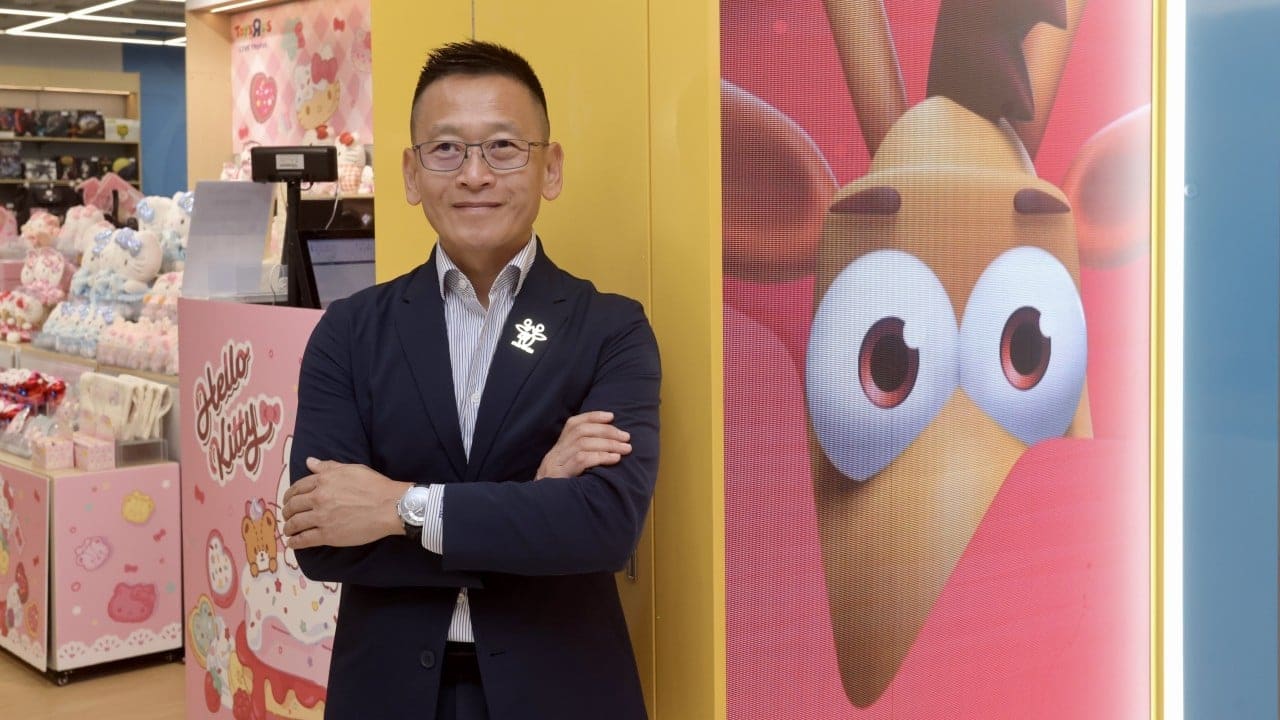
Hang Lung Properties announced Leo Tsoi Tak-lun as its incoming chief executive, bringing aboard an executive with deep retail and consumer brand experience across Greater China. Tsoi currently serves as CEO of Toys 'R' Us Asia and previously ran Starbucks China during a period of rapid expansion for the coffee chain.
The Hong Kong-listed developer said Tsoi will join both Hang Lung Group and Hang Lung Properties on September 7 as CEO-designate and executive director before formally stepping into the chief executive role on October 1. The appointment was disclosed in a Friday filing to the Hong Kong stock exchange.
Tsoi replaces Weber Lo Wai-pak, who retires August 31 after eight years as CEO. Lo's tenure spanned a turbulent period for Hong Kong and mainland China property markets, including pandemic-era lockdowns, mainland developer debt crises, and a prolonged slump in commercial real estate valuations.
Retail Credentials for a Property Play
The choice of Tsoi signals Hang Lung's continued focus on premium shopping malls in mainland China, where the company owns and operates a portfolio concentrated in tier-one and tier-two cities including Shanghai, Shenyang, Jinan, and Wuxi. Unlike many Hong Kong developers that sold residential inventory, Hang Lung has maintained a landlord model, deriving rental income from retail and office tenants.
Tsoi's background spans multinational consumer brands. At Starbucks China, he oversaw store network growth and digital integration during the mid-2010s, a critical phase when the Seattle-based chain faced rising competition from Luckin Coffee and local rivals. His subsequent move to Toys 'R' Us Asia came as the toy retailer sought to rebuild its regional footprint after bankruptcy restructuring in the United States.
That retail operating experience may prove valuable as Hang Lung contends with shifting consumer behavior in China. Domestic consumption has lagged expectations despite Beijing's policy pivots, and luxury spending has cooled amid broader economic uncertainty. Mall landlords are under pressure to curate tenant mixes that draw foot traffic and justify rents.
Navigating a Challenging Market
Hang Lung's mainland portfolio has faced occupancy and rental rate headwinds. Several of its properties are anchored by international fashion and luxury brands, segments that have seen slower sales growth in China over the past two years. The company has responded by introducing more experiential retail, dining concepts, and entertainment options to diversify tenant rosters.
The developer remains one of the few Hong Kong-based property firms with a pure-play commercial strategy in the mainland, eschewing the residential development model that has ensnared peers in liquidity traps. Hang Lung's balance sheet is relatively conservative, with modest leverage compared to mainland giants that have defaulted or undergone restructuring since 2021.
Tsoi inherits a portfolio that requires active asset management rather than large-scale development. Hang Lung's major construction phase in the mainland has largely concluded, and the focus has shifted to optimizing existing assets, renewing leases, and maintaining occupancy in a tenant-favorable market.
What the Succession Means
The transition from Lo to Tsoi also reflects a generational shift in Hong Kong's property establishment. Lo, a career property executive, steered the company through crisis years. Tsoi's consumer-brand pedigree suggests Hang Lung is prioritizing tenant relationships and customer experience as differentiators in a saturated market.
Hang Lung Group, the family-controlled parent, remains under the leadership of chairman Ronnie Chan Chi-chung, who has long championed the mainland commercial strategy. The CEO appointment does not alter the ownership structure or strategic direction, but it does install an operator more attuned to the retail side of the real estate equation.
For investors, the question is whether Tsoi can stabilize occupancy and rental reversion at a time when mall fundamentals across China remain soft. Hang Lung Properties shares have underperformed the broader Hong Kong property index over the past year, reflecting concerns about mainland exposure and limited near-term catalysts.
The appointment takes effect as Hong Kong developers reassess their mainland ambitions. Some have scaled back or exited; Hang Lung is doubling down on the operational lever, betting that the right leadership can extract value from assets already in place.
RELATED STORIES
Cheung Kong Center II Pushes Rents Above HK$100 as Central Market Tightens
Cheng Wei-Lun · 3 min
McDonald's Sells Nearly Half Its Hong Kong Property Portfolio in Sluggish Market
Priyanka V. Rao · 3 min
Ningbo Tycoon Family Buys Hong Kong Villa for $18.5 Million
Cheng Wei-Lun · 3 min
McDonald's Unloads Hong Kong Retail Assets at Premium Amid Market Freeze
Priyanka V. Rao · 3 min
Spot something wrong? Email editor@briefasia.com. We log every correction publicly.