Sustainability · Energy
Manila's Hyperscaler Bet Draws Fire Over Job Creation and Grid Strain
Industry voices question whether multi-billion-dollar data centre projects align with national priorities as brownouts persist and electricity demand outpaces supply
KEY TAKEAWAYS
- ·George Barcelon of the Philippine Chamber of Commerce and Industry argues that hyperscaler facilities consume hundreds of megawatts yet create minimal employment, urging government to prioritise job-intensive industries instead.
- ·The proposed Pax Silica site in Pampanga could require 3GW of electricity and 39 billion litres of water annually, equivalent to 16 per cent of Luzon's grid capacity and the water use of 600,000 households.
- ·The Philippines exports 25.41 per cent of global nickel ore but processes little domestically; business leaders recommend building refining capacity to capture more value and strengthen clean-technology supply chains.
A Jobs-Light Industrial Strategy
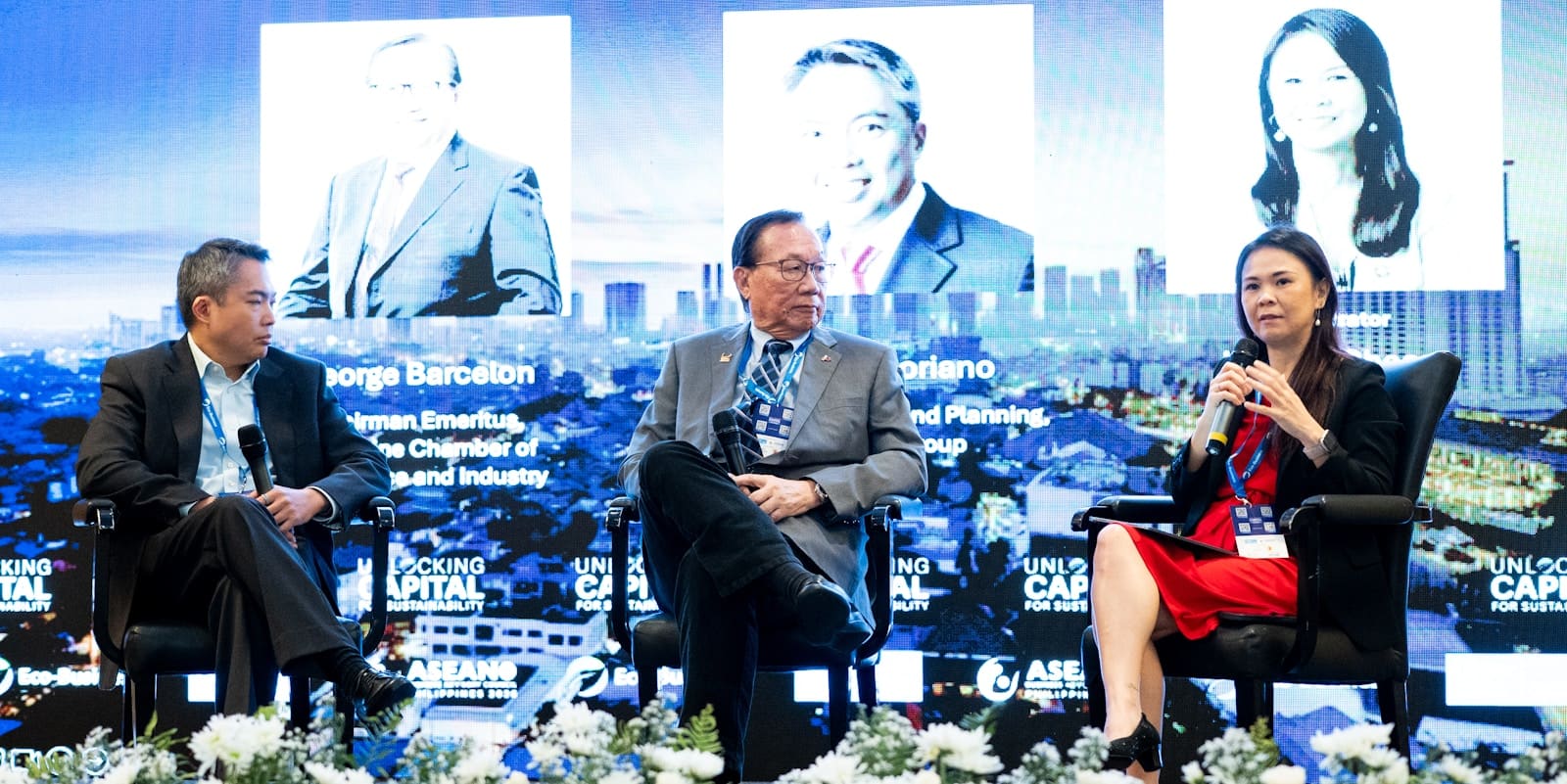
George Barcelon, chairman emeritus of the Philippine Chamber of Commerce and Industry, has thrown cold water on Manila's ambitions to become a regional hyperscaler hub. Speaking at the Unlocking Capital for Sustainability Philippines forum in Quezon City last week, Barcelon argued that government resources would be better directed toward sectors that generate significant employment rather than electricity-intensive digital infrastructure with limited workforce needs.
Data centres require continuous power measured in hundreds of megawatts yet typically employ only a skeleton crew for operations and maintenance. Barcelon pointed to Singapore's experience, where hyperscaler facilities now consume nearly 20 per cent of national electricity but have prompted regulators to tighten approvals over concerns about resource efficiency and modest job creation. The city-state's cautious stance reflects a broader regional recalibration as governments weigh infrastructure trade-offs.
The contrast becomes stark when measured against the Philippines' manufacturing base. Electronics exports alone totalled USD 5.25 billion in June 2026, representing 59.9 per cent of national exports, yet the sector remains concentrated in assembly work rather than higher-value design or fabrication. Barcelon, who also leads technology solutions firm Integrated Computer Systems, suggested that industrial policy should prioritise activities that strengthen domestic supply chains and create durable employment across skill levels.
Grid Under Pressure
The timing of the debate is not accidental. This August, the Visayas grid operator declared red alerts and warned of rotating blackouts as supply margins thinned during peak demand. Similar warnings have been issued across Luzon, including provinces surrounding Metro Manila and Pampanga, where the US-backed Pax Silica initiative envisions a concentration of semiconductor and artificial intelligence infrastructure.
A single hyperscaler facility can draw between 500 megawatts and one gigawatt of continuous load, according to Barcelon. The proposed Pax Silica site in New Clark City, spanning 1,620 hectares, could require up to 3GW of electricity and 39 billion litres of water annually. That electricity figure represents roughly 16 per cent of Luzon's current grid capacity; the water demand equals the annual consumption of approximately 600,000 households.
Jay Joel Soriano, head of strategy and planning at First Gen Group, told the forum that investors are less troubled by high electricity tariffs than by unpredictable supply and sudden price volatility. Filipino consumers already pay the second-highest power rates in Southeast Asia after Singapore, yet red and yellow grid alerts complicate business planning and erode confidence in infrastructure reliability.
Soriano underscored that geopolitical tensions have made energy security a front-line concern. The Philippines remains exposed to external supply-chain disruptions, and adding large, inflexible loads from hyperscalers could compound vulnerability during periods of tight supply or infrastructure failure.
Processing, Not Just Extraction
Barcelon urged policymakers to refocus the Pax Silica opportunity on building domestic capacity in critical-mineral processing rather than simply hosting power-hungry server farms. The Philippines possesses significant reserves of rare earths and other strategic minerals in Samar, Palawan and Zambales, yet most are exported as raw material rather than refined domestically into higher-value intermediates.
The nickel sector exemplifies the gap. The Philippines ranked as the world's second-largest nickel producer and largest exporter of nickel ore in 2024, shipping 25.41 per cent of global nickel exports. Mineral exports reached USD 7.62 billion in 2025. Yet the bulk of mined nickel leaves the country unprocessed, bound primarily for Chinese smelters and refineries. Capturing more value through domestic processing could strengthen supply chains for batteries, renewable-energy components and clean-technology manufacturing while generating skilled jobs and industrial know-how.
Soriano echoed concerns about supply-chain concentration, noting that key components for solar panels, wind turbines and energy storage remain dominated by a handful of countries, including China. He argued that the Philippines must be deliberate about technology choices and ensure that new capacity integrates effectively with the existing power system.
Geothermal Curtailed, Grids Lagging
Soriano highlighted an operational paradox on Negros Island, where an Energy Development Corporation geothermal plant produces approximately 220MW against regional demand of around 300MW. Surplus power from the facility cannot be exported off the island because transmission infrastructure lacks the capacity to move it. The result is curtailment of a round-the-clock, geopolitically insulated renewable resource at a time when other grids face shortages.
Geothermal generation offers stable, baseload power that complements the intermittency of solar and wind. The Philippines sits on substantial geothermal reserves, yet inadequate grid investment prevents existing assets from being fully utilised. Soriano called for better coordination between generation planning and transmission buildout so that infrastructure keeps pace with new capacity.
He stressed that energy security depends on a diversified mix rather than overreliance on any single technology. Solar cannot generate at night; wind output fluctuates seasonally. Technologies that provide consistent power, insulated from fuel-price swings and supply-chain choke points, become strategically valuable in a region exposed to external shocks.
Accounting for Natural Capital
Atty Analiza Rebuelta-Teh, undersecretary for finance, information systems and climate change at the Department of Environment and Natural Resources, framed the debate in broader terms during her keynote address at the forum. Traditional economic models, she argued, have long treated forests, soils and marine ecosystems as infinite resources to be liquidated for growth, an accounting error with catastrophic consequences.
Rebuelta-Teh warned that depleting natural capital today bankrupts future generations. Her remarks underscored a tension at the heart of the Pax Silica debate: whether large-scale infrastructure investments align with long-term sustainability or simply accelerate resource depletion under the banner of economic development.
Barcelon's position is that investment decisions should be judged not only by headline capital figures but by their contribution to resilient, inclusive growth. Industries that compete on logistics, labour costs and reliable power while creating employment and strengthening local supply chains should take precedence over facilities that consume vast resources yet generate limited economic multiplier effects.
Soriano suggested that navigating uncertainty requires collective problem-solving rather than isolated dealmaking. Greater coordination among government, utilities, investors and civil society could help the Philippines chart a path that balances energy security, economic development and environmental stewardship.
The question facing Manila is whether billions of dollars in hyperscaler investment represent an opportunity to leapfrog into the digital economy or a distraction from building the industrial depth and energy resilience the country needs. As brownouts persist and water stress intensifies, the answer will shape the Philippines' economic trajectory for decades.
RELATED STORIES
Philippine Nickel Miners Push for Unified Policy Framework as Critical Minerals Race Intensifies
Priyanka V. Rao · 3 min

Philippines Faces Prolonged Budget Deficit as Growth Slowdown Shifts Fiscal Timeline
Priyanka V. Rao · 3 min
Raslag Eyes Solar-on-Water and Green Auctions in Push for 1,000 MW by 2036
Priyanka V. Rao · 4 min

Philippine Economic Zones Pull Record ₱216 Billion in Eight Months
Priyanka V. Rao · 3 min
Spot something wrong? Email editor@briefasia.com. We log every correction publicly.