Sustainability · Energy
Raslag Eyes Solar-on-Water and Green Auctions in Push for 1,000 MW by 2036
The Philippines renewable developer targets a tenfold capacity increase as it explores floating solar and plans participation in government clean energy bidding rounds.
KEY TAKEAWAYS
- ·Raslag Corp. is exploring solar-on-stilts technology and plans to participate in government green energy auctions as part of its expansion strategy.
- ·The company has allocated up to three billion pesos for 2026 capital spending, focused on a 140 MW solar plant with 100 MWh battery storage targeted for 2028 completion.
- ·Raslag aims to grow installed capacity from 93 MW today to at least 1,000 MW by 2036, while ruling out offshore wind investments due to high costs and long payback periods.
Floating Solar and Auction Strategy
Raslag Corp. is hunting for its next renewable energy deals, with floating solar installations and government green energy auctions now firmly on the table. The Manila-listed developer, led by the Nepomuceno family, disclosed plans to explore solar-on-stilts projects, where photovoltaic panels are mounted on concrete pile structures above water surfaces, according to CEO Robert Nepomuceno.
The company also intends to compete in future rounds of the government's Green Energy Auction program, a mechanism designed to channel capital into renewable capacity and help the Philippines lift its clean energy share from 25 percent today to 35 percent by 2030 and 50 percent by 2040. Nepomuceno confirmed the strategy during a briefing organized by the Philippine Stock Exchange.
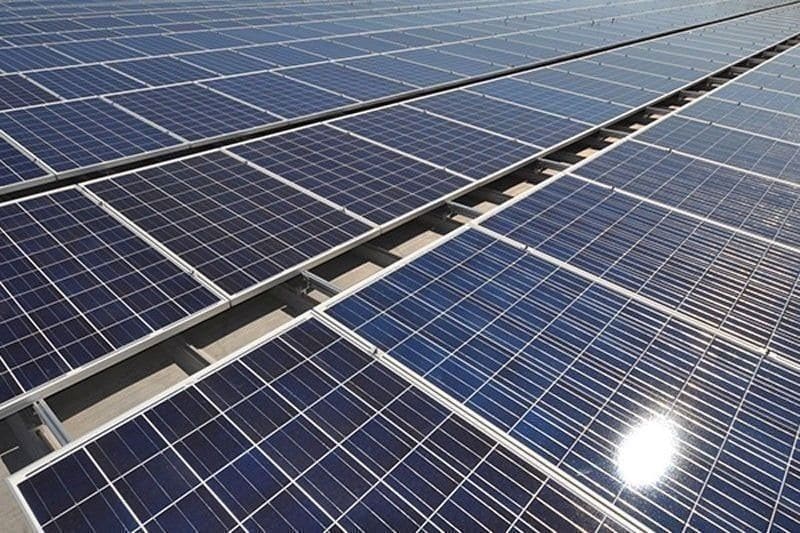
Raslag currently operates four ground-mounted solar plants totaling more than 77 megawatts across Pampanga, the country's central Luzon region. Earlier in 2026, it entered the wind sector by acquiring a 16 MW onshore wind project in Mindoro, bundled with six megawatt-hours of battery storage. That acquisition pushed the company's aggregate installed capacity to 93 MW.
Onshore Wind Only, Offshore Too Costly
While wind is now part of the portfolio, Raslag has drawn a clear boundary around the technologies it will pursue. Nepomuceno said the company is not interested in offshore wind, citing extended payback periods and prohibitively high upfront costs. The firm remains focused on onshore wind projects, which offer faster commissioning timelines and lower capital intensity.
That conservative stance contrasts with a handful of Philippine developers and international consortia that have secured offshore wind service contracts from the Department of Energy, some targeting multi-gigawatt capacities in waters off Luzon and the Visayas. Raslag's decision reflects a preference for asset-light expansion and quicker returns, particularly as it allocates capital to a flagship solar-plus-storage project.
140 MW Solar Plant With 100 MWh Storage
Raslag has earmarked up to three billion Philippine pesos for capital expenditure in 2026, with the bulk directed toward Raslag Liwayway, a 140 MW solar facility paired with 100 megawatt-hours of battery storage. The project, which would become the company's largest to date, is targeted for completion by 2028, according to CFO Karl Geo Origeneza.
Development is underway but remains in the permitting phase. Origeneza said the company is working to secure land-use conversions and the necessary approvals from the Department of Energy. To accelerate engineering and construction readiness, Raslag has engaged Greencity Energy Philippines Inc. as owner's engineer. Greencity, backed by a German technical team, will support the project through development, design review, procurement, construction, testing, and commissioning.
The Liwayway project's 100 MWh storage component is significant in a market where grid intermittency and ancillary service requirements are driving demand for co-located batteries. The Philippine grid operator has flagged capacity shortfalls during peak evening hours, and battery systems paired with solar can capture midday generation and dispatch it when demand peaks.
1,000 MW Target by 2036
Over the next ten years, Raslag is targeting at least 1,000 MW of installed renewable capacity, more than a tenfold increase from its current 93 MW base. That ambition positions the company among a cohort of mid-tier Philippine developers seeking to scale rapidly as corporate power purchase agreements and renewable energy certificates gain traction among industrial and commercial offtakers.
The government's Green Energy Auction program, which Raslag plans to enter, awards long-term power supply contracts to the lowest bidders, providing revenue certainty that can underpin project finance. The most recent auction round, held in late 2025, awarded contracts for more than 3,500 MW of solar, wind, and biomass capacity across multiple grid zones.
Raslag's pivot toward auction participation and floating solar suggests the company is diversifying its revenue model beyond merchant sales and bilateral contracts. Floating solar, while still a nascent segment in the Philippines, offers land-use efficiency and can be deployed on reservoirs, fishponds, and coastal lagoons where ground-mounted arrays face permitting or community opposition.
Regional Context
The Philippines remains one of Southeast Asia's most attractive renewable markets, buoyed by a feed-in tariff legacy, improving grid infrastructure, and a regulatory push to phase out coal. Yet the sector faces headwinds, including transmission bottlenecks, delayed interconnection approvals, and competition for developable land in high-irradiance zones.
Raslag's strategy reflects a calculated bet that solar-plus-storage and participation in centralized auctions can mitigate merchant price volatility while securing grid access. The company's decision to avoid offshore wind also highlights a broader industry debate in the region over technology risk, capital availability, and the pace at which nascent segments can achieve commercial viability.
With Liwayway on track and auction participation planned, Raslag is positioning itself for a decade of growth that hinges on execution, permitting speed, and the government's ability to deliver on its renewable energy targets.
RELATED STORIES

Philippine Green Energy Push Tests Grid Capacity as Pax Silica Hub Takes Shape
Priyanka V. Rao · 5 min
Philippines Regulator Tightens Oversight of Power Spot Market
Priyanka V. Rao · 3 min

Philippines Faces Prolonged Budget Deficit as Growth Slowdown Shifts Fiscal Timeline
Priyanka V. Rao · 3 min

Philippines Central Bank Set for Third Consecutive Rate Increase
Priyanka V. Rao · 3 min
Spot something wrong? Email editor@briefasia.com. We log every correction publicly.