Finance · Markets
Malaysian Palm Oil Climbs as Currency Weakness Offsets Biodiesel Headwinds
September futures gain 1.25% to RM4,536 per metric ton as weaker ringgit and rival oil strength counter bearish crude signals
KEY TAKEAWAYS
- ·Malaysian palm oil September futures rose RM56 to RM4,536 per metric ton, a 1.25% gain, as the ringgit weakened 0.1% against the dollar and rival soyoil prices climbed up to 1.67% on major exchanges.
- ·Falling crude oil prices and OPEC output increases reduce palm oil's appeal as biodiesel feedstock, while Malaysian inventories likely reached record highs for June as production outpaced demand growth.
- ·Technical support sits at RM4,440 per ton, with EU deforestation regulations and Southeast Asian biofuel mandates shaping medium-term demand dynamics for Malaysian and Indonesian producers.
Early Gains Break Two-Day Slide
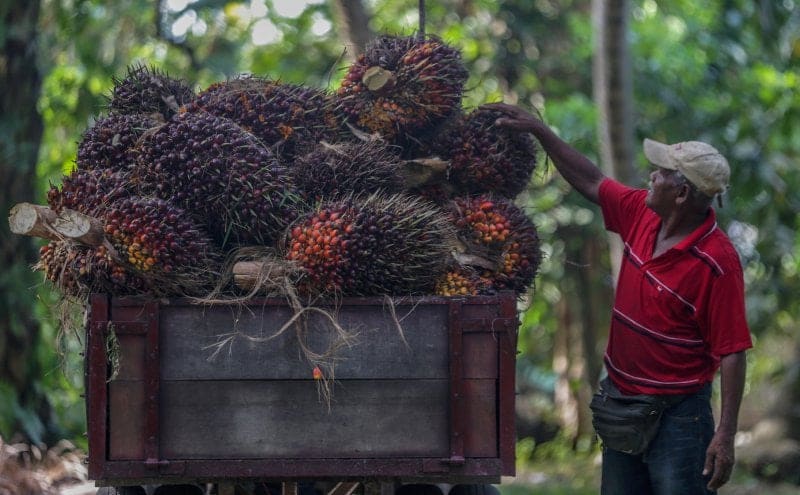
Malaysian palm oil futures climbed in early Monday trading, recovering from consecutive losses as currency movements and strength in competing vegetable oils provided support. The September benchmark contract on the Bursa Malaysia Derivatives Exchange advanced RM56 to RM4,536 per metric ton, a gain of 1.25 per cent.
The upward movement came despite persistent headwinds from crude oil markets and mounting domestic stockpiles. Traders pointed to a confluence of factors, with the ringgit's softness against the dollar playing a central role in lifting prices for foreign buyers.
Currency and Competing Oils Drive Momentum
The ringgit weakened 0.1 per cent against the dollar, a modest shift that nonetheless improved palm oil's competitiveness for importers holding foreign currency. While the depreciation was small, it contributed to the commodity's attractiveness in a market where pricing advantages matter at the margin.
Rival edible oils also posted gains across major exchanges. Dalian's most-active soyoil contract rose 0.96 per cent, while its palm oil contract increased 1.06 per cent. On the Chicago Board of Trade, soyoil prices climbed 1.67 per cent. These movements reflect broader dynamics in the global vegetable oils complex, where palm oil competes directly for market share in food processing, cosmetics, and industrial applications.
Palm oil and soyoil often move in tandem because buyers can substitute one for the other depending on relative pricing. When soyoil strengthens, palm oil typically follows, as processors adjust their purchasing strategies to maintain cost efficiency. This substitution effect has become more pronounced in recent years as refineries in Asia and Europe have invested in flexible processing capabilities.
Crude Oil Weakness Clouds Biofuel Demand
Yet the picture remains complicated. Crude oil prices edged lower on Monday after OPEC and its allies agreed to further increase output targets starting in August. At the same time, exports from key producers via the Strait of Hormuz are recovering, signaling potential additions to global supplies.
Weaker crude oil futures reduce the appeal of palm oil as a biodiesel feedstock. When petroleum-based fuels become cheaper, biofuel mandates and blending economics shift unfavorably for vegetable oil derivatives. This dynamic is particularly relevant in Southeast Asia, where Indonesia and Malaysia have implemented biodiesel blending programs to support domestic palm oil demand.
Indonesia's B35 mandate, which requires 35 per cent palm oil content in diesel fuel, has been a significant demand driver. Malaysia has a B20 program, though implementation has been slower. Both programs depend on crude oil pricing to remain economically viable. When crude falls, the cost differential narrows, and government subsidies or mandate enforcement become critical to maintaining biofuel uptake.
Inventory Pressures Build
Malaysian palm oil inventories likely rose in June to their highest level on record for that month, a survey conducted by a financial news service indicated. Production gains outpaced demand growth, adding to stockpile pressures that could weigh on prices in the months ahead.
Seasonal patterns typically see Malaysian output peak between July and October, driven by favorable weather conditions and the maturation cycle of oil palm trees. If demand does not keep pace, stockpiles could continue climbing, forcing exporters to cut prices or accept lower margins to clear inventories.
India and China remain the largest importers of Malaysian palm oil, but both markets face their own headwinds. India's import duties on edible oils have been adjusted multiple times in recent years, creating uncertainty for exporters. China's economic recovery has been uneven, with consumer spending and industrial activity showing mixed signals.
Broader Food Commodity Trends
World food prices edged lower in June, the United Nations' Food and Agriculture Organization reported. Declines in sugar, cereals, and dairy outweighed increases in vegetable oils and meat. The vegetable oils component of the FAO index rose, reflecting tightness in sunflower oil supplies due to ongoing disruptions in Black Sea export corridors, as well as concerns about soybean crop conditions in South America.
This divergence within the food commodity complex highlights the specific supply-and-demand dynamics affecting palm oil. While grains and sugar face abundant harvests and weak demand, vegetable oils are navigating a more constrained environment shaped by geopolitical disruptions, weather events, and biofuel policy shifts.
Technical Outlook and Market Sentiment
Technical analysis suggests palm oil may extend recent losses toward support at RM4,440 per metric ton before stabilizing and potentially rebounding. That level represents a key threshold where buyers have historically stepped in, viewing prices as attractive relative to production costs and long-term demand fundamentals.
Asian equity markets were mostly firmer on Monday, with Wall Street futures starting the week with gains on expectations of a strong earnings season. Easing oil prices offered relief from inflationary pressures, a sentiment that could support risk appetite across commodity markets. However, palm oil's trajectory will depend more on sector-specific factors than broader market sentiment.
Regional Context and Policy Variables
Southeast Asia's palm oil industry faces a delicate balancing act. Environmental scrutiny over deforestation and sustainability practices has intensified, particularly from European buyers who are implementing stricter supply chain traceability requirements. The European Union's deforestation regulation, set to take effect in phases, will require proof that palm oil imports are not linked to forest clearing after a specified cutoff date.
These regulatory shifts are forcing Malaysian and Indonesian producers to invest in certification programs and satellite monitoring systems. While compliance costs are rising, access to premium markets depends on meeting these standards. Producers who can demonstrate sustainable practices may command higher prices, creating a bifurcated market where certified and non-certified palm oil trade at different levels.
At the same time, domestic consumption in Southeast Asia continues to grow. Rising incomes and urbanization are driving demand for processed foods, cosmetics, and consumer goods that use palm oil as an ingredient. This regional demand base provides a buffer against volatility in export markets, though it is not sufficient to absorb the full scale of Malaysian and Indonesian production.
The interplay between currency movements, rival oil pricing, crude oil dynamics, and inventory levels will continue to shape near-term price action. For now, the ringgit's weakness and gains in soyoil have provided a temporary lift, but the underlying fundamentals remain mixed. Traders will be watching July production data and export figures closely for clues about the balance between supply and demand heading into the peak production season.
RELATED STORIES
Malaysian Palm Oil Giant KLK Swings to RM1.34 Billion Quarterly Loss
Priyanka V. Rao · 3 min
Ringgit Strengthens as Malaysia's Stable Rates Signal Policy Flexibility
Mariel D. Santos · 3 min
Ringgit Gains Ground as Traders Await Fed Chair Warsh's Jackson Hole Address
Priyanka V. Rao · 3 min
Malaysia's KLCI Index to Add 20 Stocks in Phased Expansion
Jun-ho Seo · 2 min
Spot something wrong? Email editor@briefasia.com. We log every correction publicly.