Finance · Markets
Ringgit Gains Ground as Traders Await Fed Chair Warsh's Jackson Hole Address
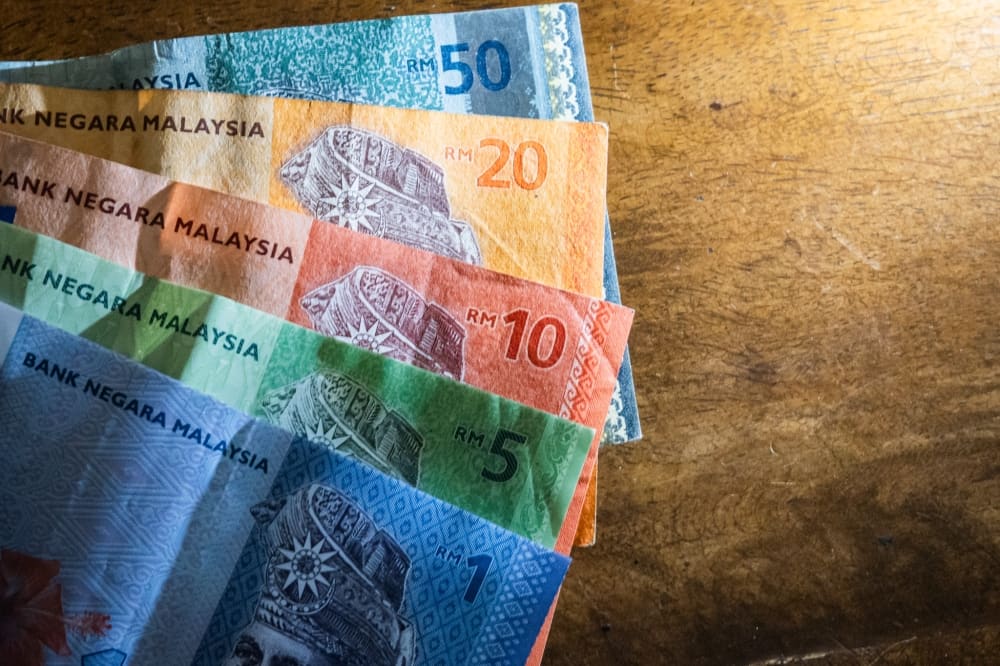
Malaysia's currency strengthened against the dollar on softer US Treasury yields and a weaker greenback, with market focus shifting to the Federal Reserve's policy signals this week.
KEY TAKEAWAYS
- ·The ringgit opened at 4.0380 per US dollar Wednesday, strengthening from 4.0405 on Monday as 30-year US Treasury yields declined six basis points to 5.17 percent.
- ·Fed Chair Kevin Warsh's Jackson Hole speech this week will be closely watched for policy signals, with markets expecting potential pivot away from elevated interest rates.
- ·The ringgit gained against most Southeast Asian peers, rising to 227.8 per 100 Indonesian rupiah and 6.54 per Philippine peso, while slipping marginally versus the Singapore dollar.
Morning Session Strength
The ringgit opened at 4.0380 per US dollar on Wednesday morning, improving from Monday's close of 4.0405, as the Malaysian currency capitalized on weakening momentum in the greenback. Markets had been closed Tuesday for Prophet Muhammad's birthday, condensing two days of sentiment shifts into the Wednesday open.
The move came alongside a six basis point decline in 30-year US Treasury yields, which fell to 5.17 percent. The US Dollar Index dropped 0.10 percent to 98.905 points, reflecting broader softness in the American currency across global markets.
Mohd Afzanizam Abdul Rashid, chief economist at Bank Muamalat Malaysia, pointed to the Treasury Department's potential use of the Treasury General Account to fund its bond buyback programme as a factor pressuring yields. The account holds cash reserves parked at the Federal Reserve, and tapping it could reduce the need for fresh debt issuance in the near term.
Policy Uncertainty and Jackson Hole
With the Federal Reserve's next policy move still uncertain, market participants are turning their attention to Jackson Hole, Wyoming, where Fed Chair Kevin Warsh is scheduled to speak this week at the annual economic symposium. The event has historically served as a platform for central bank leaders to signal shifts in monetary policy thinking.
The ringgit's strengthening reflects broader expectations that US authorities may pivot away from maintaining elevated interest rates, a scenario that would reduce the dollar's yield advantage and support emerging market currencies. However, until Warsh provides clearer guidance, traders remain in wait-and-see mode.
Cross-Currency Performance
Against other major currencies, the ringgit showed mixed results. It edged higher versus the Japanese yen, moving to 2.5360 from 2.5380 at Monday's close. However, it weakened against the British pound, slipping to 5.5099 from 5.5080, and declined marginally versus the euro, moving to 4.7140 from 4.7132.
Within Southeast Asia, the ringgit posted gains across most regional peers. It firmed to 227.8 per 100 Indonesian rupiah from 227.9, improved to 6.54 per Philippine peso from 6.55, and strengthened to 12.3486 per Thai baht from 12.3589. The Singapore dollar proved the exception, with the ringgit slipping to 3.1810 from 3.1805.
Regional Capital Flow Dynamics
The ringgit's performance fits within a broader pattern of capital repositioning across Asia as investors reassess rate differentials and growth outlooks. Malaysia's current account surplus and relatively stable inflation environment have provided fundamental support for the currency, even as global volatility persists.
Treasury yield movements remain a critical variable. A sustained decline in long-term US rates would likely encourage further inflows into Asian fixed income and equity markets, where real returns remain attractive relative to developed markets. Conversely, any hawkish signals from Jackson Hole could reverse recent gains and reignite dollar strength.
What Comes Next
The next 48 hours will prove decisive for near-term currency direction. Warsh's speech will be parsed for clues on the Fed's tolerance for current yield levels, its assessment of inflation risks, and any hints about the pace of future policy adjustments. Markets are particularly sensitive to language around the neutral rate and the Fed's reaction function given recent economic data.
For the ringgit, continued strength will depend on a combination of external factors, particularly dollar weakness and stable commodity prices, alongside domestic fundamentals. The currency has demonstrated resilience in recent sessions, but the path forward hinges on signals from the world's most influential central bank.
RELATED STORIES
Ringgit Rally Faces Correction Risk as Fed Chair Takes Stage
Cheng Wei-Lun · 3 min
Malaysian Ringgit Climbs on Export Strength as Markets Eye Fed Signals
Priyanka V. Rao · 3 min
Ringgit Strengthens to 4.0365 Against Dollar as US Fiscal Concerns Offset Treasury Yield Gains
Priyanka V. Rao · 2 min
Ringgit Weakens as Iran Sanctions and Jackson Hole Loom Over Markets
Priyanka V. Rao · 3 min
Spot something wrong? Email editor@briefasia.com. We log every correction publicly.