Finance · Markets
Ringgit Rally Faces Correction Risk as Fed Chair Takes Stage
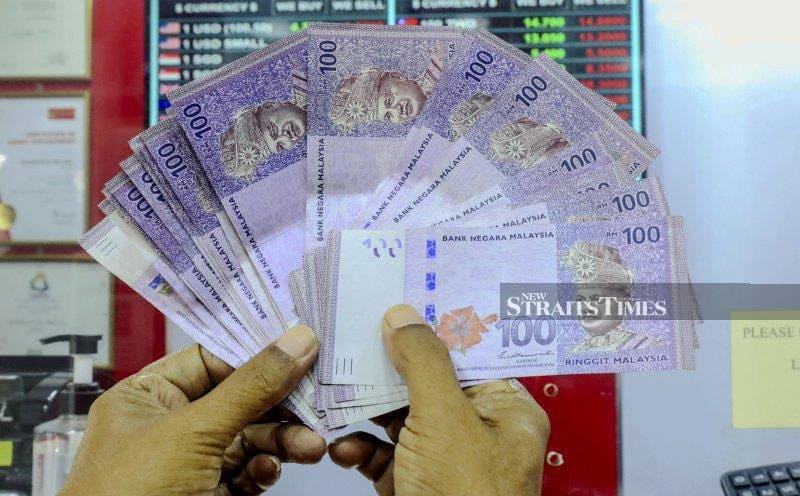
Malaysia's currency ended six-day surge at 4.0365 per dollar, with analysts warning profit-taking may follow Jackson Hole comments
KEY TAKEAWAYS
- ·Malaysia's ringgit ended at 4.0365 per US dollar after a six-day rally, strengthening 1.2 percent week-over-week from 4.0840.
- ·Kenanga Research warns profit-taking may emerge if Fed Chair Kevin Warsh delivers less dovish guidance at the Jackson Hole Symposium on August 27-29.
- ·The currency is projected to trade within 4.04 to 4.06 range, with upside capped unless geopolitical tensions involving Iran escalate significantly.
Rally Momentum Meets Reality Check
Malaysia's ringgit ended Friday at 4.0365 per US dollar, capping a six-day climb that left the currency vulnerable to near-term reversals. The sustained appreciation has pushed technical indicators into oversold territory, setting the stage for potential profit-taking depending on signals from the US Federal Reserve leadership.
Kenanga Research flagged the Jackson Hole Economic Symposium, scheduled for August 27-29, as the critical inflection point. If Fed Chair Kevin Warsh delivers remarks that fall short of market expectations for dovish policy pivots, the ringgit's recent gains could evaporate quickly. The symposium has historically served as a venue for central bank chiefs to telegraph policy direction ahead of formal committee meetings.
The ringgit strengthened roughly 1.2 percent on a week-over-week basis, moving from 4.0840 on the previous Friday to its latest close. That pace of appreciation, while welcomed by importers and dollar-liability holders, has created conditions ripe for position unwinding among short-term traders.
Trading Band and Downside Triggers
Kenanga Research projects the dollar-ringgit pair will trade within a 4.04 to 4.06 range in the coming sessions. The firm expects an early corrective bounce, a technical term for a temporary reversal after a sharp move, before the ringgit resumes its strengthening trend. The 4.06 level would only break if geopolitical tensions involving Iran escalate, introducing fresh risk premiums into currency markets.
Before Jackson Hole takes center stage, market participants will parse the US personal consumption expenditures inflation report due August 26. PCE is the Fed's preferred inflation gauge, and any surprise in either direction could shift rate-cut expectations ahead of the Federal Open Market Committee meeting on September 15-16.
The upcoming FOMC gathering looms large. Traders have priced in varying probabilities of a rate cut, and Warsh's Jackson Hole commentary will either validate or challenge those bets. A hawkish tilt would likely strengthen the dollar across the board, pressuring Asian currencies including the ringgit.
Cross-Currency Performance
Against major currencies, the ringgit posted mixed results. It gained ground versus the British pound, closing at 5.5118 compared to 5.5232 a week earlier, and appreciated against the Japanese yen to 2.5449 from 2.5660. However, it slipped marginally against the euro, ending at 4.7227 versus the prior week's 4.7182.
Within Southeast Asia, the ringgit advanced against most peers. It strengthened to 6.54 per Philippine peso from 6.64, improved to 3.1809 per Singapore dollar from 3.1924, and firmed to 228.1 per 100 Indonesian rupiah from 229.0. The sole exception was the Thai baht, against which the ringgit eased to 12.3474 from 12.3153.
The divergence in regional currency performance reflects varying monetary policy stances and growth outlooks. Thailand's baht has benefited from tourism recovery and relatively stable inflation, while the Philippine peso and Indonesian rupiah face headwinds from current account dynamics and domestic rate trajectories.
What Drives the Ringgit Next
Malaysia's currency remains sensitive to three vectors: US monetary policy signals, commodity price movements, and domestic economic data. The country's export profile, heavy in electronics and palm oil, ties the ringgit's fortunes to global demand cycles and supply-chain shifts.
The six-day rally was partly driven by market repricing of Fed rate-cut odds following softer US inflation prints earlier in August. If Warsh pushes back against aggressive easing expectations, that repricing will reverse, and carry trades favoring higher-yielding Asian assets could unwind.
Portfolio flows into Malaysian equities and government securities have also supported the ringgit. Foreign holdings of Malaysian government bonds have climbed steadily this year, attracted by yield differentials and expectations of currency appreciation. Any shift in Fed guidance that narrows those differentials would test the durability of those inflows.
Analysts will also monitor Malaysia's own economic indicators due in early September, including industrial production and trade balance figures. Strong export numbers would reinforce the ringgit's fundamental case, while disappointing data could amplify profit-taking pressures.
The interplay between technical exhaustion and event risk defines the ringgit's near-term path. Traders holding long ringgit positions will weigh locking in gains against the possibility that dovish Fed signals extend the rally further. The next week will clarify whether the recent strength marks a durable shift or a temporary overshoot.
RELATED STORIES
Malaysian Stocks Hover Near Flat as Fed Symposium Looms
Cheng Wei-Lun · 3 min
Ringgit Strengthens as US Debt Burden Pressures Dollar
Priyanka V. Rao · 3 min
Malaysian Ringgit Faces Profit-Taking Risk After Six-Day Rally
Cheng Wei-Lun · 2 min
Ringgit Strengthens to 4.0365 Against Dollar as US Fiscal Concerns Offset Treasury Yield Gains
Priyanka V. Rao · 2 min
Spot something wrong? Email editor@briefasia.com. We log every correction publicly.