Asia · Business
Malaysia's Second-Quarter GDP Hits 6 Percent on Exports and Domestic Demand
Southeast Asian economy outperforms forecasts as household spending and trade flows offset geopolitical headwinds
KEY TAKEAWAYS
- ·Malaysia's economy expanded 6 percent year-on-year in Q2 2026, exceeding the 5.8 percent forecast and accelerating from 5.4 percent in Q1.
- ·All sectors except agriculture posted gains, with export strength and steady household spending driving growth despite Middle East conflict risks.
- ·Bank Negara Malaysia expects full-year 2026 growth near 5 percent and held interest rates steady for the sixth consecutive meeting amid contained inflation.
Stronger Performance Across the Board
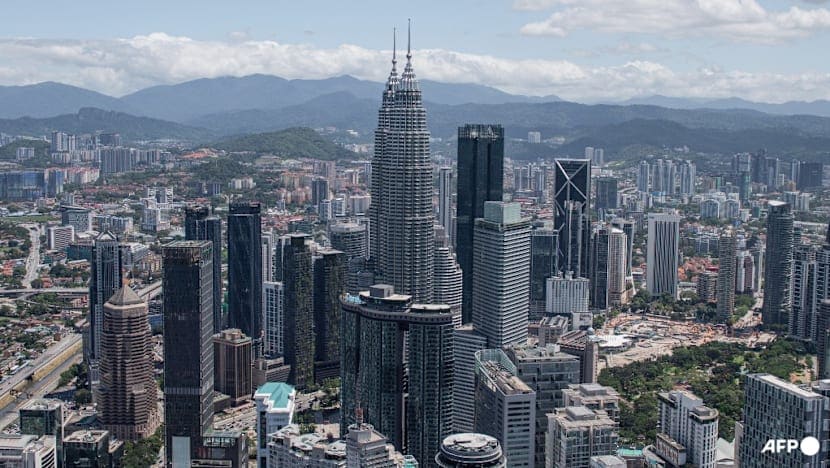
Malaysia's economy expanded 6 percent year-on-year in the second quarter of 2026, according to figures released by the Statistics Department and Bank Negara Malaysia. The result topped both the official advance estimate of 5.8 percent and the consensus forecast among economists, while marking an acceleration from the 5.4 percent growth recorded in the first quarter.
Broad-based sectoral gains underpinned the quarter's performance. All major segments except agriculture posted improved output, data showed, with manufacturing and services leading the expansion. The uptick reflects sustained momentum in export-oriented industries and steady consumption by Malaysian households, even as regional economies navigate uncertainty tied to the Middle East conflict.
Export Resilience and Domestic Foundations
Trade flows remained robust through the quarter. Stronger demand for Malaysian electronics, commodities, and manufactured goods supported industrial activity, while domestic consumption held steady despite external volatility. Household spending, a traditional pillar of Malaysia's GDP, continued to benefit from employment stability and targeted government assistance programs, including fuel subsidies that have cushioned cost pressures for consumers.
Investment activity also contributed to the upside. Private capital expenditure in infrastructure, technology, and services sectors maintained traction, signaling confidence in the medium-term economic outlook. Public investment, meanwhile, stayed on track with government development plans aimed at upgrading digital infrastructure and transport networks.
Inflation Outlook and Policy Stance
Bank Negara Malaysia Governor Abdul Rasheed Ghaffour said the central bank expects full-year 2026 growth to approach 5 percent, at the upper end of its 4 to 5 percent projection range. That would represent a modest improvement over the 5.2 percent expansion recorded in 2025.
The governor highlighted that commercial demand is expected to remain resilient, driven by household spending and continued investment. He noted that the central bank views its current monetary policy stance as appropriate given the outlook for price stability and sustainable growth.
Inflation is projected to remain contained this year, according to Abdul Rasheed. Government subsidies on fuel and other essential goods, along with targeted assistance measures, have helped keep price increases in check. However, the central bank acknowledged that higher global commodity prices could exert upward pressure on consumer costs in the months ahead.
Last month, Bank Negara Malaysia held its benchmark interest rate steady for the sixth consecutive policy meeting, reflecting confidence that inflation remains manageable and growth is on a solid footing.
Regional Context and Geopolitical Factors
Malaysia's performance stands out in Southeast Asia, where several economies face headwinds from tighter global financial conditions and uneven post-pandemic recoveries. The country has largely insulated itself from shocks stemming from the Middle East conflict through a combination of diversified trade partners, strong domestic consumption, and prudent fiscal management.
While the conflict has disrupted energy markets and supply chains in some regions, Malaysia's export base has proven adaptable. Shipments to key markets in Asia, Europe, and North America have remained steady, and the country's position as a semiconductor and electronics hub has benefited from persistent global demand for tech hardware.
The agricultural sector's underperformance in the second quarter was a notable exception to the otherwise positive picture. Weather-related disruptions and commodity price volatility weighed on output, though the impact was limited given agriculture's smaller share of overall GDP.
Outlook and Momentum
With half the year now complete, Malaysia's economic trajectory suggests the country is on track to meet or exceed official growth targets. The combination of export strength, stable domestic demand, and controlled inflation provides a solid foundation heading into the second half of 2026.
Key risks remain, including potential escalation of geopolitical tensions, shifts in global monetary policy, and commodity price swings. However, the resilience demonstrated in the second quarter indicates that Malaysia's diversified economy is well positioned to navigate near-term uncertainties while maintaining steady expansion.
RELATED STORIES
Malaysia Set to Exceed 5 Percent Growth in 2026 on Tech Exports and Resilient Demand
Priyanka V. Rao · 4 min

Malaysia's Gig Worker Law Covers 1.64 Million, But Gaps Remain
Priyanka V. Rao · 4 min
Malaysia's FGVPI Sets Billion-Ringgit Target Amid Business Model Overhaul
Priyanka V. Rao · 3 min

Malaysia Regains Ground as Asia's Cocoa Processing Hub
Priyanka V. Rao · 2 min
Spot something wrong? Email editor@briefasia.com. We log every correction publicly.