Asia · Business
Malaysia's FGVPI Sets Billion-Ringgit Target Amid Business Model Overhaul
The country's largest palm oil mill operator is pivoting to direct oil sales and investing heavily in workforce productivity to quadruple profits by decade's end.
KEY TAKEAWAYS
- ·FGV Palm Industries is targeting RM1 billion in pre-tax profit by 2030, starting from RM400 million in 2027, through a business model shift launching October 1.
- ·The company is investing RM45 million in developing its 5,800 employees and aims for a 30 percent annual productivity increase to support the transition.
- ·FGVPI operates 63 mills maintaining above 21 percent oil extraction rates and is pushing palm kernel recovery beyond five percent to raise returns for FELDA settlers.
Repositioning for Growth
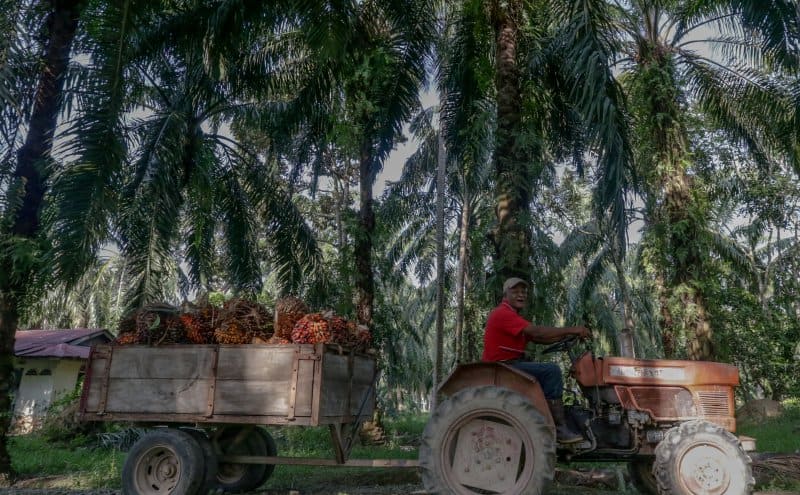
FGV Palm Industries (FGVPI), Malaysia's largest palm oil mill operator, is pursuing an ambitious profit target of RM1 billion before tax by 2030, underpinned by a fundamental restructuring of its business operations and a significant investment in workforce capability.
The subsidiary of FGV Holdings operates 63 mills across Malaysia, processing fresh fruit bunches from smallholders and Federal Land Development Authority (FELDA) settler communities. Now it is abandoning its traditional primary processor role in favor of what CEO Hamdan Ismail describes as a "buy fruit, sell oil" model, set to launch October 1.
The strategy represents a bet that moving closer to end markets will unlock higher margins. FGVPI has mapped a steep profit trajectory: RM400 million in 2027, RM600 million in 2028, RM800 million in 2029, and the billion-ringgit milestone the following year, according to Hamdan.
"By moving towards direct oil sales, we are positioning FGVPI as a high-value profit-generating entity," Hamdan said during a ceremony recognizing non-formal education partnerships with the Malaysia Productivity Corporation in Bangi.
Human Capital as the Lever
The company is allocating RM45 million to develop its 5,800-strong workforce, targeting a 30 percent annual productivity increase. That figure is not arbitrary: Hamdan insists the math supports it, even as he acknowledges the scale of the challenge.
The logic is straightforward. Competent workers drive efficient operations, which lift productivity and sharpen competitive positioning. For a company processing fruit from thousands of smallholders and settler families, operational gains at the mill level cascade through the entire value chain.
FGVPI has already demonstrated technical capability. It maintains an oil extraction rate above 21 percent across all mills, with the Chuping facility reaching 24 percent. Those are industry-leading figures in a sector where even marginal efficiency gains translate to significant volume.
Settler Economics in Focus
Beyond extraction rates, FGVPI is pushing to exceed the industry's five percent palm kernel recovery benchmark. Higher recovery rates mean higher fruit prices paid to FELDA settlers, a constituency that numbers in the millions when extended families are counted.
Hamdan framed this as both a commercial and a social imperative. Better returns keep the economic cycle moving within settler communities, which remain a critical pillar of rural Malaysia's economy. For FGV, a company with deep ties to FELDA, the calculus is inseparable from its operating license.
The palm kernel push also reflects a broader trend in the Malaysian palm oil sector: extracting more value from every ton of fresh fruit bunches as global buyers demand better traceability and sustainability credentials. Companies that can demonstrate operational excellence and fair pricing to upstream suppliers are better positioned in export markets increasingly sensitive to supply chain practices.
The Execution Question
The trajectory FGVPI has outlined is steep. Moving from primary processing to direct oil sales requires new commercial capabilities, market intelligence, and risk management infrastructure. The company will be competing not just on volume but on timing, quality specification, and customer relationships.
The RM45 million workforce investment signals recognition that mills alone will not deliver the target. The company needs agronomists, logistics coordinators, quality control specialists, and market analysts who can operate in a more dynamic commercial environment.
Whether the 30 percent productivity gain materializes will depend on how effectively FGVPI can retrain and redeploy its existing workforce while attracting new talent to an industry that has struggled with labor shortages and an aging demographic profile.
The October 1 transition date is now the line in the sand. FGVPI's ability to hit its 2027 milestone will offer the first real test of whether the business model shift can deliver the margins Hamdan has projected, and whether Malaysia's largest mill operator can redefine its role in the regional palm oil value chain.
RELATED STORIES

Malaysia's Gig Worker Law Covers 1.64 Million, But Gaps Remain
Priyanka V. Rao · 4 min
Malaysia Regains Ground as Asia's Cocoa Processing Hub
Priyanka V. Rao · 2 min
Malaysia's Natural Rubber Output Jumps on Smallholder Strength
Priyanka V. Rao · 3 min
Malaysia's Banking System Gains Momentum as Business Lending Climbs to 7.2 Percent
Priyanka V. Rao · 4 min
Spot something wrong? Email editor@briefasia.com. We log every correction publicly.