Sustainability · Energy
India's Ethanol Fuel Shift Draws Scrutiny Over Vehicle Compatibility
Scientists and analysts question impact on fuel economy and older vehicles as E20 rollout accelerates nationwide
KEY TAKEAWAYS
- ·India is accelerating deployment of E20 ethanol-blended fuel nationwide, but most vehicles on the road were not designed for 20% ethanol content.
- ·Scientists and analysts warn of reduced fuel efficiency and increased wear on older vehicles, with agricultural surplus management appearing as a policy driver alongside emissions goals.
- ·The gap between policy rollout and vehicle fleet compatibility creates transitional costs that will likely be absorbed by millions of drivers.
Compatibility Concerns Surface
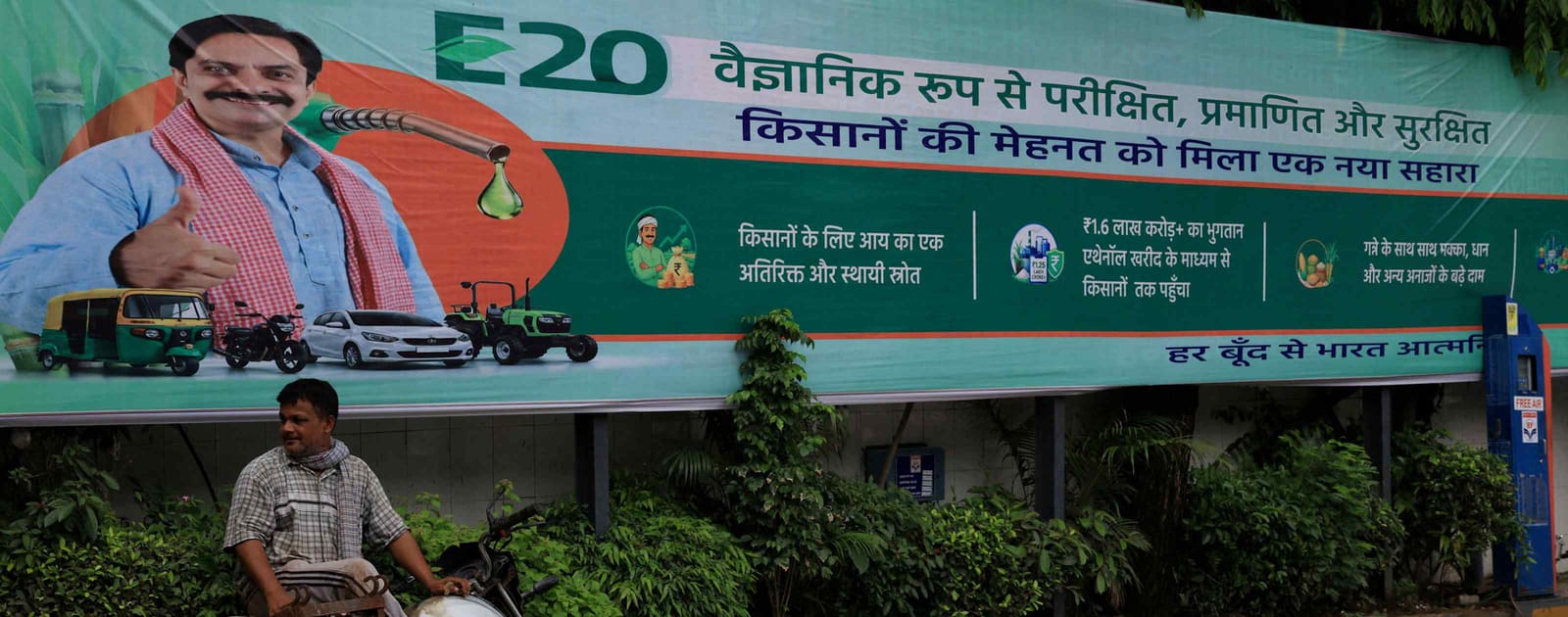
India's accelerated transition to ethanol-blended petrol is encountering resistance from scientists and industry analysts who warn that most vehicles currently on Indian roads lack full compatibility with the higher blend ratios now being deployed at fuel stations across the country.
The government has pushed forward with E20 fuel, which contains 20% ethanol mixed with petrol, as part of a broader strategy to reduce crude oil imports and lower carbon emissions. Yet the majority of India's vehicle fleet was designed for lower ethanol concentrations, raising practical questions about fuel economy losses and accelerated component degradation.
Industry observers note that older vehicles, which comprise a significant portion of India's automotive landscape, face particular challenges. Ethanol's chemical properties differ from conventional petrol in ways that affect engine performance, fuel system materials, and overall efficiency. Vehicles not engineered for higher ethanol ratios may experience reduced mileage and increased maintenance costs.
Policy Drivers Beyond Environment
The push for ethanol blending appears linked to agricultural production patterns, specifically India's recurring surpluses of rice and sugarcane. These commodities serve as primary feedstocks for ethanol production, and the biofuel program offers an outlet for excess agricultural output that might otherwise strain storage infrastructure or depress farm-gate prices.
India's sugar industry has already begun reorienting away from export markets toward domestic ethanol production, a shift that reflects both policy incentives and changing global trade dynamics. The ethanol mandate effectively creates guaranteed domestic demand for crops that have historically been subject to volatile international pricing.
This agricultural dimension adds complexity to what is officially framed as an environmental and energy security initiative. While reducing dependence on imported crude oil remains a legitimate policy goal, particularly given India's position as the world's third-largest oil importer, the alignment with agricultural surplus management suggests multiple motivations behind the accelerated timeline.
Infrastructure and Consumer Impact
Fuel retailers have invested in blending infrastructure, but the consumer-facing implications remain under-examined in public discourse. Drivers of non-compatible vehicles report measurably lower kilometers per liter, which can offset the modest price advantage ethanol-blended fuel sometimes carries at the pump.
The wear-and-tear question centers on fuel system components. Ethanol is hygroscopic and more corrosive than conventional petrol, potentially affecting rubber seals, fuel lines, and injector systems in vehicles manufactured before compatibility standards were updated. Repair costs for these components could accumulate over time, particularly for lower-income vehicle owners operating older models.
India's automotive manufacturers have begun producing E20-compatible vehicles, but fleet turnover happens slowly. The gap between policy implementation and vehicle stock readiness creates a transitional period in which millions of drivers operate vehicles under conditions they were not designed for.
Regional Precedents and Lessons
Other Asian markets offer instructive precedents. Thailand introduced ethanol blending over a longer timeline with phased compatibility requirements, allowing vehicle manufacturers and consumers to adapt gradually. Brazil, though not in Asia, achieved high ethanol adoption rates only after decades of coordinated policy, infrastructure investment, and vehicle fleet transformation.
India's compressed implementation schedule reflects both ambition and urgency but may underestimate the practical friction inherent in transforming a nation's fuel system. The country's fuel retailers absorbed nearly two billion dollars in losses shielding consumers from energy price volatility in recent years, indicating limited appetite for further consumer cost burdens.
What Comes Next
The government has not publicly addressed the compatibility concerns raised by independent scientists and analysts, maintaining focus on emissions reduction targets and energy security metrics. Whether adjustments to the rollout timeline or additional consumer support measures emerge will depend partly on how vocal vehicle owners become about mileage losses and repair costs.
India's ethanol program will likely proceed regardless, given the convergence of agricultural, energy, and environmental policy interests behind it. The question is whether the implementation can be refined to account for the realities of the existing vehicle fleet, or whether those realities will simply be absorbed as transitional costs by millions of individual drivers.
RELATED STORIES

India Deploys Cable Cars to Cut Urban Congestion
Rajesh K. Iyer · 2 min

India Pours $8.8 Billion Into Deep-Sea Drilling to Shift Away From Middle East Oil
Rajesh K. Iyer · 3 min
Eureka Forbes Launches Probe After Child Labor Found at New Delhi Supplier
Priyanka V. Rao · 2 min

India's Battery Materials Industry Outpaces Stalled Cell Production
Priyanka V. Rao · 3 min
Spot something wrong? Email editor@briefasia.com. We log every correction publicly.