Sustainability · Mobility
India Deploys Cable Cars to Cut Urban Congestion
Government plans 250 aerial gondola lines nationwide after Himachal Pradesh pilot eases mountain city commutes
KEY TAKEAWAYS
- ·India plans to build at least 250 aerial gondola lines nationwide after a Tata-built cable car in Dharamshala, Himachal Pradesh, successfully eased congestion since 2022.
- ·Cable cars suit India's hilly terrain and crowded cities by requiring minimal land, faster construction than metros, and serving both commuters and tourists.
- ·The Modi government is coordinating the rollout centrally, though financing, approvals, and environmental clearances will test the program's execution speed.
A New Altitude for Urban Mobility
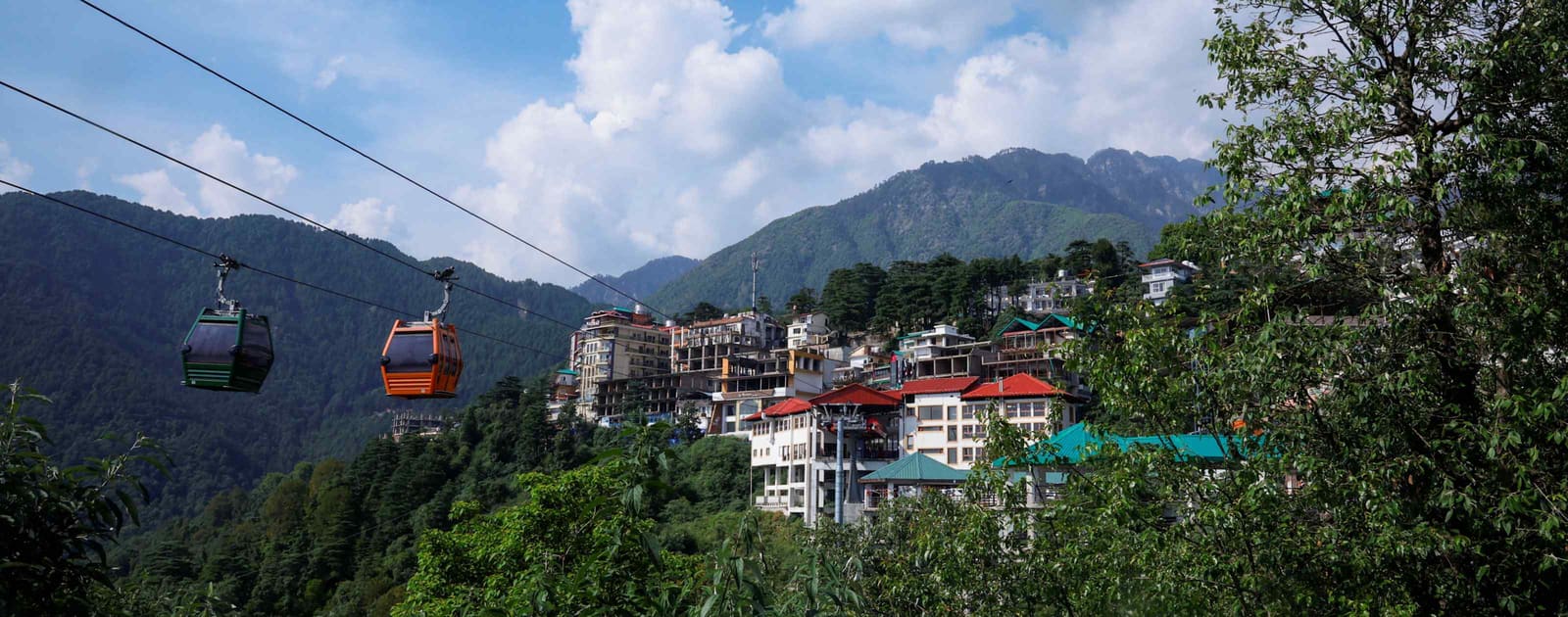
India is betting on the sky to solve its ground-level traffic crisis. The central government has launched an ambitious program to build at least 250 aerial gondola lines across the country, drawing on the success of a 2022 pilot project in the Himalayan foothills.
The Dharamshala Skyway in Himachal Pradesh state, constructed by a Tata Group subsidiary, has demonstrated how cable transport can bypass congested mountain roads. The system now moves both daily commuters and tourists through the alpine city, cutting journey times that once stretched into hours on winding, jam-packed routes.
For families like Bipin Singh's, who escape New Delhi's summer heat for the hills, the infrastructure shift is tangible. What used to mean crawling through switchback traffic now includes an aerial option that glides over the bottlenecks.
Why Cable Cars Fit India's Geography
India's urban centers face a compound mobility problem. Rapid population growth has outpaced road construction, while hilly terrain in states like Himachal Pradesh, Uttarakhand, and parts of the Northeast makes conventional transit expensive and slow to build. Cable cars require minimal ground footprint, avoid land acquisition battles, and can be installed faster than metro lines or highway expansions.
The technology also suits tourist economies. Hill stations like Mussoorie and Shimla draw millions of visitors annually, and their narrow colonial-era roads buckle under peak-season loads. Aerial systems offer a dual benefit: easing local commutes while enhancing visitor experience.
Scaling Beyond the Pilot
The Modi administration is driving the rollout centrally, coordinating with state governments to identify routes. Priority corridors include congested pilgrimage sites, tourist hubs, and cities hemmed in by rivers or mountains. The target of 250 lines represents a significant infrastructure commitment, though timelines remain fluid.
Financing and execution will test the program's momentum. The Dharamshala project benefited from Tata's engineering capacity and state backing, but replicating that model across dozens of locations will require streamlined approvals, private sector participation, and coordination between transport and tourism ministries.
Regional Context
India is not alone in turning to aerial transit. Southeast Asian cities from Hanoi to Jakarta have explored cable cars to supplement overburdened metro networks. Singapore's cable car remains a tourist draw, while Bangkok has studied gondola links to riverside districts. Latin American cities like Medellín and La Paz pioneered urban cable transit in steep informal settlements, demonstrating that the technology works beyond ski resorts.
For India, the appeal lies in leapfrogging conventional infrastructure in difficult terrain. If the program maintains pace, it could reshape how secondary cities handle growth and how pilgrimage and tourism circuits manage seasonal surges.
What Comes Next
Execution speed will determine whether this becomes a signature mobility initiative or another stalled vision. The government has yet to publish a detailed rollout schedule or funding breakdown. Environmental clearances, especially in ecologically sensitive hill zones, will add layers of approval.
Still, the Dharamshala line offers proof of concept. As urban India grapples with heat, pollution, and gridlock, cable cars present a vertical escape route, both literally and strategically.
RELATED STORIES
Google's $15 Billion India Data Center Sparks Water Crisis Fears
Priyanka V. Rao · 3 min
Tata Group Shares Sink More Than 5% Following Chandrasekaran Resignation
Priyanka V. Rao · 3 min

India Pours $8.8 Billion Into Deep-Sea Drilling to Shift Away From Middle East Oil
Rajesh K. Iyer · 3 min

Indonesia and India Strike Deal to Exchange AI Tools for National Statistics
Siti Nuraini · 3 min
Spot something wrong? Email editor@briefasia.com. We log every correction publicly.