Sustainability · Nature
Google's $15 Billion India Data Center Sparks Water Crisis Fears
Activists in Andhra Pradesh challenge tech giant's largest-ever investment amid concerns over strained water supplies and wildlife sanctuary proximity
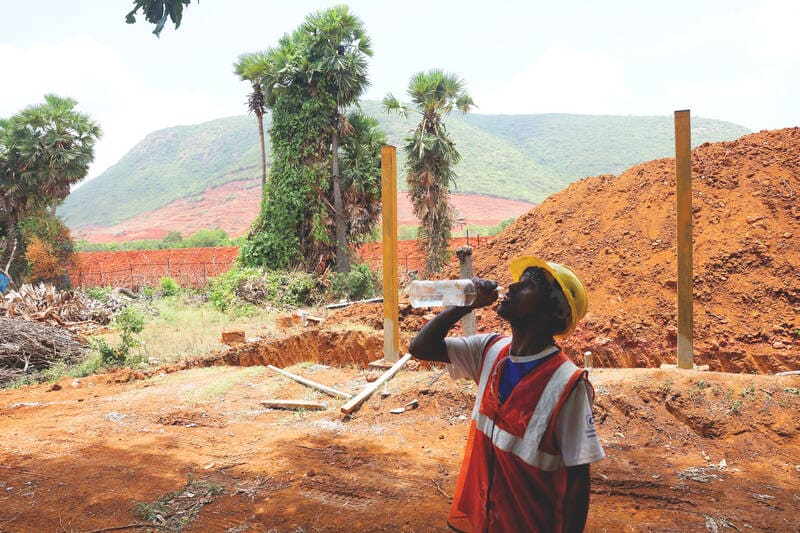
KEY TAKEAWAYS
- ·Google's $15 billion data center project in Andhra Pradesh faces multiple court challenges over water supply impact in Visakhapatnam, a city that receives 410 million liters daily against a 480 million liter requirement.
- ·Activist groups including Jal Biradari and Human Rights Forum argue the state approved the project without adequate environmental review, with the high court scheduled to hear arguments on August 24.
- ·The facility sits 860 meters from Kambalakonda Wildlife Sanctuary and has drawn protests from residents concerned about 20-year guaranteed water allocations while the city operates under rationing.
Legal Challenges Mount
Google's largest-ever investment in India faces a growing wave of legal and community opposition centered on water access and environmental impact. The company's $15 billion data center project in Andhra Pradesh, developed in partnership with Gautam Adani's infrastructure group, is now the subject of multiple court challenges questioning whether the state fast-tracked approvals without adequate environmental review.
Visakhapatnam, the coastal city where construction is underway, already operates under water rationing. The city receives 410 million liters daily from reservoirs and rivers against a requirement of 480 million liters, according to government figures. Activist group Jal Biradari filed a public interest litigation at Andhra Pradesh High Court alleging the project would place additional strain on a nearby reservoir, with the next hearing scheduled for August 24.
Three additional cases at India's environmental court demand a halt to construction. The Human Rights Forum argues the state cleared the project without properly assessing the impact on a rural drinking-water scheme that supplies the area.
Construction Continues Amid Protests
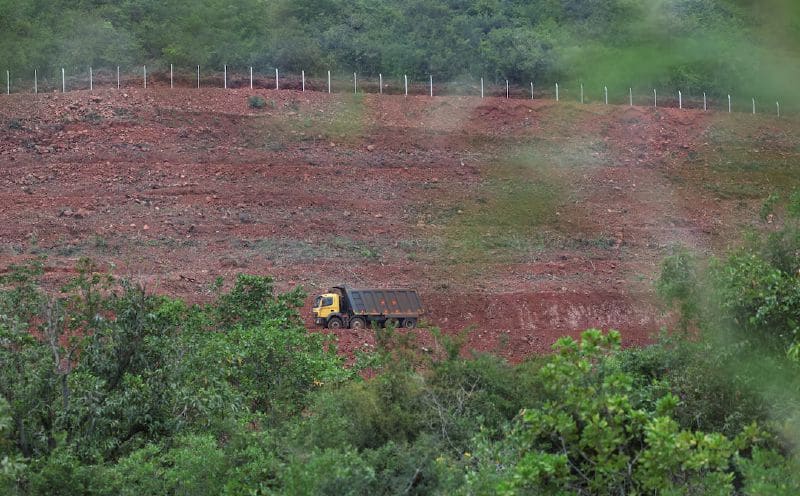
Site work has progressed rapidly despite the legal challenges. The hillside above the planned data center has been cleared to red earth and terraced for construction, with earthmovers still active at the location. Google and Adani estimate the project will create up to 188,000 jobs once operational.
Recent weeks have seen street demonstrations in Visakhapatnam, with activists and children carrying banners reading "We cannot drink DATA" and painting handcuffs on the Google logo. A public gathering last Sunday drew residents planning door-to-door awareness campaigns and beach protests in coming days.
Raja Rama Mohan Roy, founder of non-profit Green Visakha, presented data at the event showing the gap between the city's water supply and demand. "Development should not be at the cost of livelihood of the people," Roy stated, according to those present.
The group has questioned the state government's commitment to provide guaranteed water supplies to the project for 20 years while the city's 2.5 million residents face regular shortages.
Wildlife Sanctuary Proximity Raises Additional Concerns
The site sits 860 meters from Kambalakonda Wildlife Sanctuary, home to leopards and pangolins. The public interest litigation raises concerns that heavy construction and operational noise could impact the protected area.
Andhra Pradesh officials stated the site is farther from the sanctuary than regulations require. Google said in a statement it would implement sound-dampening measures to ensure "we are a quiet, unobtrusive neighbor."
The state government, led by an ally of Prime Minister Narendra Modi, has called the project historic and transformational. Officials described activist concerns as incorrect and misleading, while adding they remain open to feedback and factual clarifications.
Cooling Technology at Center of Water Debate
Data center water consumption has become a flashpoint globally as artificial intelligence drives demand for computing capacity. Facilities use large quantities of water to cool servers, alongside significant electricity requirements. In the United States, opponents held 142 protests across 42 states in July raising similar concerns about resource strain.
Google stated its project would be developed in line with applicable laws and would implement advanced air cooling to protect local water resources. The company did not specify projected water consumption volumes or detail how air cooling would reduce reliance on municipal supplies.
The state government said no water designated for rural or residential purposes would be allocated to the data centers, and the nearby reservoir would not be tapped. However, officials have not disclosed which alternative water sources would supply the facility or whether new infrastructure would be required.
Regional Infrastructure Pressures
The controversy highlights broader tensions across Asia as hyperscale data center construction accelerates. India's digital economy has grown rapidly, with cloud computing and AI adoption driving demand for domestic infrastructure. Yet many Indian cities face chronic water stress, a challenge projected to intensify with climate change and urbanization.
Andhra Pradesh has positioned itself as a technology investment destination, offering incentives to attract global tech firms. The state's willingness to guarantee long-term water supplies to industrial projects while urban residents experience rationing has become a central point of contention for activists.
The Andhra Pradesh government emphasized that such protests represent a democratic right and pledged to engage with legitimate claims. Whether legal challenges will delay or alter the project remains uncertain as court proceedings continue through August.
RELATED STORIES
Google's $15 Billion India Data Hub Faces Rising Local Resistance
Priyanka V. Rao · 3 min

India Pours $8.8 Billion Into Deep-Sea Drilling to Shift Away From Middle East Oil
Rajesh K. Iyer · 3 min
India's Corporate Mangrove Projects Skip Carbon Credits for Conservation First
Priyanka V. Rao · 4 min
India Extends Tax Certainty for Electronics Suppliers, Eases Data Center Approvals
Priyanka V. Rao · 3 min
Spot something wrong? Email editor@briefasia.com. We log every correction publicly.