Sustainability · Nature
India's Corporate Mangrove Projects Skip Carbon Credits for Conservation First
Apple, Amazon, and Godrej are protecting thousands of hectares of coastal forests without generating offsets, setting the stage for a future blue carbon market.
KEY TAKEAWAYS
- ·Apple, Amazon, and Godrej are financing mangrove conservation across Maharashtra and Gujarat, protecting over 1,100 hectares without generating carbon credits, unlike projects in Kenya, Colombia, and Ghana that produce thousands of offsets annually.
- ·India launched its carbon market portal in March 2026, and experts expect current conservation initiatives to evolve into structured blue carbon projects once scientific baselines, monitoring systems, and regulatory frameworks are in place.
- ·Corporate mangrove projects focus on long-term ecosystem health and community partnerships rather than immediate carbon offsets, with companies treating conservation as patient capital that requires multi-decade commitments beyond typical CSR cycles.
A Different Path to Coastal Protection
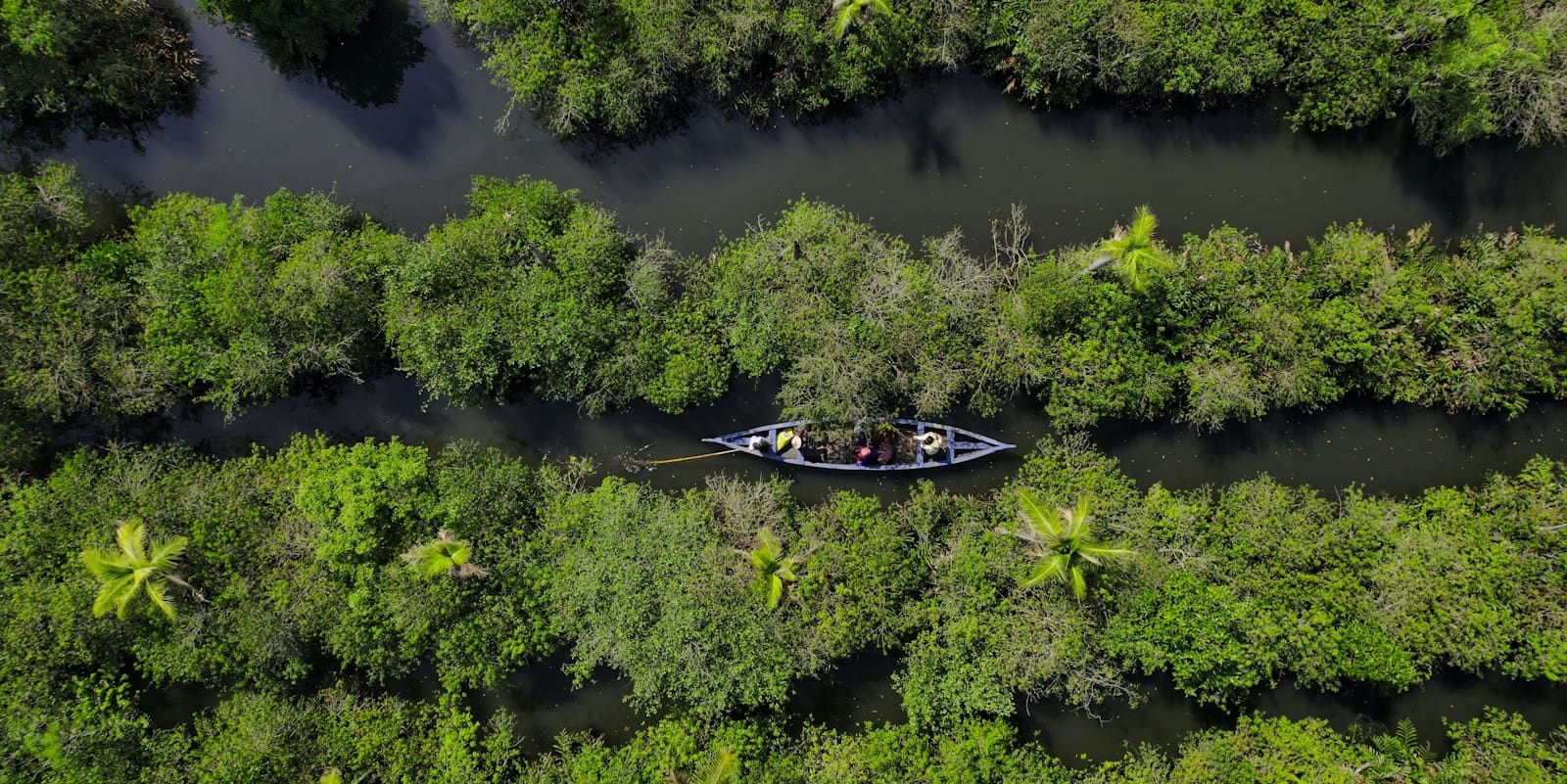
Kailas Gawand's two-hectare plot in Hashiware, Maharashtra, was once farmland. After a coastal embankment collapsed in 1990, seawater flooded the fields, rendering them useless for agriculture. Saltwater mangroves took root instead. Those trees helped the village weather Cyclone Nisarga in 2020 and Cyclone Tauktae in 2021.
In 2021, Gawand signed an agreement with Applied Environmental Research Foundation, a Pune NGO partnering with Apple India, to protect the mangroves on his land. He retains ownership and receives financial incentives. Around 100 similar agreements have been signed in the village since.
The arrangement is part of a broader corporate push into mangrove conservation across India. Apple has committed USD 200 million globally for nature-based carbon removal, including Maharashtra's coastal forests. Amazon allocated USD 1.2 million in 2025 for mangrove and flamingo habitat work in Maharashtra and Gujarat. Godrej Enterprises Group spends INR 8 to 10 million annually on mangrove protection around its Mumbai township, a programme running since 1985.
None of these projects currently generate carbon credits.
Conservation Without Offsets
That stands in contrast to mangrove initiatives elsewhere. Kenya's Mikoko Pamoja produces at least 3,000 carbon credits each year, each representing one metric tonne of CO2 equivalent avoided, generating around USD 130,000 annually for community projects. Colombia's Vida Manglar expects to sequester nearly 1 million tonnes of carbon over 30 years through credits. Ghana's Keta Lagoon project could yield 2.3 million credits over four decades.
In India, the focus remains on ecosystem health, biodiversity, and livelihoods rather than tradable offsets. Tejashree Joshi, head of environmental sustainability at Godrej, says the company measured 23,000 tonnes of sequestered carbon in its Vikhroli mangroves but chose not to apply those figures toward carbon neutrality claims. The company conducted carbon assessments in 2013 and 2025 using UN-approved methodologies but treats the work as stewardship rather than asset generation.
Mangroves sequester an estimated 6 to 8 tonnes of CO2 equivalent per hectare, roughly four times the rate of terrestrial forests, according to research. They also buffer coasts from storm surges, reduce flooding, and support fishing communities.
The Economics of Patience
Carbon credit projects require longer timelines than typical corporate social responsibility initiatives. Joshi describes high-quality credits as "patient capital" that needs years to generate. Carbon market lawyer Avadhi Jain, co-founder of the Climate and Law Initiative, notes that CSR funding typically follows annual budget cycles, while carbon projects demand multi-decade commitments to establish baselines and verify outcomes.
Conservation projects often function as pilots. Companies learn ecosystem restoration principles before scaling or formalizing carbon market participation. Jain says these early efforts help firms understand what works before committing to structured programmes.
Sheeba Sen, co-founder of Hasten Regeneration, which is managing Amazon's Maharashtra and Gujarat mangrove work, confirmed the project is philanthropic with no carbon credits involved. Sen argues that fragmented CSR grants cannot deliver restoration at the necessary scale. Private capital is essential for climate finance, she says, but cautions against viewing ecosystems solely through a carbon lens. Biodiversity, livelihoods, and resilience must remain central.
Applied Environmental Research Foundation has signed over 500 agreements across Ratnagiri, Sindhudurg, and Raigad districts in Maharashtra, protecting more than 1,100 hectares of privately owned mangroves, according to Apple. The model compensates landowners for conserving existing forests rather than planting new ones.
Building Toward Blue Carbon
India launched its carbon market portal in March 2026, moving closer to implementing a national carbon credit trading scheme. Manish Dabkara, managing director of EKI Energy Services, a carbon credit developer, expects many mangrove initiatives currently framed as CSR or coastal resilience programmes to eventually become structured blue carbon projects.
Generating carbon credits requires developers to establish scientific baselines, monitor ecosystems continuously, and verify carbon storage. Projects must also demonstrate additionality, meaning the conservation would not occur without the intervention. Jayant Sarnaik, joint director at Applied Environmental Research Foundation, notes that existing blue carbon methodologies do not always align with the organization's approach, which prioritizes protecting intact ecosystems rather than proving they would otherwise disappear.
The accountability structures differ between conservation and carbon projects. Conservation requires monitoring and community engagement to uphold agreements. Carbon projects add verification and regulatory compliance because they create financial assets. Jain says regulatory certainty is critical for investors.
Companies also weigh reputational risks. Carbon projects face greater scrutiny over methodology, additionality, and community benefit-sharing. Some firms prefer the conservation route to avoid greenwashing concerns associated with flawed offset programmes.
Apple's 2018 partnership with Conservation International in Colombia quantified blue carbon credits in mangrove trees and soil, indicating the company has explored carbon markets in other regions.
Community Partnerships and Long-Term Finance
Archana Godbole, director of Applied Environmental Research Foundation, stresses that conservation will not succeed unless communities understand the value and become partners in the process. The foundation's agreements with landowners like Gawand provide income while maintaining private ownership.
Whether India's mangrove projects transition to carbon assets will depend on how the country designs its blue carbon framework. Experts say the objective should be ensuring climate finance strengthens ecosystems that already deliver value beyond carbon storage.
Mangroves in India continue to face pressure from coastal development and climate impacts. The long-term success of private finance in conservation will hinge on whether corporations can move beyond short-term sustainability commitments and treat ecosystem protection as multi-decade investment.
Jain notes that the current reality does not allow for nature to be protected purely on principle. Incentive structures that make companies liable while rewarding conservation are necessary for long-term economic viability. A functioning blue carbon market would require strong safeguards, including robust monitoring, validation, and verification systems to ensure finance supports genuine outcomes.
The projects underway today may serve as groundwork for a broader blue carbon economy, building the scientific knowledge, monitoring capacity, and community partnerships needed for future markets.
RELATED STORIES
Google's $15 Billion India Data Center Sparks Water Crisis Fears
Priyanka V. Rao · 3 min

India Pours $8.8 Billion Into Deep-Sea Drilling to Shift Away From Middle East Oil
Rajesh K. Iyer · 3 min
Google's $15 Billion India Data Hub Faces Rising Local Resistance
Priyanka V. Rao · 3 min
India Expands Chip Strategy Beyond Fabrication Into Packaging and Workforce
Priyanka V. Rao · 3 min
Spot something wrong? Email editor@briefasia.com. We log every correction publicly.