Technology · Dev
India Expands Chip Strategy Beyond Fabrication Into Packaging and Workforce
New investments from ASIP, Dixon, and Rashi signal a shift toward higher-value manufacturing and deeper localization across India's semiconductor ecosystem.
KEY TAKEAWAYS
- ·India is shifting semiconductor focus to advanced packaging and workforce development, with new investments from ASIP, Dixon Technologies, and Rashi Peripherals targeting higher-value manufacturing segments.
- ·The government has extended tax incentives and introduced phased localization mandates for defense, telecom, and AI infrastructure, with compliance timelines starting in 2027.
- ·Talent shortages remain the critical bottleneck, prompting training partnerships with TSMC and Applied Materials while universities launch new semiconductor curricula.
Moving Beyond Fab Ambitions
India's semiconductor ambitions are maturing beyond the headline-grabbing fabrication announcements of recent years. The country is now channeling resources into advanced packaging facilities, workforce development programs, and localization mandates that address gaps across the value chain. Recent commitments from ASIP, Dixon Technologies, and Rashi Peripherals underscore a pragmatic pivot toward segments where India can build competitive advantage faster.
Advanced packaging capacity, in particular, represents a strategic middle ground. While leading-edge fabs require tens of billions in capital and decades of accumulated process knowledge, packaging plants demand lower upfront investment and can be operational within shorter timelines. For India, this offers a pathway to capture higher margins than traditional assembly while avoiding the technical and financial risks of cutting-edge logic production.
Packaging Capacity and Tax Extensions
ASIP has committed to establishing advanced packaging lines that will handle heterogeneous integration and chiplet assembly. The move positions India to serve domestic electronics manufacturers and global clients seeking geographic diversification from Taiwan and South Korea. Dixon Technologies, already a contract manufacturer for smartphones and consumer electronics, is expanding into semiconductor assembly and test operations, leveraging its existing footprint in Noida and Tamil Nadu.
Tax incentives are being recalibrated to support longer investment horizons. The government has extended modified depreciation schedules and import duty exemptions for capital equipment tied to semiconductor manufacturing. These measures are designed to de-risk multi-year buildouts and signal policy continuity to foreign investors wary of regulatory shifts.
Rashi Peripherals, a distributor with deep ties to component supply chains, is partnering with international technology firms to set up test and validation centers. The facilities will support qualification workflows for automotive and industrial chips, sectors where India's electronics industry is expanding rapidly.
Localization Mandates and Sovereign AI
Localization requirements are tightening across defense, telecom, and critical infrastructure. The Ministry of Electronics and Information Technology has introduced phased domestic value-addition targets for server components, networking gear, and AI accelerators procured by government agencies. Compliance timelines begin in 2027, giving vendors a narrow window to establish or expand Indian production.
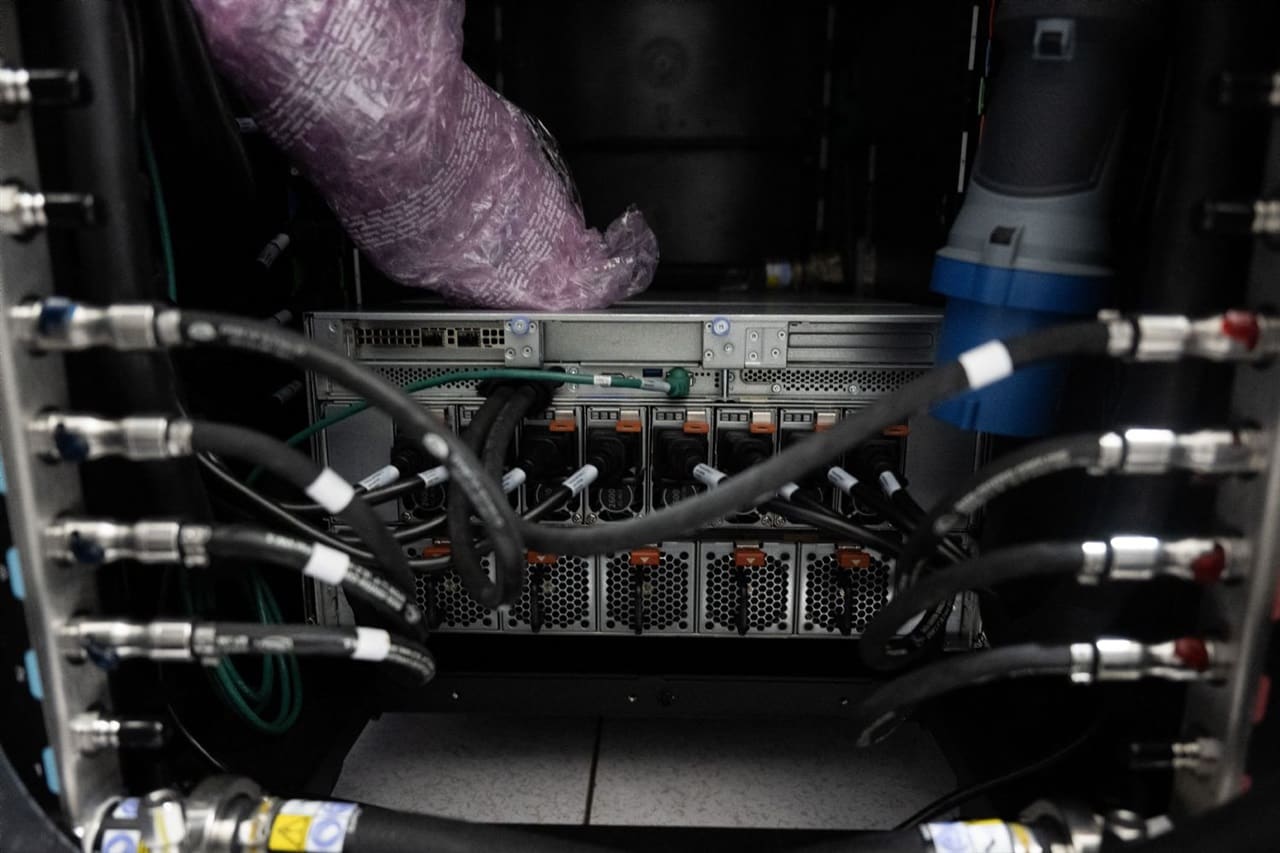
Sovereign AI initiatives are gaining traction alongside chip development. India is building state-backed compute clusters using domestically assembled servers and exploring partnerships for inference workloads tied to language models and public-service applications. The goal is to reduce dependence on hyperscale cloud providers based outside the region and retain data sovereignty for sensitive workloads.
Workforce Expansion Remains the Bottleneck
Talent remains the most acute constraint. India produces hundreds of thousands of engineering graduates annually, but few possess specialized skills in process integration, yield management, or advanced packaging. The government has launched training programs in collaboration with Taiwan Semiconductor Manufacturing Company and Applied Materials, focusing on technician-level roles and equipment maintenance.
Universities in Bangalore, Hyderabad, and Ahmedabad are introducing graduate curricula in semiconductor design and manufacturing, but the pipeline will take years to mature. In the interim, companies are recruiting expatriate engineers and offering premium compensation packages to attract talent from Singapore, Malaysia, and Taiwan.
What Comes Next
India's semiconductor strategy is entering a phase where execution matters more than announcements. Packaging capacity must come online on schedule, localization targets need to be met without disrupting supply chains, and workforce programs must deliver skilled labor at scale. The investments by ASIP, Dixon, and Rashi provide concrete proof points, but sustained progress will require coordination across ministries, state governments, and private-sector partners.
The country's electronics production is projected to exceed $300 billion by 2028, driven by smartphones, automotive systems, and industrial equipment. Capturing a meaningful share of the semiconductor value within that output will determine whether India's chip push translates into durable industrial capability or remains a work in progress.
RELATED STORIES
India Builds Semiconductor Workforce as Global Chip Industry Races for Talent
Priyanka V. Rao · 3 min

Rashi Peripherals and Restar Form Joint Venture to Expand Semiconductor Services in India
Priyanka V. Rao · 2 min

Apple Crosses $10 Billion in India as Premium Demand Reshapes a Contracting Market
Priyanka V. Rao · 3 min
India Eyes Tax Break Extension to 2041 for Electronics Makers
Rajesh K. Iyer · 3 min
Spot something wrong? Email editor@briefasia.com. We log every correction publicly.