Technology · Products
Apple Crosses $10 Billion in India as Premium Demand Reshapes a Contracting Market
The milestone reflects a shift toward high-value devices in a smartphone landscape where unit shipments are falling and pricing power now separates winners from the rest.

KEY TAKEAWAYS
- ·Apple's India business surpassed $10 billion in annual revenue for the first time, driven by premium device demand in a market where overall smartphone unit volumes are declining.
- ·The milestone reflects local manufacturing expansion and production-linked incentives that have reduced costs and enabled Apple to adjust pricing while maintaining premium positioning.
- ·The shift highlights a broader industry trend where profitability depends on pricing power and ecosystem lock-in rather than unit market share.
A Revenue Milestone in a Shrinking Market
Apple's India business has crossed the $10 billion annual revenue threshold for the first time, a landmark that says more about the changing economics of the smartphone industry than raw device volume. The achievement comes at a moment when the broader handset market is contracting by unit count, forcing manufacturers to choose between chasing volume at thin margins or capturing value at the top end.
The milestone underscores a structural shift across South and Southeast Asia. Where growth once came from first-time smartphone buyers and replacement cycles driven by affordability, the next phase hinges on customers willing to pay significantly more for devices that offer ecosystem lock-in, multi-year software support, and brand cachet.
Premium Over Volume
India's smartphone market has been defined for years by intense price competition, dominated by brands offering feature-rich devices under $200. Apple historically held single-digit market share by unit volume but has steadily increased its revenue footprint by targeting the upper tier of consumers, particularly in metro areas where disposable income has risen faster than the national average.
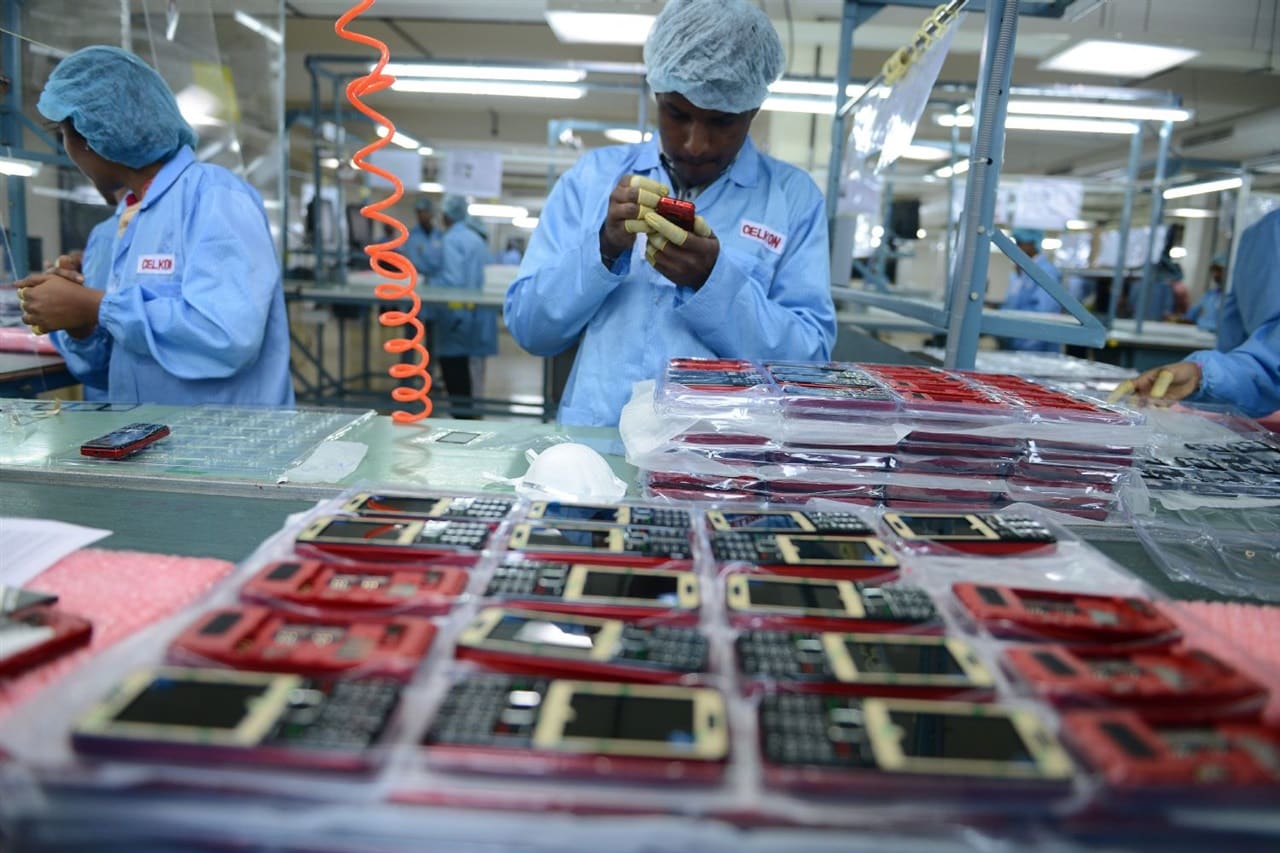
The $10 billion figure represents a combination of direct retail expansion, including company-operated stores in Mumbai and Delhi, and a maturing local manufacturing base that has reduced import duties and improved margins. Apple began assembling iPhones in India in 2017 and has since expanded production to include multiple models, enabling price adjustments that make flagship and previous-generation devices more accessible without eroding premium positioning.
Market Dynamics and Competitive Pressure
The broader smartphone sector is under pressure. Unit shipments have declined in several major Asian markets as replacement cycles lengthen and economic uncertainty weighs on discretionary spending. Manufacturers that relied on volume are now squeezed between rising component costs and consumer reluctance to upgrade devices that remain functional.
Apple's strategy bypasses much of this dynamic. Its revenue growth in India is driven less by converting first-time buyers and more by upgrading existing iPhone users and pulling high-end Android customers into its ecosystem. The company's services revenue, including App Store purchases, subscriptions, and iCloud storage, adds a recurring layer that amplifies the value of each device sold.
Competitors in the premium Android segment, including Samsung and emerging Chinese brands, face a different calculus. They must balance hardware innovation with pricing discipline, often in markets where brand loyalty is less entrenched and switching costs are lower. Apple benefits from an installed base that generates ongoing revenue and reduces churn, a structural advantage that becomes more pronounced as unit growth slows.
Manufacturing and Policy Tailwinds
India's production-linked incentive scheme, introduced to boost domestic electronics manufacturing, has accelerated Apple's local assembly footprint. The program offers financial incentives tied to incremental production and investment, aligning with Apple's goal of diversifying supply chains beyond China. Foxconn, Wistron, and Pegatron have all scaled operations in India, producing devices for both domestic sale and export.
This shift has geopolitical and economic dimensions. For Apple, India represents a hedge against concentration risk in China and a manufacturing base with lower labor costs and favorable trade terms with key markets. For India, Apple's presence signals the country's ability to integrate into high-value global supply chains, a priority for policymakers seeking to position the economy as a manufacturing hub beyond textiles and low-margin assembly.
What This Means for the Industry
Apple's performance in India illustrates a broader trend: smartphone profitability is increasingly decoupled from unit share. The companies capturing value are those with strong brand equity, ecosystem integration, and the ability to command pricing power. Volume leaders without these attributes face margin compression and limited optionality as component costs rise and consumer budgets tighten.
The $10 billion milestone also signals a maturation of India's consumer electronics market. The next phase of growth will come not from expanding the base of smartphone users but from monetizing the existing base more effectively through higher-value devices, services, and accessories. This shift favors players with deep software integration and recurring revenue models, characteristics that define Apple's approach across all its major markets.
For the rest of the industry, the lesson is clear: competing on price alone is a path to diminishing returns. The companies that will thrive in a lower-volume, higher-value environment are those that can offer differentiation worth paying for and retention mechanisms that extend customer lifetime value beyond the initial sale.
RELATED STORIES

India Builds Semiconductor Workforce as Global Chip Industry Races for Talent
Priyanka V. Rao · 3 min

Rashi Peripherals and Restar Form Joint Venture to Expand Semiconductor Services in India
Priyanka V. Rao · 2 min

India Eyes Tax Break Extension to 2041 for Electronics Makers
Rajesh K. Iyer · 3 min
Dixon Technologies Eyes Export Growth Through Component Manufacturing Push
Priyanka V. Rao · 3 min
Spot something wrong? Email editor@briefasia.com. We log every correction publicly.