Technology · Dev
Dixon Technologies Eyes Export Growth Through Component Manufacturing Push
India's electronics manufacturer bets on displays, camera modules, and telecom hardware to offset margin pressure from rising input costs and expiring incentives
KEY TAKEAWAYS
- ·Dixon Technologies is expanding into displays, camera modules, SSDs, and telecom hardware through joint ventures with Vivo and Inventec to increase domestic value addition and export volumes.
- ·Near-term margins face pressure from rising input costs and the conclusion of the mobile PLI 1 incentive program, with relief expected from the second phase of the scheme.
- ·The company is betting on vertical integration and export demand from Southeast Asia, the Middle East, and Africa to offset profitability headwinds and strengthen its supply chain position.
Vertical Integration Strategy
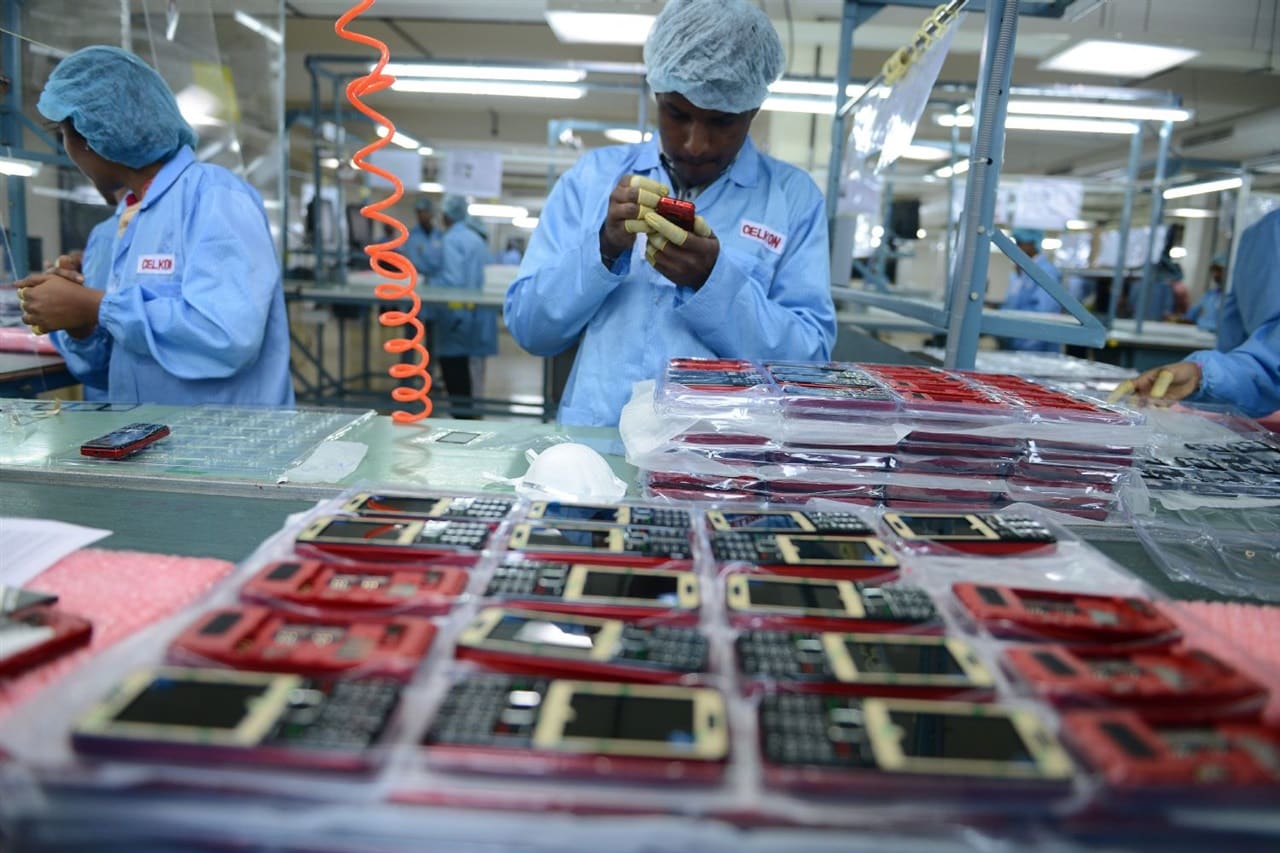
Dixon Technologies has outlined a strategy centered on component manufacturing, targeting displays, camera modules, solid-state drives, and telecom hardware to deepen its position in India's electronics supply chain. The company sees this vertical push as a path to higher export volumes and greater domestic value capture, even as it navigates near-term profitability pressure.
The move comes at a moment when India's electronics manufacturing sector is recalibrating after the first phase of the Production Linked Incentive scheme for mobile devices concluded. Dixon, one of the largest contract manufacturers in the country, is banking on a second wave of policy support and joint venture partnerships to sustain momentum.
Joint Ventures Anchor Expansion
Dixon announced that its growth trajectory will lean heavily on partnerships with Vivo and Inventec. The Vivo collaboration is expected to focus on mobile and component assembly, while the Inventec tie-up targets IT hardware and networking equipment. Both ventures are designed to bring advanced manufacturing capabilities onshore and position Dixon as a supplier for both domestic and export markets.
The company has been expanding its footprint beyond handset assembly into higher-value components. Displays and camera modules represent two areas where India has historically relied on imports, particularly from China, Taiwan, and South Korea. By localizing these parts, Dixon aims to capture a larger share of the bill of materials and improve unit economics over time.
Solid-state drives and telecom infrastructure hardware are also part of the roadmap. These segments align with India's broader push to build out digital infrastructure and reduce dependency on foreign suppliers for critical technology components.
Margin Pressure Acknowledged
Dixon acknowledged that margins are under pressure in the near term. Rising input costs, particularly for semiconductors and raw materials, have compressed profitability across the electronics manufacturing sector. The end of the mobile PLI 1 incentive program has also removed a cushion that supported early adopters of the scheme.
The company expects the second phase of the PLI program, which covers a broader range of products including IT hardware and components, to provide renewed support. However, the benefits of PLI 2 are expected to materialize gradually, as companies scale production and meet volume thresholds required to unlock incentives.
In the interim, Dixon is focusing on operational efficiency and scale. The joint ventures are intended to spread fixed costs across larger production runs, while the component push is designed to capture more value per unit shipped.
Export Ambitions Take Shape
Exports are a key part of Dixon's calculus. The company sees growing demand from markets in Southeast Asia, the Middle East, and Africa for competitively priced electronics assembled in India. The joint ventures with global players like Inventec are expected to open export channels and provide technical know-how to meet international quality standards.
India's electronics exports have grown sharply in recent years, driven in part by the PLI scheme and the China-plus-one strategies of multinational brands. Dixon is positioning itself to ride this wave, particularly in categories where India has developed scale, such as mobile phones, and where it is building capacity, such as networking equipment and storage devices.
The company's pivot toward components also addresses a structural challenge: much of India's electronics manufacturing remains assembly-intensive, with limited local sourcing of high-value parts. By moving upstream, Dixon is betting it can improve trade balances and strengthen its competitive position.
Policy Tailwinds and Execution Risk
Dixon's outlook hinges on continued government support and the successful execution of its joint venture plans. The PLI 2 scheme, which includes IT hardware and telecom equipment, is expected to drive investment, but companies must navigate complex compliance requirements and capital-intensive buildouts.
The company will also need to manage relationships with global partners, integrate new manufacturing processes, and compete with established players in component supply chains. Success in displays and camera modules, in particular, will require matching the cost and quality benchmarks set by East Asian suppliers.
For now, Dixon is signaling confidence that the combination of policy incentives, joint venture scale, and export demand will outweigh the near-term margin squeeze. The next few quarters will test whether that confidence is justified.
RELATED STORIES

Fujifilm Commits $83 Million to Semiconductor Materials Plant in India
Siti Nuraini · 3 min
Indian AI Firm Commits $8 Billion to Nvidia Infrastructure Buildout
Priyanka V. Rao · 3 min
India's Semiconductor Push Extends to Supply Chains and Advanced Manufacturing
Priyanka V. Rao · 4 min

Indian Chip Designer Eyes Millions in Local Wi-Fi Module Sales on CCTV Policy Push
Jun-ho Seo · 3 min
Spot something wrong? Email editor@briefasia.com. We log every correction publicly.