Finance · Markets
Malaysia's Ringgit Slips Against Dollar as Markets Await Fed Rate Decision
The currency gained ground against major peers but weakened versus the greenback amid cautious positioning ahead of this week's Federal Open Market Committee meeting
KEY TAKEAWAYS
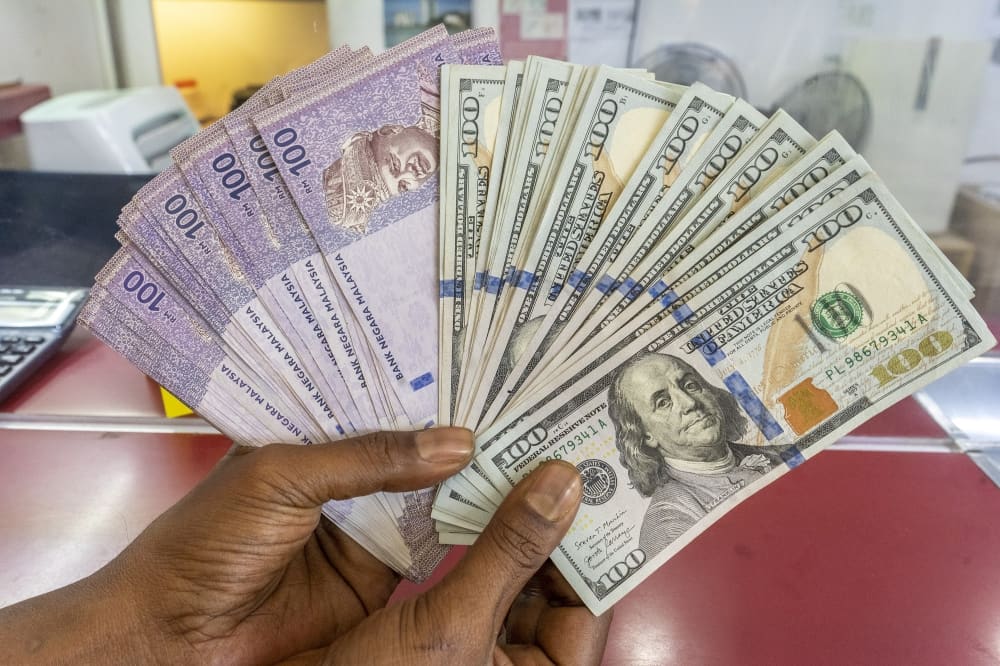
- ·Malaysia's ringgit closed at 4.0885 per dollar on Tuesday, weaker than Monday's 4.0835, while gaining against the euro, pound, and yen.
- ·Markets are holding steady ahead of the Federal Reserve's two-day policy meeting concluding Wednesday, with traders focused on interest rate guidance.
- ·Lower crude oil prices following US-Iran negotiations add complexity for Malaysia as an oil exporter, potentially affecting trade balances and currency strength.
Divergent Currency Moves Reflect Fed Uncertainty
Malaysia's ringgit closed Tuesday's session weaker against the dollar but posted gains across most other major currencies, underscoring the market's cautious positioning as traders prepare for the US Federal Reserve's upcoming interest rate decision. The local currency settled at 4.0885 per dollar at 6 pm Kuala Lumpur time, softer than Monday's close of 4.0835, according to Bank Muamalat Malaysia.
The mixed performance reflects a broader pattern across emerging Asian currencies this week. Investors are holding back from making significant bets while awaiting clarity on American monetary policy direction. The Fed's two-day Federal Open Market Committee meeting, which began Tuesday and concludes Wednesday, represents the most consequential event on this week's economic calendar for regional currencies.
Dr Mohd Afzanizam Abdul Rashid, chief economist at Bank Muamalat Malaysia, noted that the ringgit has been confined to a tight trading band as participants delay major positioning decisions. The market's primary focus centers on the Fed's economic assessment and, more critically, its forward guidance on the trajectory of borrowing costs in the world's largest economy.
Regional Currency Dynamics Show Strength
Despite the weakness against the dollar, the ringgit demonstrated resilience against other developed-market currencies. The Malaysian unit appreciated to 4.6429 per euro from the previous session's 4.6536, marking a notable improvement against the European common currency. Against the British pound, the ringgit advanced to 5.4287 from 5.4433, while it edged higher versus the Japanese yen to 2.4948 from 2.4969.
These cross-currency movements suggest that dollar strength, rather than ringgit-specific weakness, drove Tuesday's headline depreciation. The dollar index has maintained elevated levels in recent sessions as markets price in the possibility that the Fed may adopt a more hawkish tone than previously anticipated, particularly if recent American economic data continues to show resilience.
Within Southeast Asia, the ringgit posted gains against most regional peers. The Malaysian currency strengthened to 226.0 per 1,000 Indonesian rupiah from 226.7, and improved to 3.1603 against the Singapore dollar from 3.1653. Against the Thai baht, the ringgit rose to 12.1494 from 12.1612 in the prior session.
The sole exception among regional currencies was the Philippine peso, against which the ringgit slipped marginally to 6.63 from 6.62. This isolated weakness likely reflects peso-specific factors rather than broader ringgit vulnerability.
Oil Price Dynamics Add Complexity
An additional layer of complexity for the ringgit stems from recent movements in global crude oil markets. Prices have trended lower following renewed diplomatic engagement between Washington and Tehran, raising expectations of a potential reopening of the Strait of Hormuz and reduced military tensions in West Asia.
For Malaysia, an oil-exporting nation, softer crude prices present a double-edged scenario. Lower energy costs can support domestic economic activity and reduce inflationary pressures, but they also weaken export revenues and current account dynamics. The country's trade balance remains sensitive to hydrocarbon price fluctuations, even as Malaysia has diversified its export base toward electronics and manufactured goods over the past decade.
The prospect of Iranian oil returning to global markets in significant volumes could add substantial supply, potentially keeping crude prices subdued for an extended period. This scenario would test the ringgit's resilience, particularly if the Fed maintains higher rates for longer than markets currently anticipate.
What the Fed Decision Means for Asian Currencies
The Fed's Wednesday announcement carries outsized importance for emerging Asian currencies beyond the immediate rate decision itself. Market participants are scrutinizing the central bank's language for signals about the pace and extent of any future policy adjustments.
A more dovish stance, suggesting the Fed may pause or slow its tightening cycle, could provide relief for the ringgit and regional peers by reducing the interest rate differential that has supported dollar strength. Conversely, a hawkish signal emphasizing persistent inflationary concerns would likely extend pressure on Asian currencies and could prompt renewed capital outflows from the region.
Bank Negara Malaysia, the country's central bank, has maintained its own policy stance in recent months while monitoring external developments. The ringgit's performance this year has been relatively stable compared to some regional currencies, supported by solid economic fundamentals including robust export growth and controlled inflation.
Broader Market Implications
The ringgit's narrow trading range reflects a market in waiting mode, with participants reluctant to establish large positions ahead of major policy clarity. Trading volumes have been moderate, and volatility measures remain subdued compared to earlier periods of market stress.
Beyond the immediate Fed decision, longer-term factors will continue shaping the ringgit's trajectory. These include China's economic recovery pace, given that nation's status as Malaysia's largest trading partner; global semiconductor demand, critical for Malaysia's electronics export sector; and domestic political stability as the country approaches its next electoral cycle.
Currency strategists across the region are watching whether the current pattern of dollar strength against emerging market currencies represents a temporary positioning adjustment or signals a more durable shift in capital flows. For Malaysia, maintaining competitiveness in export markets while managing imported inflation will require careful navigation of these cross-currents.
The coming sessions will reveal whether Tuesday's mixed currency performance represents a pause before resumed ringgit strength or the beginning of a more challenging period for the Malaysian unit.
RELATED STORIES
Ringgit Strengthens as Malaysia's Stable Rates Signal Policy Flexibility
Mariel D. Santos · 3 min

Ringgit Set to Hold Gains as Malaysia Central Bank Meeting Nears
Priyanka V. Rao · 3 min

Malaysian Ringgit Strengthens on Strong US Jobs Data
Tran Quoc Bao · 3 min

Malaysian Equities Climb in Morning Session as Regional Investors Weigh Oil Price Rally
Anand Sundaram · 3 min
Spot something wrong? Email editor@briefasia.com. We log every correction publicly.