Asia · Trade
Malaysia Reviews Rare Earth Export Restrictions Amid Supply Race
Kuala Lumpur's potential policy shift on unprocessed minerals could reshape critical supply chains for defense, tech, and clean energy industries across Asia and beyond.
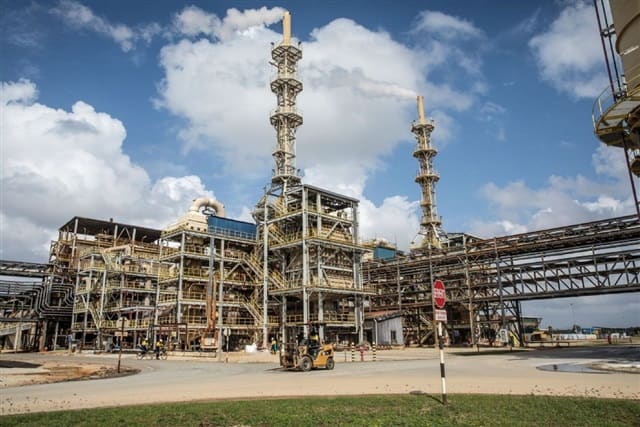
KEY TAKEAWAYS
- ·Malaysia is reviewing restrictions on unprocessed rare earth exports amid investor pressure and intensifying global competition for strategic minerals.
- ·The policy decision will affect supply chains for defense contractors, electric vehicle makers, and clean energy developers across Asia, North America, and Europe.
- ·Kuala Lumpur faces a choice between immediate export revenue and preserving leverage for future domestic refining investment and technology transfer agreements.
Policy Under Review
Malaysia has begun examining its current restrictions on unprocessed rare earth exports, responding to growing pressure from international investors and the broader global scramble to secure access to strategic minerals. The Southeast Asian nation holds significant deposits of these materials, which are essential inputs for everything from smartphone screens to missile guidance systems.
The review comes at a moment when governments across North America, Europe, and Asia are working to reduce dependence on concentrated supply chains. Malaysia's existing framework limits the export of raw rare earth materials, requiring domestic processing before shipment abroad. That structure was designed to capture more value domestically and build local refining capacity.
Now, with capital flowing into the sector and geopolitical competition reshaping mineral markets, Kuala Lumpur faces a decision that extends well beyond its borders. Any loosening of export controls would open new pathways for manufacturers seeking alternatives to dominant suppliers, while maintaining restrictions could preserve leverage in future negotiations over downstream investment.
Strategic Mineral Competition
Rare earth elements occupy a unique position in modern industrial ecosystems. Seventeen metals in the group are critical to permanent magnets, advanced electronics, precision optics, and defense hardware. A single electric vehicle can require several kilograms of neodymium and dysprosium for motor magnets. Wind turbines, radar systems, and fiber-optic networks all depend on stable access.
Yet supply remains concentrated. One country accounts for roughly 60 percent of global mining output and over 85 percent of refining capacity. That imbalance has prompted dozens of governments to fund exploration, stockpiling, and processing projects. Australia, Canada, and several African nations have announced new mining ventures in the past two years. The United States and European Union have both allocated billions in subsidies to onshore refining.
Malaysia sits at the intersection of these trends. Its mineral reserves are substantial enough to matter in global calculations, but not large enough to reshape the market alone. The country's regulatory posture, however, can influence where capital flows and how quickly alternative supply routes emerge.
Investor Pressure and Domestic Calculus
International mining groups and downstream manufacturers have been lobbying Malaysian officials for greater export flexibility. Their argument centers on speed: building refining capacity takes years and requires sustained investment, while demand for finished rare earth products is climbing now. Allowing raw exports, they contend, would unlock immediate revenue and attract joint ventures that might otherwise look elsewhere.
Malaysian policymakers, however, are weighing a different set of considerations. Permitting unprocessed exports could undermine efforts to establish a domestic refining industry, leaving the country as a low-margin raw material supplier. It could also reduce leverage in negotiations with foreign firms that might otherwise commit to technology transfer and local employment in exchange for access to feedstock.
Environmental concerns add another layer. Rare earth extraction and processing generate radioactive waste and heavy metal runoff. Some officials worry that loosening export rules without strict environmental guarantees could shift the dirtiest parts of the supply chain onto Malaysian soil while value-added refining happens abroad.
Implications Beyond Borders
The outcome of Malaysia's review will reverberate across several industries. Defense contractors in the United States, Japan, and South Korea monitor rare earth supply closely; disruptions can delay production of precision-guided munitions and advanced radar. Electric vehicle manufacturers in China, Europe, and North America are equally attentive, given the volumes of neodymium and praseodymium required for traction motors.
Clean energy developers also have a stake. Offshore wind projects in Taiwan, Vietnam, and the Philippines rely on turbines with rare earth permanent magnets. Any new source of supply, even at the raw material stage, can ease bottlenecks and reduce price volatility.
For Malaysia, the decision involves trade-offs between short-term revenue and long-term industrial strategy. Opening exports might attract immediate investment but could limit future bargaining power. Maintaining restrictions preserves optionality but risks seeing capital and projects move to competing jurisdictions.
What Comes Next
No timeline has been announced for the conclusion of Malaysia's policy review. Industry observers expect consultations with mining companies, environmental agencies, and trade officials to continue through the remainder of the year. Any regulatory change would likely include conditions around environmental standards, domestic processing quotas, or joint venture requirements.
Meanwhile, other governments are not waiting. Indonesia recently tightened its own rare earth export rules, aiming to build a domestic refining sector. Australia has fast-tracked approvals for several new mines. The competition for both resources and the value chains built around them is only intensifying.
Malaysia's choice will signal whether it sees itself primarily as a raw material exporter or as a future hub for higher-margin processing. Either path carries risk, but doing nothing may be the riskiest option of all in a market where supply security has become a matter of national strategy.
RELATED STORIES

Indonesia Car Sales Jump 34% as Electric Vehicles Reshape Southeast Asia's Auto Market
Siti Nuraini · 3 min
Singapore Clears 900 MW of Solar Imports from Malaysia
Cheng Wei-Lun · 3 min
ASEAN Targets Fourth-Largest Economy Spot as Internal Trade Lags Behind
Priyanka V. Rao · 3 min

Malaysia's Central Bank Chief Cites Four Pillars Behind Economic Stability
Priyanka V. Rao · 5 min
Spot something wrong? Email editor@briefasia.com. We log every correction publicly.