Asia · Politics
Malaysia's Central Bank Chief Cites Four Pillars Behind Economic Stability
The governor outlines the structural defenses that have allowed the country to absorb shocks from the Asian crisis to the pandemic without losing growth momentum
KEY TAKEAWAYS
- ·Bank Negara Malaysia governor Abdul Rasheed Ghaffour identified trade diversification, policy clarity, fiscal buffers, and reserves totaling 132 billion US dollars as the four pillars of the country's economic resilience.
- ·No single trading partner accounts for more than 16 percent of Malaysia's total exports, insulating the economy from concentrated external shocks.
- ·Targeted subsidy reforms have freed fiscal space for countercyclical spending, while international reserves have risen from 113 billion US dollars in 2023 to current levels.
The Resilience Framework
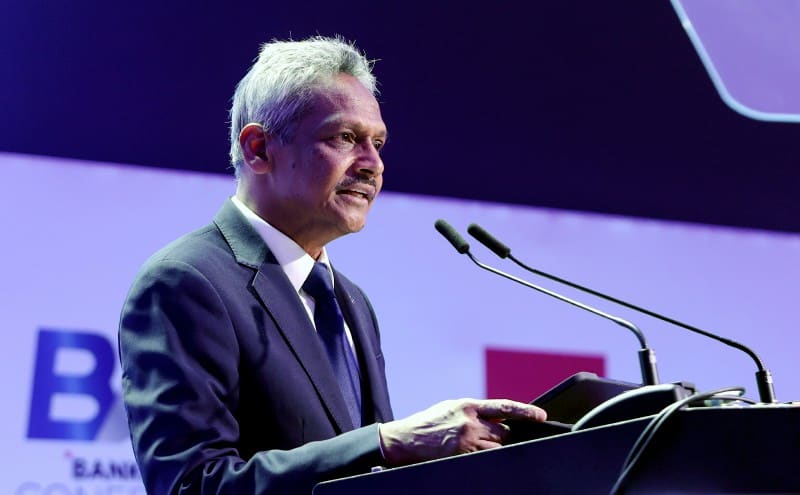
Abdul Rasheed Ghaffour, governor of Bank Negara Malaysia, has identified four structural elements that he credits with preserving the country's economic stability across multiple episodes of global disruption. Speaking from the central bank's Kuala Lumpur headquarters, he outlined a framework that spans trade diversification, policy coherence, fiscal flexibility, and reserve adequacy.
The assessment comes as regional economies face fresh uncertainty from geopolitical friction, commodity volatility, and the prospect of higher-for-longer interest rates in advanced economies. Malaysia has navigated the 1997 Asian financial crisis, the 2008 global recession, the Covid-19 pandemic, and more recently the ripple effects of Middle Eastern conflict without experiencing a sustained contraction in output.
Abdul Rasheed argues that this track record rests on deliberate structural choices rather than cyclical luck. The four pillars he highlighted comprise trade and economic diversification, transparent policy frameworks, sufficient fiscal buffers, and robust foreign exchange reserves.
Trade Diversification as Shock Absorber
The first pillar centers on Malaysia's export profile. No single trading partner accounts for more than 16 percent of total merchandise exports, according to Abdul Rasheed. This spread reduces the transmission of external shocks: a downturn in one major economy does not cascade through the entire export sector.
Malaysia's top export destinations include China, Singapore, the United States, the European Union, and Japan, with significant secondary flows to Thailand, Indonesia, South Korea, and Taiwan. The country ships electronics, palm oil, liquefied natural gas, chemicals, and machinery, each to a different constellation of buyers.
This pattern contrasts with economies that depend heavily on a single commodity or a narrow set of destinations. When global demand fragments, diversified exporters can redirect output or lean on sectors facing less headwind. The strategy has insulated Malaysia from the worst effects of trade disputes and regional slowdowns.
Abdul Rasheed emphasized that sectoral diversification complements geographic spread. Malaysia does not rely on a single industry for growth. Manufacturing, agriculture, mining, and services each contribute to GDP, and within manufacturing, the mix spans semiconductors, medical devices, petrochemicals, and consumer electronics.
Policy Clarity and Institutional Credibility
The second pillar is policy predictability. Abdul Rasheed highlighted the role of transparent frameworks in anchoring investor confidence and household expectations. Clear monetary policy communication, stable fiscal rules, and consistent regulatory oversight reduce uncertainty about the government's response to shocks.
Bank Negara operates under an inflation-targeting regime and publishes forward guidance on its policy stance. The central bank has maintained operational independence while coordinating closely with the finance ministry on macroeconomic strategy. This separation of roles has preserved credibility even during election cycles or cabinet reshuffles.
On the fiscal side, Malaysia has pursued subsidy rationalization and revenue base broadening over the past several years. The governor noted that targeted fuel subsidy reforms have freed up budgetary resources, creating room for countercyclical spending when external conditions deteriorate. Instead of blanket subsidies that drain fiscal capacity, the government now directs support to households that need it most.
Policy clarity also extends to regulatory frameworks for banking, capital markets, and cross-border investment. Investors understand the rules governing foreign ownership, repatriation, and dispute resolution. This transparency lowers the risk premium demanded for Malaysian assets and stabilizes capital flows during periods of global risk aversion.
Fiscal Space for Countercyclical Response
The third pillar is fiscal flexibility. Abdul Rasheed pointed to the government's ability to deploy spending or tax relief when growth slows or unemployment rises. Malaysia entered the pandemic with a debt-to-GDP ratio below 60 percent, which allowed the government to roll out wage subsidies, cash transfers, and loan moratoriums without triggering a sovereign debt crisis.
Subsidy reform has been central to preserving fiscal space. By removing blanket fuel and electricity subsidies and replacing them with targeted transfers, the government has lowered recurrent expenditure and redirected savings toward infrastructure, education, and healthcare. This reallocation strengthens long-term growth potential while maintaining a cushion for short-term stabilization.
The governor emphasized that fiscal discipline during expansions creates the capacity to act during downturns. Countries that run large structural deficits in good times have little room to maneuver when a crisis hits. Malaysia's approach has been to consolidate gradually during recoveries, building buffers that can be deployed when needed.
Fiscal space also matters for debt sustainability. Lower deficits reduce the need for borrowing, which keeps interest payments manageable and leaves more revenue available for productive spending. This virtuous cycle reinforces investor confidence and lowers borrowing costs, further easing the fiscal constraint.
Reserve Adequacy and External Buffers
The fourth pillar is foreign exchange reserves. Malaysia's international reserves stood at approximately 132 billion US dollars in 2024, up from 113 billion in 2023. This accumulation reflects both current account surpluses and portfolio inflows attracted by relatively high domestic yields.
Reserves serve multiple functions. They provide a buffer against sudden capital outflows, allowing the central bank to smooth exchange rate volatility without resorting to capital controls. They also signal creditworthiness to international investors, reducing the risk of speculative attacks on the ringgit.
Abdul Rasheed noted that reserve adequacy has been a priority since the Asian financial crisis, when several regional economies exhausted their buffers and required multilateral assistance. Malaysia's reserves now exceed standard adequacy metrics, covering more than seven months of imports and well above the level needed to service short-term external debt.
The reserves also underpin monetary policy autonomy. A central bank with ample reserves can set interest rates to meet domestic inflation and growth objectives without worrying that rate differentials will trigger destabilizing capital flight. This autonomy has allowed Bank Negara to calibrate policy to Malaysia's economic cycle rather than mirroring the Federal Reserve or the European Central Bank.
Prudence Amid Positive Indicators
Despite the strong fundamentals, Abdul Rasheed urged households to maintain prudent spending and build personal savings buffers. He acknowledged that current economic indicators are positive but cautioned that external conditions remain uncertain. Geopolitical tensions, commodity price swings, and shifts in global monetary policy could still affect Malaysia's growth trajectory.
The governor's message reflects a broader theme in Bank Negara's communication: resilience is not a permanent state but a capacity that must be continuously renewed. Diversification, policy clarity, fiscal discipline, and reserve accumulation require sustained effort and political commitment. Complacency during favorable periods can erode the very foundations that enable a country to withstand future shocks.
Malaysia's experience offers a template for other middle-income economies navigating an unstable global environment. The four pillars are not unique to Malaysia, but their consistent application over multiple business cycles has created a resilience that is now deeply embedded in the country's institutional fabric.
RELATED STORIES
ASEAN Targets Fourth-Largest Economy Spot as Internal Trade Lags Behind
Priyanka V. Rao · 3 min

Indonesia Car Sales Jump 34% as Electric Vehicles Reshape Southeast Asia's Auto Market
Siti Nuraini · 3 min
Malaysia Reviews Rare Earth Export Restrictions Amid Supply Race
Cheng Wei-Lun · 4 min
Singapore Clears 900 MW of Solar Imports from Malaysia
Cheng Wei-Lun · 3 min
Spot something wrong? Email editor@briefasia.com. We log every correction publicly.