Asia · Trade
Malaysia's Palm Oil Forecast Holds Steady as Indonesia Biodiesel Push Lifts Market
August pricing expected between RM4,400 and RM4,650 per tonne, supported by regional biofuel demand and resilient extraction rates
KEY TAKEAWAYS
- ·Crude palm oil is expected to trade between RM4,400 and RM4,650 per tonne in August, supported by Indonesia's B50 biodiesel mandate and improved biodiesel economics.
- ·Malaysia's June production rose 8.0 per cent month-on-month to 1.63 million tonnes, driven by a decade-high oil extraction rate, though output remained 3.0 per cent below last year.
- ·Softer demand in China and India has kept exports 4.0 per cent below June 2025 levels, while potential El Niño conditions in early 2027 could weaken future extraction efficiency.
Pricing Window Narrows for August
Crude palm oil is on track to trade in a RM4,400 to RM4,650 per tonne band next month, according to the Malaysia Palm Oil Council. The range reflects a market buoyed by Indonesia's rollout of its B50 biodiesel requirement starting in July, alongside firmer energy benchmarks and better margins for biodiesel refiners.
The forecast comes as Malaysia's production dynamics shift. Output climbed to 1.63 million tonnes in June, an 8.0 per cent increase from May, driven by the seasonal production cycle that typically picks up from March onward. Yet the same month's figure still lagged last year's June tally by 3.0 per cent, the fourth straight month of year-on-year contraction.
Extraction Efficiency Masks Weaker Fruit Volumes
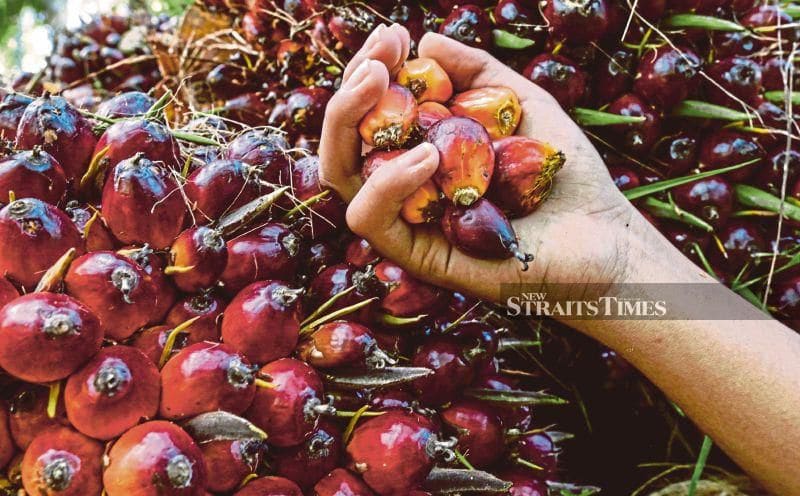
What kept supply levels from falling further was a decade-high oil extraction rate. Malaysian Palm Oil Board figures show that even as fresh fruit bunch production stayed relatively flat across the first half of 2026, extraction efficiency improved enough to stabilize overall output. Stocks rose to 2.5 million tonnes by the end of June.
The stronger extraction rate is attributed to favorable rainfall in 2025, which improved the oil content of fruit harvested this year. That tailwind may not last. If El Niño conditions materialize in early 2027, drier weather could erode extraction performance and tighten supply margins.
Export Growth Remains Fragile
Shipments edged up 6.1 per cent month-on-month to 1.2 million tonnes in June, but remained 4.0 per cent below the prior-year level. Softer oils and fats consumption in China and India, two of Malaysia's largest buyers, continues to weigh on demand. The lingering effects of the Middle East conflict have dampened purchasing activity in key importing nations.
Inventories in India remain elevated despite a slowdown in import volumes, signaling weaker domestic consumption amid inflationary pressures. Demand may pick up as the Diwali festival approaches; India typically sources around 30 per cent of its annual vegetable oil needs during the July to September window.
European Prices Diverge
Vegetable oil pricing in Europe showed a split picture in July. Palm oil and soybean oil rose 3.0 per cent and 6.0 per cent respectively, while sunflower oil and rapeseed oil declined by 1.0 per cent and 2.0 per cent. The divergence underscores the structural support that biodiesel demand in the United States and Indonesia provides for palm and soy oils.
Global Oilseed Growth Slows
Combined production of soybeans, sunflower seeds, and rapeseed is forecast to expand by 16.5 million tonnes in the 2026-27 season, below the four-year average annual gain of 22.7 million tonnes. Global reliance on soybean, sunflower, and rapeseed oils has climbed since 2019 as exportable palm oil supply from Southeast Asia tightened.
The slower pace of oilseed expansion, coupled with rising biofuel sector demand for vegetable oils, is expected to keep pricing supported over the longer term. In the near term, however, subdued consumption and high inventory levels in major importing countries continue to cap upside potential.
Malaysia's palm oil sector enters the second half of 2026 with a production base supported more by processing efficiency than by volume growth. Whether that balance holds will depend on weather patterns in the months ahead and whether demand in Asia's largest economies can regain momentum.
RELATED STORIES
Indonesia's Wildfires Push Air Quality to World's Worst Levels
Siti Nuraini · 2 min

CIMB Commits to 55% Dividend Floor as Regional Portfolio Offsets Indonesia Pressure
Priyanka V. Rao · 4 min
Malaysia's Rare Earth Deposits Draw Foreign Interest Ahead of China Export Controls
Priyanka V. Rao · 3 min

Proton Eyes 200,000 Units in 2026, Aiming for Best Sales Year Since 2011
Priyanka V. Rao · 3 min
Spot something wrong? Email editor@briefasia.com. We log every correction publicly.