Asia · Trending
Malaysia Detains 335 Suspects in Forest City Scam Operation
Authorities raided Malaysia's controversial mega-development in Johor, uncovering what investigators describe as a large-scale online fraud network targeting victims across the region.
KEY TAKEAWAYS
- ·Malaysian authorities arrested 335 individuals at Forest City in Johor during raids targeting a large-scale online fraud network operating from the underutilized mega-development.
- ·Forest City, a Chinese-backed project near Singapore, has struggled with low occupancy and governance gaps that criminal operators appear to have exploited for cross-border scam operations.
- ·The arrests reflect a regional pattern of transnational fraud networks using underutilized Southeast Asian real estate as operational bases, complicating foreign investment narratives.
Large-Scale Enforcement Action
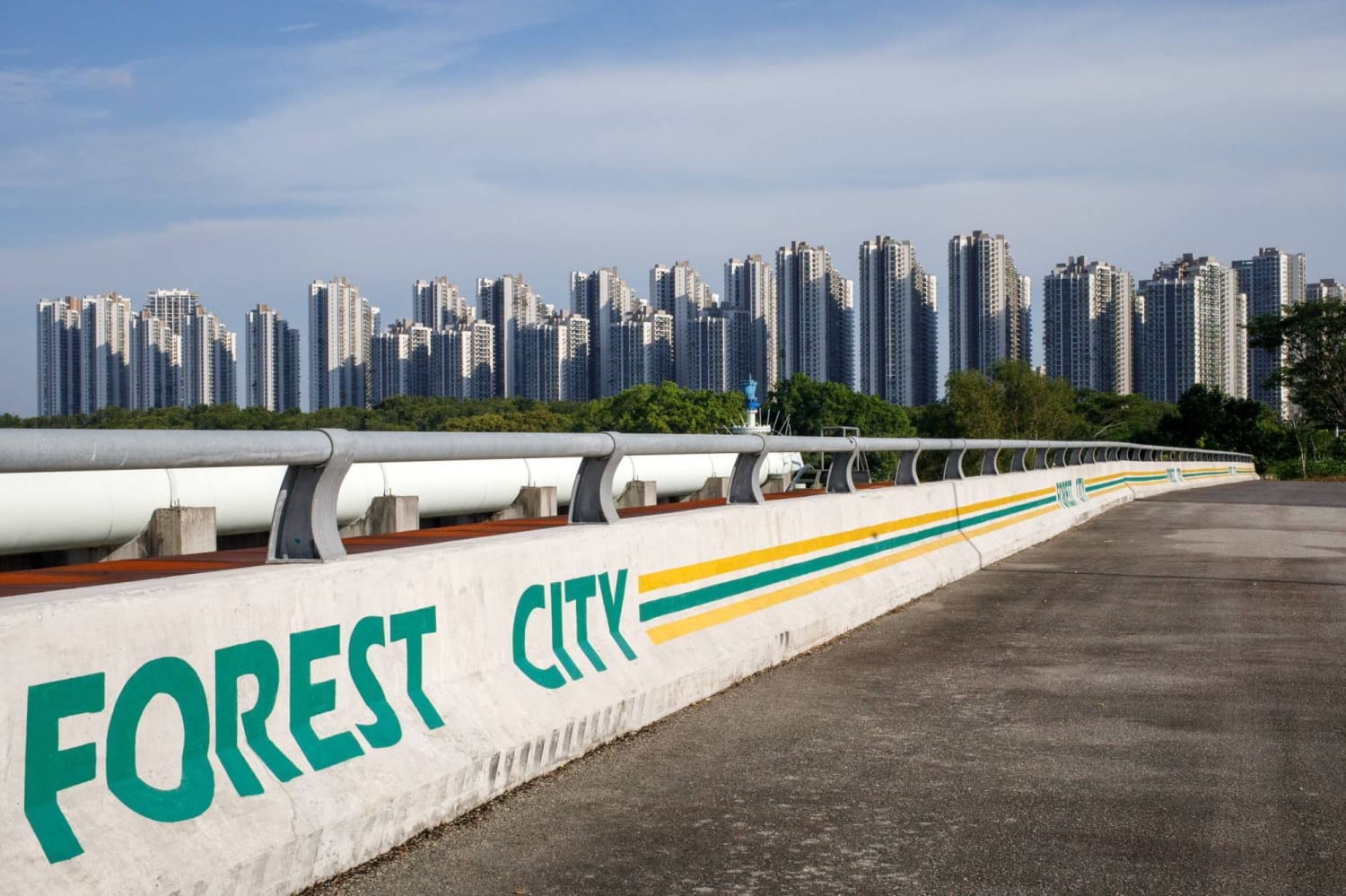
Malaysian authorities arrested 335 individuals during coordinated raids at Forest City, the sprawling Chinese-backed property development on four reclaimed islands in Johor state. The operation, conducted in late July, targeted what law enforcement officials characterize as a sophisticated online fraud operation running from inside the controversial mega-project.
Forest City sits just two kilometers from Singapore's western coast. Originally envisioned as a futuristic residential and commercial hub capable of housing 700,000 people, the development has struggled with low occupancy rates and persistent questions about its economic viability since construction began in 2014. The latest arrests add another layer of reputational risk to a project already shadowed by geopolitical sensitivity and financial uncertainty.
Network Structure and Cross-Border Reach
The detained suspects operated what investigators describe as a coordinated fraud network, exploiting the development's relatively isolated geography and sparse resident population. Specific details about the scam methodology remain under investigation, but online fraud rings operating from Southeast Asian property developments have historically targeted victims through investment schemes, romance scams, and cryptocurrency fraud.
Malaysia's proximity to Singapore and its position as a regional financial crossroads make it an attractive base for cross-border digital crime. Forest City's physical infrastructure - high-speed internet, modern office spaces, and initially lax oversight - provided operational advantages that criminal networks sought to exploit.
Forest City's Troubled Trajectory
Developed by Chinese property giant Country Garden in partnership with a Malaysian consortium, Forest City was pitched as a transformative urban experiment blending residential, commercial, and tourism functions. Initial marketing targeted Chinese buyers seeking overseas property exposure, but regulatory changes in both Malaysia and China dampened demand. By 2023, occupancy remained below 20 percent across completed phases.
The development's struggles have been compounded by shifting political winds. Malaysia's federal government has periodically signaled concern about foreign ownership concentration, while local Johor officials have defended the project as an economic catalyst. The property's ambiguous status - neither fully integrated into Malaysia's urban fabric nor commercially successful in its own right - has created governance gaps that criminal operators appear to have exploited.
Regional Pattern of Digital Crime Hubs
The Forest City arrests fit a broader pattern across Southeast Asia, where underutilized real estate projects have become staging grounds for transnational fraud. Similar operations have been disrupted in Cambodia, Myanmar, and the Philippines, often involving Chinese nationals recruited or coerced into participating in scam networks.
Law enforcement coordination across ASEAN member states has improved in response to rising digital crime, but jurisdictional complexity and resource constraints continue to challenge effective enforcement. Malaysia's Immigration Department and Royal Police Force have ramped up scrutiny of developments with high concentrations of foreign nationals, particularly those with limited legitimate business activity.
Implications for Cross-Border Investment
The raids underscore ongoing tensions between Southeast Asian governments' desire to attract foreign capital and the need to prevent criminal misuse of infrastructure. For Malaysia, the incident complicates efforts to reposition Johor as a competitive alternative to Singapore for regional business operations. The state's proximity to Singapore has long been marketed as a strategic advantage; incidents like the Forest City bust risk branding Johor as a compliance liability rather than an opportunity.
Country Garden, already navigating severe financial distress in its home market, faces additional reputational damage. The company has not commented publicly on the arrests, and it remains unclear what, if any, oversight mechanisms were in place to monitor tenant activity within Forest City's commercial and residential zones.
Malaysian authorities have indicated that investigations are ongoing and that additional arrests may follow as investigators trace financial flows and communications networks connected to the detained individuals. Regional law enforcement agencies, including those in Singapore and Thailand, are coordinating with Malaysian counterparts to identify potential cross-border victims and accomplices.
The Forest City case serves as a reminder that physical infrastructure alone cannot guarantee economic success or security. Without robust tenant vetting, active governance, and integration into legitimate economic networks, even the most ambitious developments risk becoming liabilities rather than assets.
RELATED STORIES

Selangor Pulls RM70 Billion in Six Months as Services and Manufacturing Drive Malaysia's Richest State
Anand Sundaram · 4 min

Five ASEAN Members Back Regional Oil Stockpile as Study Nears Completion
Tran Quoc Bao · 3 min

Penang Captures 34% of Malaysia's Manufacturing Investment in First Half
Anand Sundaram · 2 min
Malaysia's Rare Earth Deposits Draw Foreign Interest Ahead of China Export Controls
Priyanka V. Rao · 3 min
Spot something wrong? Email editor@briefasia.com. We log every correction publicly.