Technology · Dev
Malaysia's Data Center Boom Hits Power and Water Limits
Southeast Asia's fastest-growing hub faces infrastructure constraints as Johor state attracts billions in hyperscale investment
KEY TAKEAWAYS
- ·Johor state has announced over 2 gigawatts of planned data center capacity, making it Southeast Asia's fastest-growing hub, driven by spillover from Singapore's selective approval process.
- ·Power grid and water supply constraints have delayed multiple projects by six to nine months, as local utilities retrofit infrastructure not originally designed for high-density digital loads.
- ·Malaysia's federal government is drafting a national data center policy to standardize allocations, but operators are proceeding with bilateral deals, creating a patchwork of arrangements.
The Fastest Build-Out in the Region
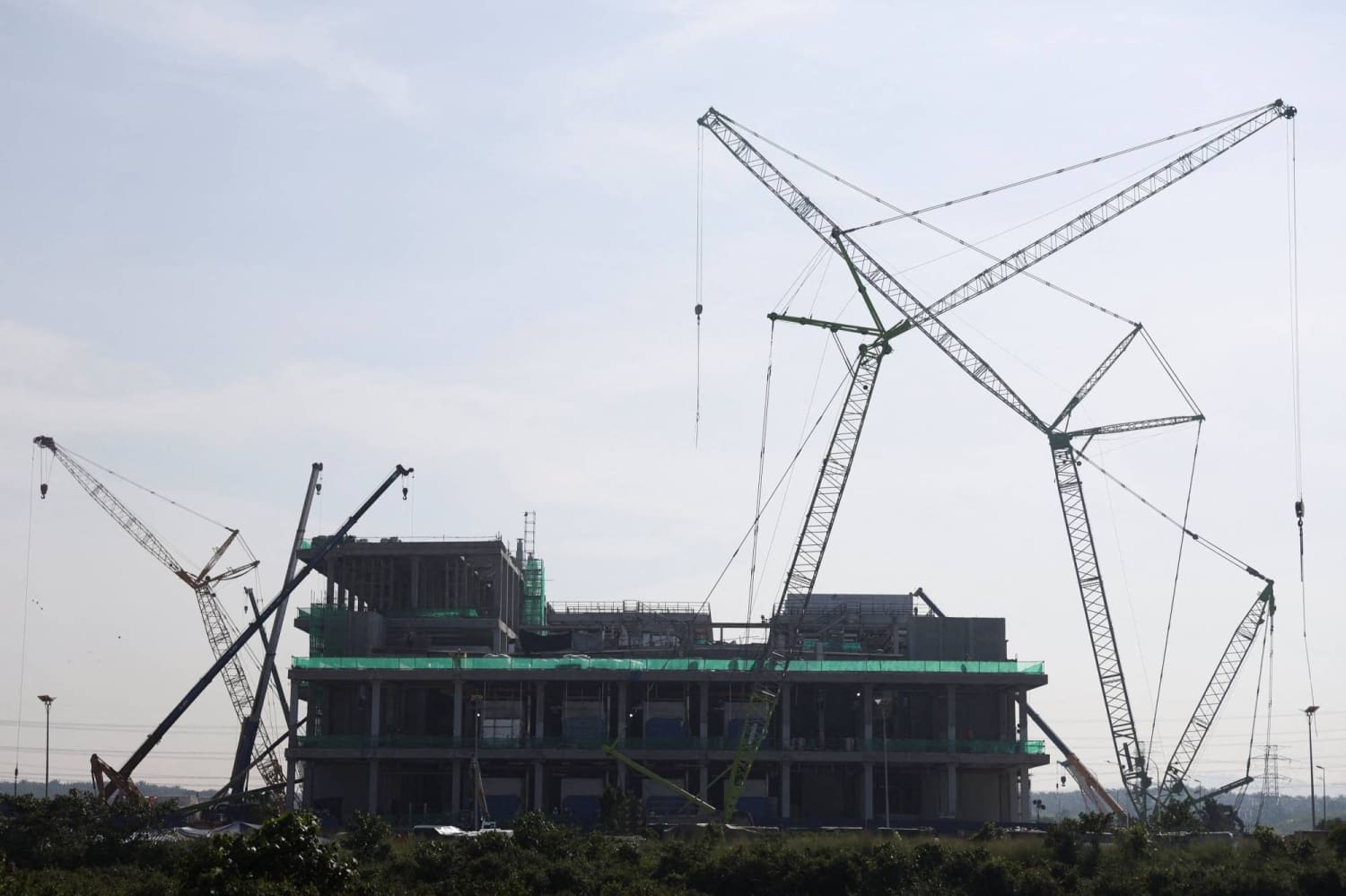
Johor state has become Southeast Asia's most aggressive data center market, drawing billions in commitments from hyperscale operators and regional infrastructure funds. Construction sites now dot the industrial corridors near Sedenak and Iskandar Puteri, where proximity to Singapore and relatively affordable land have converged to create what some industry observers call the region's next digital infrastructure frontier.
The pace of development has outstripped neighboring markets. While Thailand and Indonesia court operators with tax incentives, Malaysia has moved faster on land approvals and power allocations, enabling projects to break ground within months rather than years. Johor alone has announced more than 2 gigawatts of planned capacity, a figure that would rival established hubs in Tokyo or Sydney.
But the speed has created friction. Local utilities are scrambling to upgrade transmission infrastructure, and water authorities in the southern corridor have flagged concerns about cooling demand in a state already managing seasonal supply stress.
Resource Constraints Surface
Power availability has emerged as the binding constraint. Malaysia's national grid operator has acknowledged that Johor's electrical infrastructure was designed for manufacturing and logistics, not the constant, high-density loads that data centers require. Several projects have secured conditional approvals pending grid reinforcement, and at least two hyperscale operators have delayed construction timelines by six to nine months while waiting for substation upgrades.
Water presents a parallel challenge. Data centers in tropical climates rely heavily on evaporative cooling, and Johor's industrial water allocation framework was not built to accommodate the sector's sudden arrival. State water authorities have begun requiring new facilities to demonstrate alternative cooling strategies or invest in on-site water recycling systems, adding cost and complexity to project budgets.
The regulatory response has been reactive rather than strategic. Unlike Singapore, which imposed a moratorium on new data center builds in 2019 to reassess energy and land use, Malaysia has allowed projects to proceed while attempting to retrofit infrastructure in real time. That approach has kept capital flowing but raised questions about long-term sustainability.
The Singapore Spillover Effect
Much of Johor's momentum stems from Singapore's deliberate pause. When the city-state lifted its moratorium in 2022, it did so selectively, approving only facilities that met strict energy efficiency thresholds. Operators seeking faster timelines or lower costs began looking across the Causeway, where land prices in Johor run at a fraction of Singapore's and regulatory timelines remain shorter.
The result has been a geographic arbitrage play. Several projects in Johor are explicitly positioned as low-latency extensions of Singapore's digital ecosystem, connected by subsea fiber and designed to serve workloads that do not require in-country data residency. For operators, the model offers cost savings without sacrificing connectivity to one of Asia's primary internet exchange points.
But the spillover has also imported risk. Johor's infrastructure was not designed to absorb Singapore-scale demand, and the state's utilities lack the capital reserves and planning lead times that Singapore's statutory boards enjoy. The mismatch between ambition and capacity is now visible in project delays and rising interconnection costs.
What Comes Next
Malaysia's federal government has signaled intent to address the bottlenecks. The Ministry of Energy and Natural Resources is reportedly drafting a national data center policy that would standardize power allocations, cooling requirements, and grid access protocols. Industry groups have called for dedicated substations and priority access to renewable energy credits, arguing that data centers can anchor Malaysia's transition to higher-value digital services.
Yet policy moves slowly, and construction does not. Operators with capital committed are pressing ahead, negotiating bilateral agreements with utilities and state agencies to secure the resources their facilities need. The result is a patchwork of arrangements that may work project by project but lack the systemic coordination that long-term infrastructure planning requires.
For now, Johor remains the region's fastest build-out, a test case for whether Southeast Asia's emerging markets can scale digital infrastructure at the pace global capital demands. The answer will depend less on land and permits than on the unsexy fundamentals of power grids, water mains, and the regulatory capacity to plan for both.
RELATED STORIES
OpenAI Secures Multi-Year Malaysia Data Centre Deal with Firmus
Jun-ho Seo · 3 min

Five ASEAN Members Back Regional Oil Stockpile as Study Nears Completion
Tran Quoc Bao · 3 min
Malaysia Breaks Ground on 500km Transmission Backbone to Unlock Renewable Capacity
Priyanka V. Rao · 3 min

Top Glove Projects Strong FY2026 Results on Tighter Supply and Rising Prices
Anand Sundaram · 3 min
Spot something wrong? Email editor@briefasia.com. We log every correction publicly.