Finance · Markets
Malaysia's Currency Gains Ground Across Asia as Traders Watch West Asia Tensions
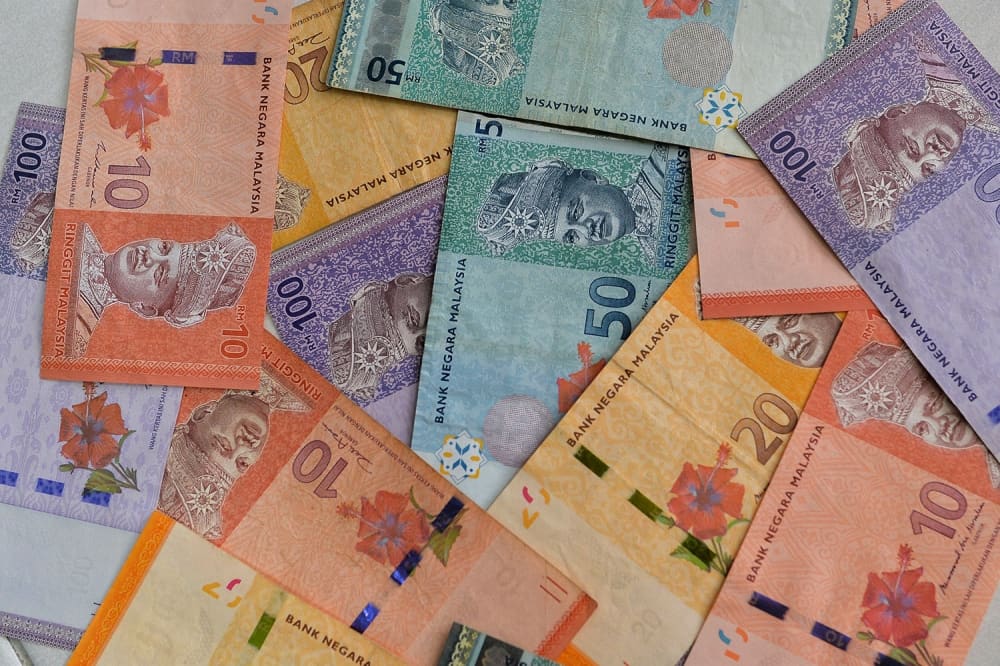
The ringgit strengthened against the euro, yen, and sterling in Wednesday trading while holding steady versus the dollar amid escalating Middle East conflict
KEY TAKEAWAYS
- ·Malaysia's ringgit appreciated to 4.6596 per euro and 2.5046 per yen on Wednesday, while holding flat at 4.0870 against the US dollar.
- ·US Treasury yields rose four to five basis points as bond markets priced in higher Fed tightening odds, supporting the dollar and capping emerging market currency gains.
- ·Bank Muamalat Malaysia projects the ringgit will trade between 4.08 and 4.10 per dollar as traders await clarity on Middle East peace negotiations and US monetary policy.
Mixed Session for Ringgit as Geopolitical Risk Dominates
Malaysia's ringgit opened Wednesday trading with gains against European and Asian currencies, though it held nearly flat against the US dollar as forex traders maintained a defensive posture amid ongoing conflict in the Middle East.
By 8am Kuala Lumpur time, the local currency stood at 4.0870 per dollar, virtually unchanged from the previous session's close of 4.0870. The stability masked divergent performance across other major pairs, with the ringgit posting solid advances against the euro, yen, and sterling.
The currency appreciated to 4.6596 per euro from Tuesday's 4.6682 close, a gain reflecting broader dollar strength rather than ringgit weakness. Against the yen, the ringgit climbed to 2.5046 from 2.5123, while it strengthened to 5.4676 per British pound compared with 5.4868 in the prior session.
Regional Currency Patterns Diverge
Within Southeast Asia, the ringgit's performance varied considerably. It gained ground against the Singapore dollar, moving to 3.1631 from 3.1682, and advanced versus the Thai baht to 12.1139 from 12.1420. However, it remained unchanged against both the Indonesian rupiah at 228.4 and the Philippine peso at 6.62.
The selective strength suggests traders are parsing individual central bank policies and trade dynamics rather than painting the entire region with a single brush. Malaysia's current account surplus and relatively stable inflation trajectory have provided a foundation for the ringgit's resilience, even as external shocks test investor nerves.
US Treasury Yields Climb as Rate Expectations Shift
Driving much of the caution in currency markets is a recalibration of US monetary policy expectations. Two-year Treasury yields rose five basis points to 4.26 percent, while 10-year notes climbed four basis points to 4.63 percent. The moves signal that bond investors are pricing in a higher probability of Federal Reserve tightening, a shift that typically supports the dollar and pressures emerging market currencies.
Dr Mohd Afzanizam Abdul Rashid, chief economist at Bank Muamalat Malaysia, noted that uncertainty over peace negotiations in the Middle East continues to anchor market sentiment. The US and Iran have exchanged attacks for a tenth consecutive day, with no clear path to de-escalation visible. That backdrop has kept risk appetite subdued across Asian equity and currency markets.
The economist projected the ringgit would likely trade in a 4.08 to 4.10 band through the remainder of Wednesday, reflecting the balance between domestic fundamentals and external volatility.
Middle East Conflict Ripples Through Asian Markets
The protracted nature of the West Asia conflict is forcing Asian central banks and finance ministries to recalibrate their outlooks. Energy import costs remain a critical variable for net oil importers such as Thailand and the Philippines, while currency volatility complicates trade financing and corporate hedging strategies.
Malaysia, as a net energy exporter, enjoys a structural buffer against oil price spikes, but it is not immune to broader risk-off flows. Foreign portfolio investors have shown a tendency to retreat from emerging Asia during periods of geopolitical stress, regardless of individual country fundamentals. That dynamic has kept the ringgit range-bound even as domestic economic indicators have remained supportive.
Bank Negara Malaysia has maintained its overnight policy rate at a level designed to balance growth and inflation, but the central bank's room for maneuver narrows if external shocks intensify. A sharp spike in global risk aversion could force policymakers to choose between defending the currency and preserving liquidity for the domestic banking system.
Divergent Trajectories in Asian FX
The ringgit's mixed performance mirrors a broader pattern across the region. Currencies tied to commodity exports, such as the Indonesian rupiah and Malaysian ringgit, have shown relative stability, while those more exposed to manufacturing supply chains and external demand, including the Thai baht, have faced headwinds.
Singapore's dollar, backed by the Monetary Authority of Singapore's managed float regime, continues to serve as a regional anchor. The Singapore dollar's modest weakening against the ringgit suggests that traders see Malaysia's near-term risk-reward profile as marginally more attractive, though the difference remains small.
The yen's continued weakness, meanwhile, reflects Japan's ultra-loose monetary policy stance, which stands in stark contrast to tightening cycles elsewhere. For Malaysian exporters selling into Japan, the weaker yen erodes purchasing power and may dampen order flows in the months ahead.
What Traders Are Watching
In the near term, currency desks across Kuala Lumpur and Singapore are monitoring three key variables. First, any breakthrough or further deterioration in Middle East peace talks will immediately shift risk sentiment and drive flows into or out of emerging market currencies.
Second, the trajectory of US Treasury yields will determine the dollar's strength. If bond markets continue to price in Fed tightening, the ringgit and its regional peers will face persistent headwinds, regardless of domestic fundamentals.
Third, Malaysia's own economic data releases, including trade balance figures and inflation prints, will shape expectations for Bank Negara's next policy move. A stronger-than-expected current account surplus or cooling inflation could provide the ringgit with a tailwind, offsetting some of the external pressure.
For now, the ringgit's modest gains against European and selected Asian currencies reflect a market in wait-and-see mode. Traders are positioning for volatility but remain reluctant to take large directional bets until the geopolitical fog lifts. The 4.08 to 4.10 range against the dollar appears likely to hold in the absence of a major shock, offering a narrow corridor for corporate hedgers and portfolio managers to navigate.
RELATED STORIES
Ringgit Strengthens as Malaysia's Stable Rates Signal Policy Flexibility
Mariel D. Santos · 3 min
Ringgit Gains Ground as Traders Await Fed Chair Warsh's Jackson Hole Address
Priyanka V. Rao · 3 min

Malaysia's KLCI Index to Add 20 Stocks in Phased Expansion
Jun-ho Seo · 2 min
Malaysian Ringgit Strengthens on Strong US Jobs Data
Tran Quoc Bao · 3 min
Spot something wrong? Email editor@briefasia.com. We log every correction publicly.