Sustainability · Energy
Malaysia's Coal Exit Faces Gas Trap Without Faster Renewable Build-Out
A World Economic Forum report warns that retiring coal plants could simply be replaced by gas-fired generation if solar, storage and grid upgrades lag behind the 2044 phase-out timeline.
KEY TAKEAWAYS
- ·Malaysia plans to phase out coal power by 2044, with aging plants scheduled to retire from 2029, but faces risk of replacing coal with gas if renewables lag.
- ·Coal currently accounts for 13.1 GW or 32.3 per cent of capacity, while renewable target is 68 GW by 2050, representing 70 per cent of installed capacity.
- ·World Economic Forum recommends repurposing retiring coal sites into solar and storage hubs to accelerate clean energy deployment and avoid gas lock-in.
Racing the Clock on Coal Retirements
Malaysia has committed to phasing out coal power by 2044 and will not build new coal plants. But the speed at which the country brings renewable capacity online will determine whether this transition strengthens energy security or simply shifts dependence from coal to gas, according to the World Economic Forum.
A recent WEF analysis identifies a narrow window for action. Aging coal plants in Peninsular Malaysia are scheduled to begin retiring from the end of this decade. If solar, battery storage and grid infrastructure do not expand quickly enough to absorb that capacity, gas-fired generation will fill the gap by default.
The stakes are higher than they appear. Malaysia's electricity demand is projected to grow 4.5 per cent annually in the medium term, driven by economic expansion, electrification and data centre investment. Data centres alone could account for around 11 per cent of Peninsular Malaysia's peak load by 2035, according to figures cited in the report.
Coal currently represents 32.3 per cent of installed capacity, or 13.1 gigawatts. Gas accounts for 37.6 per cent, or 15.3 GW. Solar stands at 10.3 per cent, or 4.2 GW, while hydropower makes up 15.6 per cent, or 6.3 GW, based on 2024 data.
Under the National Energy Transition Roadmap, Malaysia aims to lift renewable capacity, including hydro, from around 13 GW in 2025 to 68 GW by 2050, with renewables comprising 70 per cent of installed capacity.
The Gas Lock-In Risk
Gas has long been positioned as a transition fuel to provide firm power and system balancing as coal is phased down. But deeper reliance on gas carries two risks: rising emissions and supply vulnerability.
Domestic gas reserves in Peninsular Malaysia are declining, making the country increasingly dependent on liquefied natural gas imports. The disruption to the Strait of Hormuz earlier this year underscored the fragility of LNG supply chains, the WEF report noted.
If retiring coal capacity is replaced primarily by gas, Malaysia could lock in decades of fossil fuel dependence and exposure to volatile import prices, undermining both climate goals and energy security.
The WEF analysis stresses that renewables must "take over from coal rather than gas." This requires not only faster deployment of solar and wind but also parallel investments in energy storage and grid upgrades to manage the variability of renewable generation.
Turning Old Coal Sites Into Clean Energy Hubs
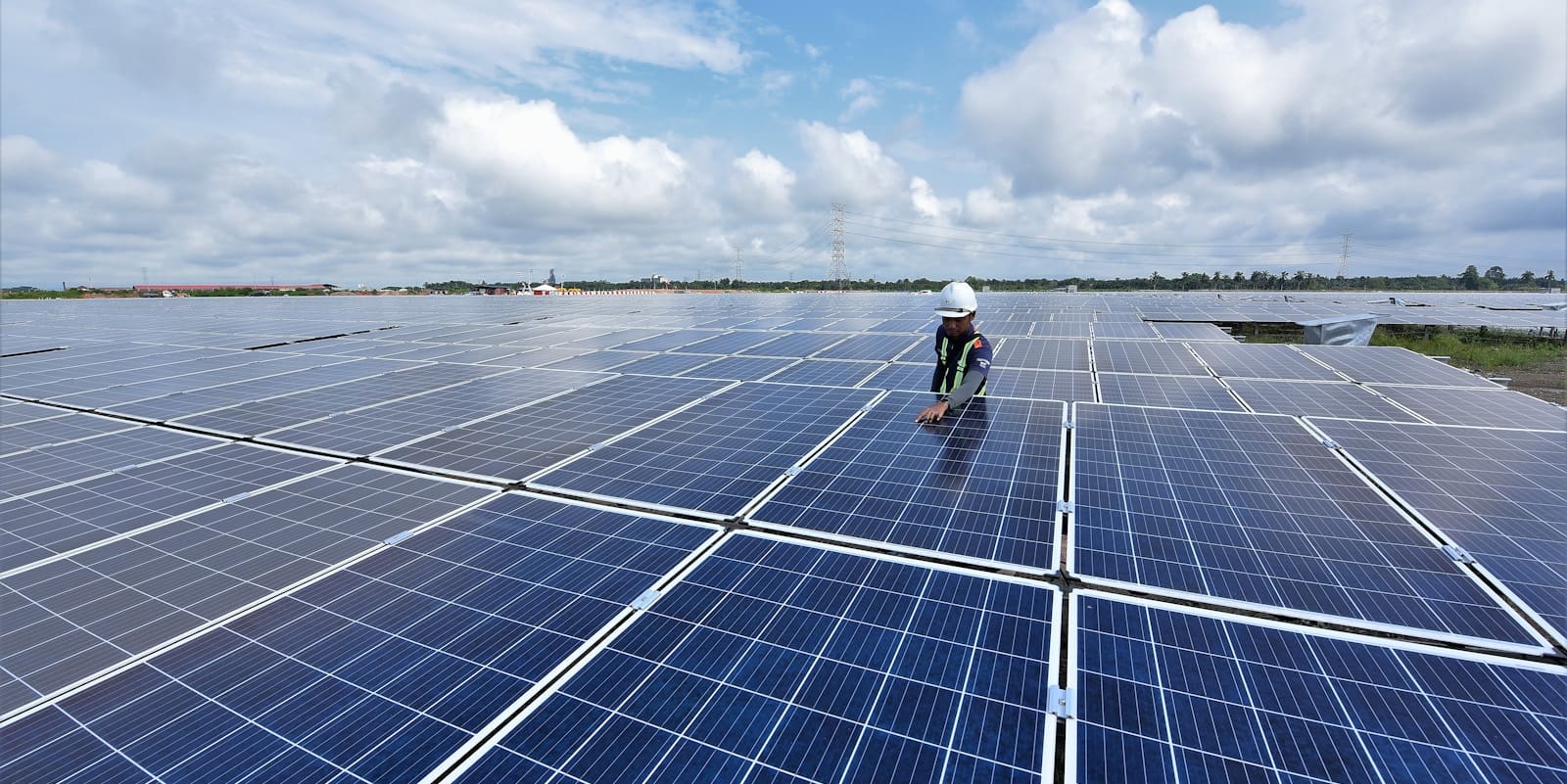
One of the report's core recommendations is the establishment of a National Coal Site Repurposing Framework. Retiring coal plants sit on land with existing grid connections, transmission infrastructure and access rights. These sites could be converted into solar farms, battery storage facilities or other clean energy assets.
Repurposing coal sites offers a way to accelerate renewable deployment while minimizing disruption to electricity supply. It also avoids the need to build entirely new grid connections, cutting both cost and time.
The WEF describes coal site repurposing as a "no-regrets" solution, particularly given that several plants are already scheduled for retirement. The framework would need to address regulatory, financial and technical barriers to conversion, including land use approvals, financing mechanisms and grid integration standards.
The report also calls for ensuring that renewable energy availability "leads coal retirements" rather than trailing behind. This means front-loading investments in solar, storage and grid flexibility so that clean capacity is ready before coal plants go offline.
Managing Gas Without Long-Term Lock-In
The report does not call for eliminating gas entirely in the near term. Instead, it recommends managing gas as a transitional fuel while avoiding long-term infrastructure commitments that would entrench dependence.
One option is coal-to-flex, where appropriate, using flexible operation of existing assets to support variable renewable energy integration without defaulting to gas substitution. Fuel blending is also suggested as a transitional measure to contribute to the coal phase-down.
Over the longer term, two pathways could reduce Malaysia's reliance on gas for firm power: regional grid integration and nuclear energy.
The Asean Power Grid could allow Malaysia to draw on electricity resources from neighboring countries to balance variability and manage system load. Greater regional interconnection would also enable Malaysia to export surplus renewable generation during periods of high output.
Nuclear power, if it becomes a viable option for Malaysia, could provide a source of firm, low-carbon electricity. The report suggests that Malaysia's regional leadership position could be leveraged to advance the Asean Power Grid, progressively reducing the need for gas as more renewable capacity comes online.
A Window Closing Fast
Malaysia's coal transition is not simply a matter of fuel substitution. It requires a fundamental redesign of the power system around renewables, storage, stronger transmission networks and regional interconnection.
The sequencing of these investments will be critical. With coal retirements set to begin in earnest from 2029, Malaysia has a five-year window to ensure that the infrastructure, policy frameworks and financing mechanisms are in place to support a renewable-led transition.
If that window closes without sufficient action, the country risks drifting into greater gas dependence by default, locking in fossil fuel infrastructure and undermining both climate and energy security objectives.
The opportunity is clear: convert retiring coal sites into clean energy assets, accelerate solar and storage deployment, and strengthen regional grid ties. The question is whether Malaysia can move fast enough to seize it.
RELATED STORIES

Malaysia's Stalled Climate Bill Threatens Investor Confidence
Priyanka V. Rao · 4 min

Hong Kong Opens Kuala Lumpur Office in Asia Network Push
Cheng Wei-Lun · 4 min
ASEAN Targets Fourth-Largest Economy Spot as Internal Trade Lags Behind
Priyanka V. Rao · 3 min

Indonesia Car Sales Jump 34% as Electric Vehicles Reshape Southeast Asia's Auto Market
Siti Nuraini · 3 min
Spot something wrong? Email editor@briefasia.com. We log every correction publicly.