Sustainability · Climate
Malaysia's Stalled Climate Bill Threatens Investor Confidence
Regulatory uncertainty from postponed legislation and carbon pricing delays is eroding business certainty in Southeast Asia's third-largest economy

KEY TAKEAWAYS
- ·Malaysia's climate change bill remains untabled despite completing consultations before May 2025, with former minister Nik Nazmi warning that regulatory uncertainty undermines investor confidence more than strict environmental rules.
- ·The country spends up to RM6 billion monthly on fuel subsidies while delaying carbon tax implementation originally scheduled for 2026, targeting steel and energy sectors.
- ·Health expert Jemilah Mahmood calls for treating climate as a national security issue, citing Malaysia's 2021 floods that caused RM17.5 billion in damage and lost economic activity as evidence adaptation investments reduce future losses.
Policy Paralysis Creates Business Uncertainty
Malaysia's protracted failure to advance climate legislation is damaging investor confidence and slowing the country's transition to a low-carbon economy, according to Nik Nazmi Nik Ahmad, who served as natural resources and environmental sustainability minister until May 2025.
Speaking at the National Climate Governance Malaysia Summit in Kuala Lumpur last week, Nik Nazmi revealed that draft climate legislation had completed consultations with state governments, industry groups, and civil organizations before his departure from office. The bill remains untabled in Parliament months later, creating a policy vacuum that compounds existing delays to carbon pricing mechanisms announced in 2024.
"Businesses value regulatory certainty above all else," Nik Nazmi said, according to summit organizers. "Regulatory clarity matters more to corporate planning than the strictness of environmental requirements."
The government initially signaled carbon tax implementation for 2026, targeting steel and energy sectors. No concrete timeline has emerged since that announcement during the 2024 federal budget presentation.
Fuel Subsidies Drain RM6 Billion Monthly
Malaysia allocates up to RM6 billion ($1.47 billion) each month to maintain RON95 fuel subsidies, expenditure that Nik Nazmi argued could fund public services or accelerate clean energy deployment. The country maintains some of Southeast Asia's cheapest petrol prices through blanket subsidy programs that economists have criticized as fiscally inefficient and environmentally counterproductive.
Recent electric vehicle policy adjustments have pushed imported EV prices to RM200,000 ($48,900), a threshold Nik Nazmi characterized as favoring luxury models rather than enabling mass-market adoption. He urged the current administration under Natural Resources and Environmental Sustainability Minister Arthur Joseph Kurup to advance both the climate bill and Malaysia's National Adaptation Plan, noting that flooding, temperature increases, and related impacts demand urgent policy responses.
"Legislation will attract criticism for being insufficient," Nik Nazmi acknowledged. "Pursuing perfect policy guarantees continued inaction."
Health Expert Calls Climate a Security Threat
Jemilah Mahmood, former special adviser to the prime minister on public health and executive director of Sunway Centre for Planetary Health, argued that Malaysian policymakers fundamentally miscategorize climate change by treating it as an economic or environmental issue rather than a national security priority.
"Climate impacts threaten population health, agricultural output, and social stability," Jemilah said during the panel discussion. "This demands the same level of governmental urgency applied to defense and public safety."
She drew parallels to the 2013 death of nine-year-old Ella Adoo-Kissi-Debrah in London, whose asthma-related death became the first globally attributed to air pollution through an official inquest. That case catalyzed stricter air quality regulations in the United Kingdom. Jemilah contrasted this outcome with Southeast Asian haze episodes that have caused respiratory deaths without triggering comparable policy reforms.
"Regional haze has killed children with asthma, yet no politician addresses this with the seriousness it deserves," she said.
Jemilah called for an independent national climate security assessment modeled on exercises conducted by Australia, Germany, and the United Kingdom to identify Malaysia's most severe climate vulnerabilities. She emphasized that climate impacts extend beyond emissions to include biodiversity loss, coral reef degradation, declining fish stocks, and deteriorating health outcomes among vulnerable populations.
Adaptation Finance Lags Behind Mitigation
Edward Vrkić, resident representative to Malaysia, Singapore, and Brunei Darussalam for the United Nations Development Programme, highlighted the persistent imbalance in global climate finance. Approximately 17 percent of climate funding currently supports adaptation measures, with private capital gravitating toward mitigation projects like renewable energy where returns are more easily quantified.
"Investment capital flows toward predictable returns," Vrkić said, according to UNDP. "The challenge for adaptation finance is demonstrating economic value in risk reduction."
He cited Malaysia's 2021 floods, which caused an estimated RM8 billion ($1.95 billion) in infrastructure damage and RM9.5 billion ($2.32 billion) in lost economic activity, as evidence that resilience investments deliver measurable financial benefits by reducing future losses.
Vrkić projected that Southeast Asia requires approximately $400 billion in climate finance over the next five years, with roughly half needed for adaptation initiatives. He advocated for integrating climate considerations into infrastructure planning, urban development, and financial systems rather than treating adaptation, mitigation, and economic growth as competing priorities.
Local Action Fills Policy Void
Both Jemilah and Vrkić stressed that government action alone cannot address Malaysia's climate vulnerabilities. Jemilah urged civil society organizations, businesses, and local governments to collaborate on community-level resilience building rather than awaiting federal policy direction.
"Meaningful change requires local implementation," she said. "Communities cannot afford to wait for top-down policy solutions that may not materialize."
The summit discussions underscored growing frustration among climate advocates and former policymakers over Malaysia's inability to translate climate commitments into concrete legislative and regulatory frameworks. With younger Malaysians expressing increasing concern about climate impacts, the gap between public expectations and governmental action continues to widen, creating both political and economic risks for Southeast Asia's third-largest economy.
RELATED STORIES
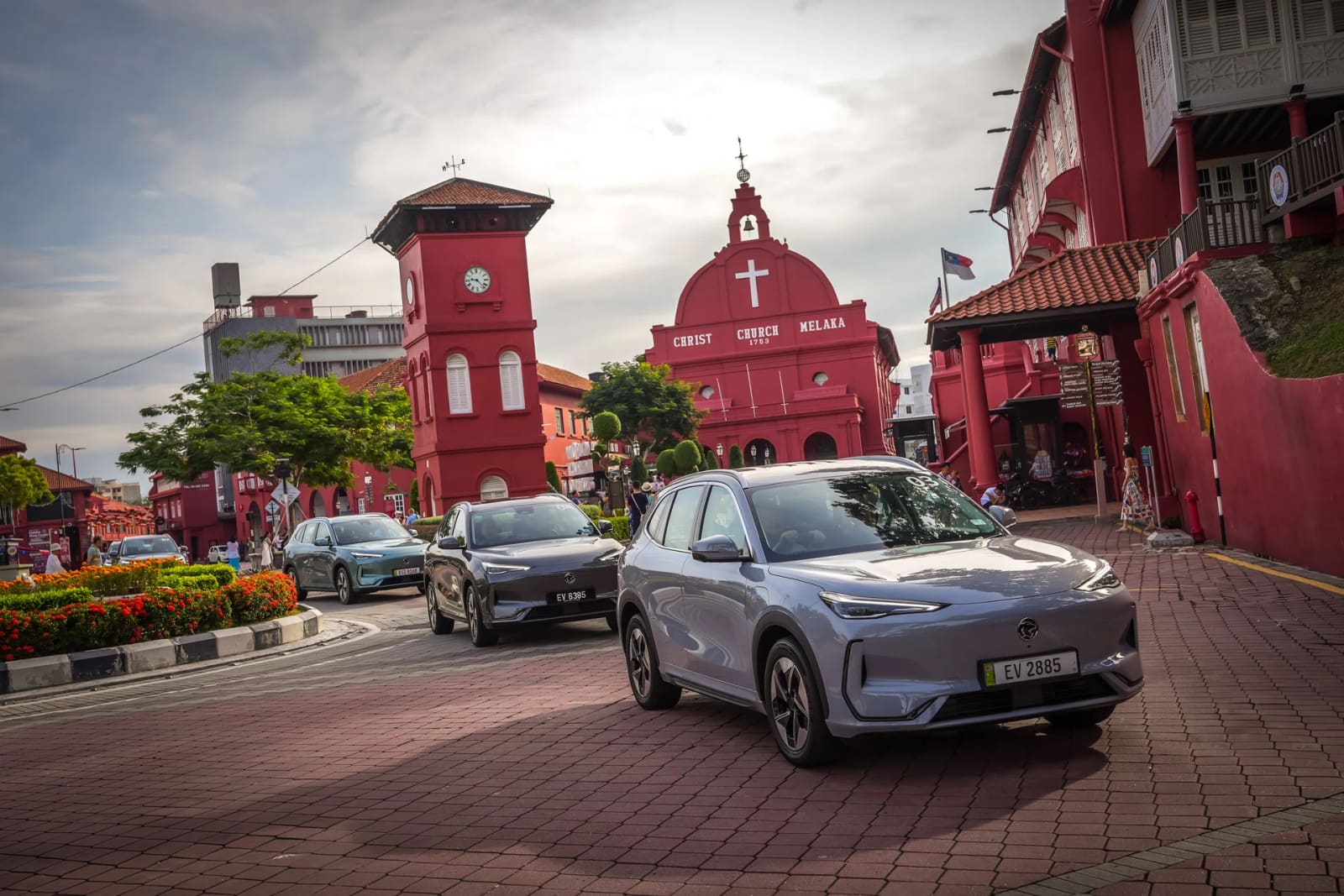
Malaysia Tightens EV Import Rules to Drive Local Manufacturing
Priyanka V. Rao · 3 min

Proton e.MAS Reaches 30,000 Units in 20 Months as Malaysia Accelerates EV Adoption
Priyanka V. Rao · 3 min
BMW Malaysia Pushes Back on EV Charging Levy Proposal
Priyanka V. Rao · 3 min
Singapore Approves 900MW Solar Import From Malaysia as Regional Grid Takes Shape
Priyanka V. Rao · 3 min
Spot something wrong? Email editor@briefasia.com. We log every correction publicly.