Sustainability · Mobility
BMW Malaysia Pushes Back on EV Charging Levy Proposal
German automaker warns that funding infrastructure through new fees on manufacturers could hinder electric vehicle adoption in Southeast Asia's third-largest market
KEY TAKEAWAYS
- ·BMW Group Malaysia is opposing a proposed government levy on automakers to fund EV charging infrastructure, arguing it would add unnecessary burdens to manufacturers already managing a complex transition.
- ·The company says Malaysia's infrastructure challenge extends beyond charging stations to include adequate electricity supply and grid readiness, which automakers cannot address independently.
- ·Malaysia's Investment, Trade and Industry Ministry recently suggested some automakers had not invested sufficiently in charging networks despite receiving EV incentives, prompting industry pushback.
Automaker Warns Against Additional Burdens
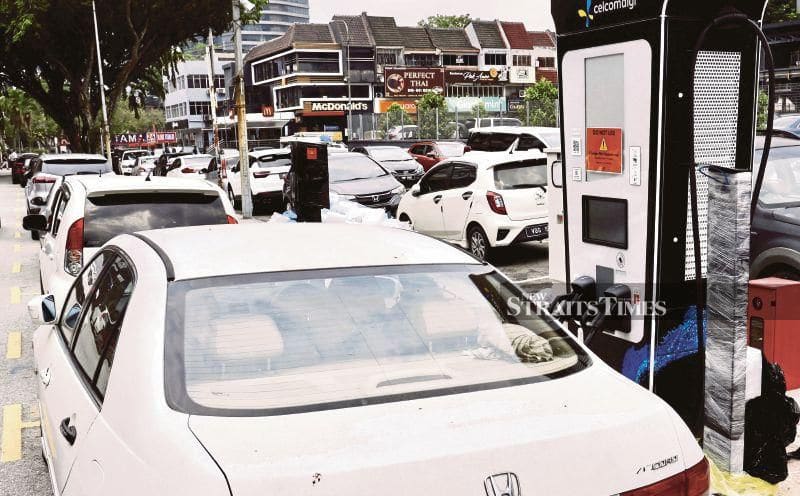
BMW Group Malaysia has voiced concerns over government proposals to introduce a levy on electric vehicle manufacturers to finance public charging infrastructure, warning that such measures could add unnecessary pressure on an industry already navigating a complex transition.
The pushback comes as Kuala Lumpur explores funding mechanisms to accelerate charging network expansion across the country. Despite previous incentives aimed at boosting EV adoption, infrastructure growth has lagged behind vehicle sales, prompting policymakers to consider new revenue sources.
Managing director Benjamin Nagel said any policy changes should involve thorough consultation with industry stakeholders before implementation. Speaking at the launch of the iX3 50 xDrive M Sport Pro, he emphasized that regulatory frameworks should facilitate rather than complicate the shift to electric mobility.
"Policy proposals should be shared and discussed with the industry," Nagel said, according to BMW. "Make the process easy. Make the applications and everything as straightforward as possible."
Infrastructure Gaps Beyond Charging Points
Nagel argued that Malaysia's infrastructure challenge extends beyond simply installing more charging stations. Adequate electricity supply at strategic locations remains a fundamental prerequisite that automakers cannot address alone.
The company pointed out that manufacturers can only handle the final installation of charging equipment, not the underlying electrical grid work required across cities and highways. Cable laying and power distribution fall outside the scope of what vehicle producers can reasonably finance or execute.
"The power supply needs to be there," Nagel noted. "An original equipment manufacturer can only do the end part. It cannot lay cables in the entire city."
He suggested the government should examine process improvements and regulatory streamlining rather than introducing additional levies that shift infrastructure costs onto manufacturers.
Ministry Critique Sparks Industry Response
The charging infrastructure debate intensified after Malaysia's Investment, Trade and Industry Ministry suggested some automakers had not invested sufficiently in charging networks despite receiving EV incentives.
Nagel defended BMW's track record, pointing to more than two decades of operations in Malaysia and ongoing collaborations with charging operators and the company's dealer network. BMW Malaysia's training center in Cyberjaya serves technicians from approximately 20 regional markets and was the first facility outside the company's German headquarters to achieve its highest high-voltage certification.
The Cyberjaya center trains technicians in both internal combustion engine and electric vehicle systems, with BMW partnering with the Selangor government and Selangor Technical Skills Development Centre to develop local talent.
"We train Malaysians to become world-class technicians," Nagel said. "Transformation goes far beyond pure charging."
Adoption Risks in a Nascent Market
Nagel acknowledged that charging availability remains critical to sustaining EV market growth in Malaysia, describing the situation as a circular challenge. Without sufficient charging infrastructure, consumer confidence in electric vehicles weakens, potentially stalling adoption rates just as the market begins to gain momentum.
Malaysia's EV market is still in early stages compared to regional leaders like Thailand and Indonesia, which have secured major manufacturing commitments from Chinese and Japanese automakers. The country's charging network remains concentrated in urban areas, with limited coverage along highways and in rural regions.
The levy proposal reflects broader tensions across Southeast Asia as governments balance the need for rapid infrastructure buildout against limited public budgets and competing priorities. Thailand has pursued a different model, offering subsidies directly to charging station operators, while Indonesia has mandated that EV manufacturers install a minimum number of chargers as a condition of market access.
Nagel said BMW will continue engaging with Malaysian authorities to identify the most effective pathways forward, emphasizing that regulatory simplicity often proves more valuable than additional mandates in accelerating market transformation.
RELATED STORIES
Malaysia Tightens EV Import Rules to Drive Local Manufacturing
Priyanka V. Rao · 3 min
Proton e.MAS Reaches 30,000 Units in 20 Months as Malaysia Accelerates EV Adoption
Priyanka V. Rao · 3 min

Indonesia Car Sales Jump 34% as Electric Vehicles Reshape Southeast Asia's Auto Market
Siti Nuraini · 3 min

Singapore Approves 900MW Solar Import From Malaysia as Regional Grid Takes Shape
Priyanka V. Rao · 3 min
Spot something wrong? Email editor@briefasia.com. We log every correction publicly.