Asia · Business
Lotte Wellfood Expands Choco Pie Production in India With New $20.5 Million Line
The South Korean confectionery giant's fourth production facility in Haryana will lift annual capacity by a third as demand accelerates across the subcontinent.
KEY TAKEAWAYS
- ·Lotte Wellfood has commissioned a fourth Choco Pie production line in Rohtak, India, after investing $20.5 million, raising annual capacity by 33 percent.
- ·The expansion reflects confidence in India's packaged snack market, where rising incomes and urbanization are driving demand for affordable branded products.
- ·Lotte now faces the test of converting added capacity into market share gains in a price-sensitive, fragmented retail environment with intense competition.
South Korea's Sweet Push Into the Subcontinent
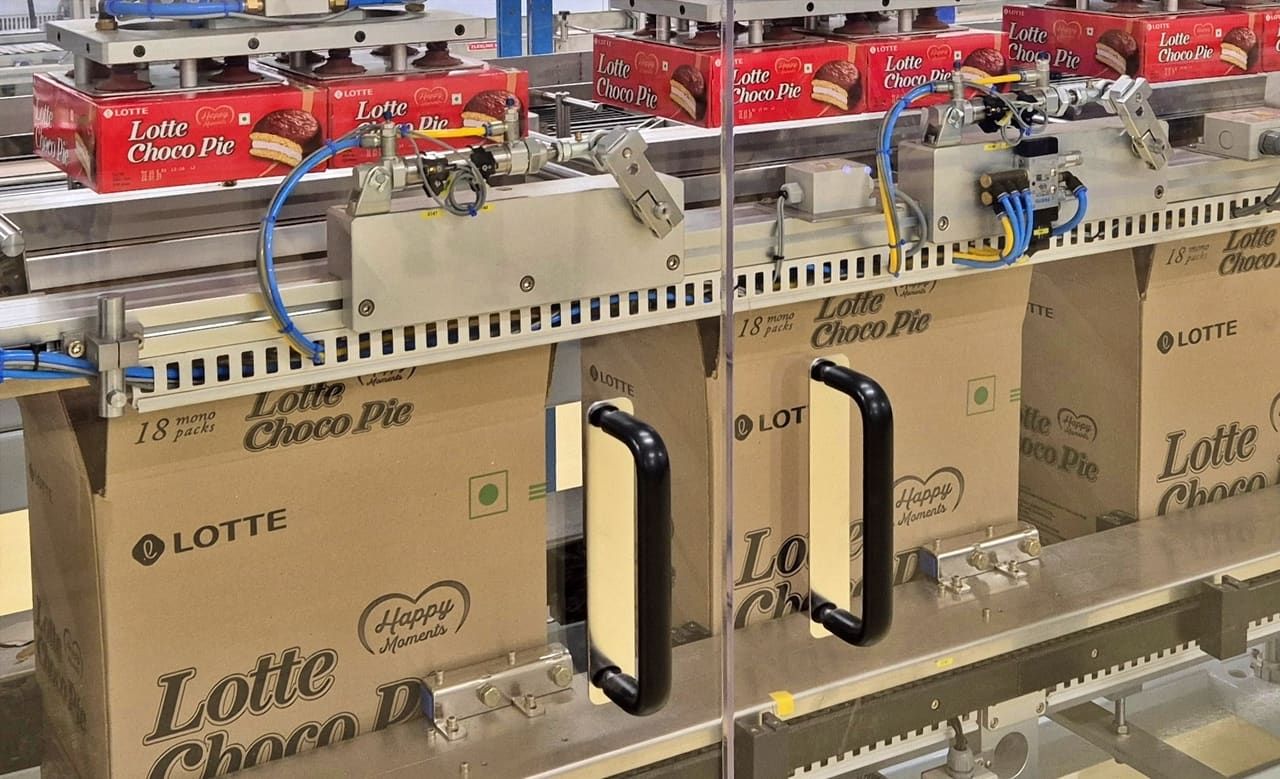
Lotte Wellfood has switched on its fourth Choco Pie production line in India, a move that positions the South Korean confectionery maker to capture a larger slice of one of Asia's fastest-growing snack markets. The company poured approximately 30 billion won, or $20.5 million, into the new facility at its existing Rohtak plant in Haryana state, according to an announcement from the company.
The line began trial operations in June and reached full commercial production this month following a stabilization period. The addition lifts Lotte India's annual Choco Pie manufacturing capacity by roughly 33 percent, a significant step-change for a brand that has been present in the Indian market for over two decades.
Betting on Rising Demand
India's packaged snack sector has seen steady expansion as urbanization accelerates and disposable incomes climb, particularly among the country's burgeoning middle class. Lotte Wellfood's decision to expand rather than simply import more volume from South Korea or Vietnam reflects confidence that local production economics and consumer appetite can sustain a larger footprint.
The Rohtak facility, located about 70 kilometers northwest of New Delhi, serves as Lotte's primary manufacturing hub for the Indian subcontinent. By adding a fourth line at the same site, the company gains logistical efficiencies and shorter lead times to distributors across northern and central India, regions where Choco Pie has built recognition as an affordable indulgence.
The 33 percent capacity increase suggests Lotte expects demand growth to outpace current supply within the next few years. While the company did not disclose absolute production volumes, a jump of that magnitude typically signals multi-year demand visibility and a willingness to absorb higher fixed costs in exchange for market share gains.
Regional Context and Competitive Pressure
Lotte Wellfood's investment comes as other Asia-Pacific food manufacturers also deepen their commitments to India. Mondelez International, Britannia, Parle, and ITC all compete in overlapping snack categories, and several have announced capacity expansions or new product launches in the past year.
For South Korean food companies, India represents both opportunity and challenge. The market is price-sensitive, distribution networks are fragmented, and taste preferences vary widely by region. Yet scale matters: India's population of 1.4 billion and rising per-capita consumption of packaged foods make it one of the few markets globally where incremental volume can move the needle for multinational players.
Lotte's Choco Pie, a chocolate-coated marshmallow sandwich cake, has achieved cult status in several Asian markets, including South Korea, China, Vietnam, and Russia. In India, it competes against local biscuit and cake brands as well as global offerings from Nestlé and Mondelez. The product's shelf stability, portion control, and relatively low price point have helped it gain traction in both urban retail chains and rural mom-and-pop stores.
What Comes Next
The Rohtak expansion is unlikely to be Lotte's last move in India. The company has signaled in past earnings calls that it views South and Southeast Asia as priority growth regions, particularly as saturation looms in its home market of South Korea and competitive intensity rises in China.
Investors and industry watchers will be looking for signs that the new capacity translates into market share gains and improved utilization rates. If demand absorption is slower than expected, Lotte may face margin pressure from underutilized assets. Conversely, if the line ramps quickly, a fifth production facility could be on the table within the next three to five years.
For now, the Rohtak plant's expanded output will test whether Lotte can convert India's demographic tailwinds into sustained revenue growth, a challenge that has tripped up more than a few multinationals in the subcontinent's complex consumer landscape.
RELATED STORIES
Kubota Expands Indian Production to Target Western Markets
Priyanka V. Rao · 3 min
India's Chinese Import Bill Climbs Despite Self-Reliance Push
Priyanka V. Rao · 3 min
India's 7.8% GDP Growth Sparks Debate Over Revised Base Year Calculations
Rajesh K. Iyer · 3 min

China Shifts Pharma Strategy From Manufacturing to Drug Ownership
Priyanka V. Rao · 3 min
Spot something wrong? Email editor@briefasia.com. We log every correction publicly.