Technology · Dev
Lotte Mart Opens Busan Fulfillment Center in $710M Logistics Push
South Korean retailer deploys 40,000-square-meter automated facility to serve online grocery orders across southeastern region
KEY TAKEAWAYS
- ·Lotte Mart opened a 40,000-square-meter automated fulfillment center in Busan capable of handling 35,000 products, part of a 1 trillion won ($710.3 million) logistics investment.
- ·The facility automates the full order cycle and will serve online grocery customers across Busan and southeastern South Korea, a region with dense population and rising delivery demand.
- ·The investment reflects intensifying competition from Coupang and other e-commerce players, forcing traditional Korean grocers to match fast fulfillment standards in a tight labor market.
Automation Comes to Korea's Grocery Sector
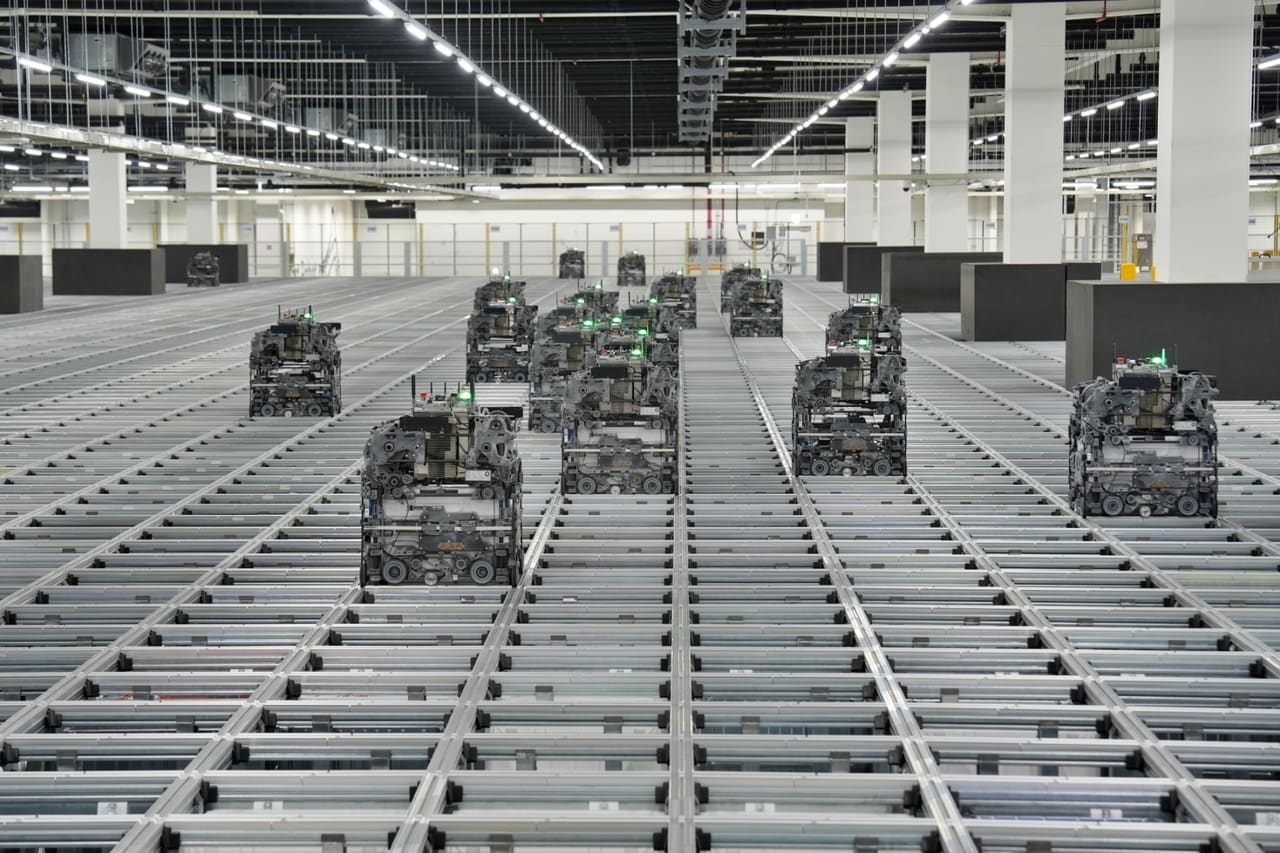
Lotte Mart opened a fully automated customer fulfillment center in Busan on Friday, marking a significant step in South Korea's grocery retail automation race. The facility, named Zetta Smart Center Busan, represents the retailer's first deployment of end-to-end automated logistics for online grocery operations.
The four-story center occupies 40,000 square meters and can process up to 35,000 distinct product SKUs, according to Lotte Mart. The facility automates the entire order cycle, from receiving inbound inventory and picking items to packing customer orders and dispatching them for delivery. It will handle online grocery orders for customers across Busan and the broader southeastern corridor of South Korea.
The Busan center is the anchor project in a 1 trillion won investment program, equivalent to $710.3 million, that Lotte Mart is channeling into upgrading its e-commerce logistics backbone. The investment signals how traditional brick-and-mortar retailers in Asia are racing to match the fulfillment speed and cost structure of pure-play e-commerce platforms.
Regional Fulfillment Strategy
By positioning the facility in Busan, South Korea's second-largest city and a major port hub, Lotte Mart gains access to a dense urban market while also covering the surrounding Gyeongsang provinces. The southeastern region accounts for a substantial share of South Korea's population and has seen rising demand for same-day and next-day grocery delivery.
The automation infrastructure allows Lotte Mart to consolidate inventory that was previously spread across multiple smaller warehouses or store backrooms. Centralized fulfillment typically reduces labor costs per order and improves inventory turnover, critical metrics as online grocery margins remain thin across Asia.
Lotte Mart did not disclose the specific robotics or software vendors involved in the Busan facility, but industry patterns suggest a mix of automated storage and retrieval systems, conveyor networks, and picking robots. South Korean retailers have increasingly turned to domestic automation suppliers as well as global providers to build out these capabilities.
Competitive Pressure in Korean Grocery
The move comes as competition intensifies in South Korea's online grocery market. Coupang, the country's dominant e-commerce player, has set aggressive delivery standards with its Rocket Fresh service, often promising delivery within hours. Traditional grocers like Lotte Mart, along with rivals Emart and Homeplus, have been compelled to invest heavily in logistics to retain market share.
South Korea's high urban density, advanced digital infrastructure, and consumer appetite for fast delivery make it a proving ground for automated fulfillment models. The country's grocery sector has also seen the entry of quick-commerce startups and platform players, further raising the bar for fulfillment speed.
Lotte Mart operates more than 100 hypermarkets across South Korea and has been expanding its online channel as foot traffic to physical stores plateaus. The retailer has integrated its offline and online inventory systems, allowing customers to order online and pick up in-store or receive home delivery sourced from the nearest fulfillment point.
Capital Intensity and Payback
A 1 trillion won commitment underscores the capital intensity required to compete in modern grocery retail. Automated fulfillment centers demand significant upfront investment in real estate, racking systems, robotics, and software integration, with payback periods often stretching several years.
However, the economics improve as order volumes scale. Automated systems can handle higher throughput with fewer labor hours per order compared to manual picking in store aisles or traditional warehouses. In a tight labor market like South Korea's, where wages are rising and younger workers are less willing to take warehouse jobs, automation offers a structural advantage.
Lotte Mart's investment also reflects a broader trend across Asia, where grocers in markets from Singapore to Tokyo are retrofitting supply chains built for physical retail into networks optimized for e-commerce. The shift requires not just automation but also changes in assortment strategy, packaging, cold-chain management, and last-mile delivery partnerships.
The Busan facility is unlikely to be Lotte Mart's last. Retailers typically build a network of regional fulfillment centers to minimize delivery times and transportation costs. Additional centers in the Seoul metropolitan area, central Korea, and other regions would be a logical next step if the Busan pilot proves successful.
For now, the Zetta Smart Center Busan stands as a test case for how traditional Korean grocers can reclaim ground in the online channel. Whether automation alone can offset the scale advantages of pure-play platforms remains an open question, but the investment makes clear that Lotte Mart is not ceding the digital grocery battlefield without a fight.
RELATED STORIES
Posco Future M Lands 190,000-Ton LFP Cathode Contract in Energy Storage Push
Jun-ho Seo · 3 min
Seoul Rejects Profit-Sharing Pressure on Samsung and SK Hynix
Cheng Wei-Lun · 3 min
South Korea Mobilizes Conglomerates for Humanoid Robot Push
Cheng Wei-Lun · 3 min
SK Hynix Eyes Stake Sale in $3 Billion China Packaging Facility
Cheng Wei-Lun · 2 min
Spot something wrong? Email editor@briefasia.com. We log every correction publicly.