Technology · Products
Lotte Deploys Cleaning Robots at Korean Construction Sites to Cut Manual Labor
South Korean builder trials autonomous floor cleaners to tackle dust exposure and repetitive tasks in high-rise developments
KEY TAKEAWAYS
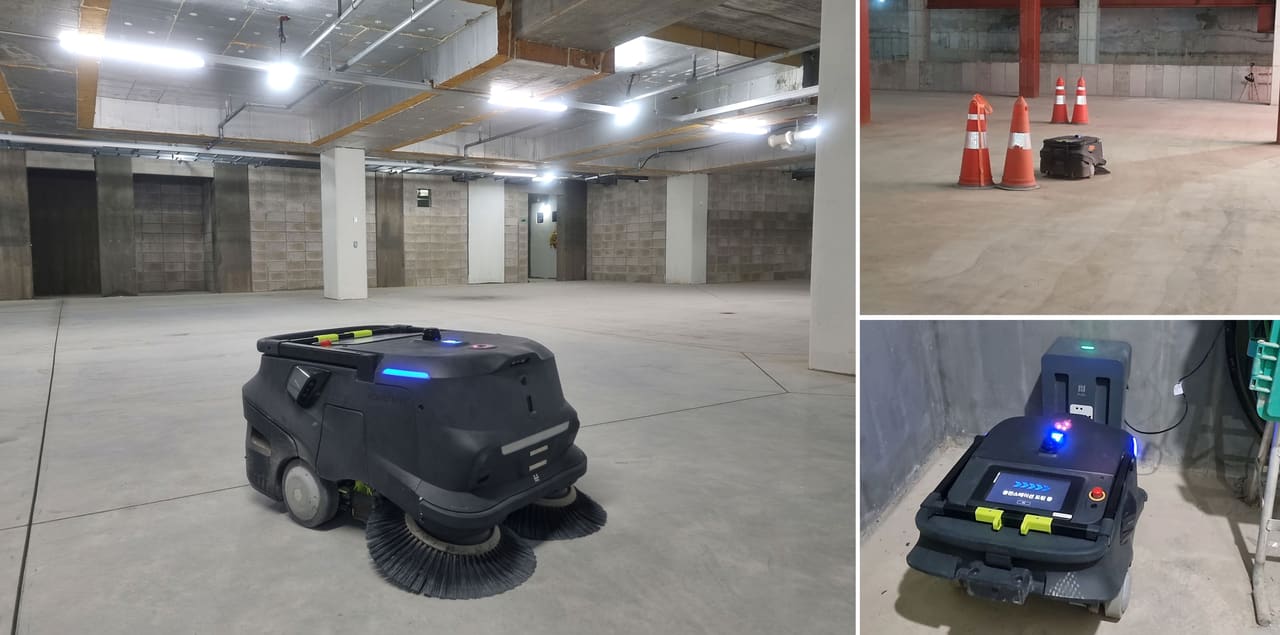
- ·Lotte E&C has deployed autonomous floor-cleaning robots at construction sites in South Korea in partnership with TXR Robotics to automate debris collection and reduce worker dust exposure.
- ·The trial addresses rising labor costs and an aging workforce in South Korea's construction sector, which faces declining productivity despite contributing 6 percent of GDP.
- ·Success could lead to wider adoption across Asia, where countries including Japan, Singapore, and China are investing in construction automation to tackle labor shortages.
Automating the Dustiest Job on Site
South Korean construction giant Lotte E&C has begun testing autonomous floor-cleaning robots at active building sites, marking a shift in how the industry tackles one of its most labor-intensive and hazardous tasks. The initiative, conducted in partnership with robotics firm TXR Robotics, targets the repetitive work of debris collection and dust vacuuming that has long exposed workers to unhealthy air quality.
Traditional construction-site cleaning involves manual sweeping and vacuuming across unfinished floors, often in environments thick with concrete dust and particulate matter. Workers typically wear protective masks for hours at a time, and the physical demands of moving equipment across large footprints add to fatigue and inefficiency.
Lotte E&C announced the deployment follows a proof-of-concept trial designed to evaluate whether autonomous cleaners could handle the unpredictable terrain and debris loads found in active construction zones. Unlike finished buildings with smooth floors and predictable layouts, construction sites present moving obstacles, uneven surfaces, and constantly changing conditions as new floors are completed.
Why Construction Robotics Lag Behind Warehouses
The construction industry has been slower to adopt autonomous systems compared to logistics and manufacturing, where robots navigate controlled environments with mapped routes and standardized surfaces. Building sites, by contrast, evolve daily, with materials, equipment, and workers occupying different zones as projects progress.
Floor-cleaning robots designed for construction must handle cement dust, wood shavings, metal fragments, and other debris that would clog consumer-grade or office-cleaning machines. They also need to operate in spaces without finished walls or ceilings, where GPS signals are weak and lighting conditions vary.
TXR Robotics, the partner in the Lotte trial, specializes in ruggedized autonomous systems for industrial settings. The company has previously supplied robots for factory floors and logistics hubs, but construction sites represent a more demanding use case due to the lack of infrastructure and the transient nature of the workspace.
Labor Costs and Safety Drive Adoption
South Korea's construction sector faces rising labor costs and an aging workforce, pressures that are accelerating interest in automation. The country's minimum wage has climbed steadily over the past decade, and younger workers are increasingly reluctant to take on physically demanding roles in dusty, hazardous environments.
Lotte E&C has not disclosed the cost of the robots or the scale of the deployment, but the company indicated that reducing the hours workers spend in high-dust areas is a primary goal. Prolonged exposure to construction dust, which contains silica and other particulates, is linked to respiratory diseases including silicosis and chronic obstructive pulmonary disease.
By automating floor cleaning, Lotte aims to free up workers for tasks that require judgment and skill, such as inspections, equipment operation, and finishing work. The robots can run during off-peak hours or in areas where human crews are not actively working, extending the effective cleaning window without adding shifts.
Regional Context: Asia's Construction Tech Push
Lotte's move aligns with broader efforts across Asia to modernize construction practices. Japan has deployed exoskeletons and remote-controlled heavy machinery to address labor shortages, while Singapore mandates the use of digital design and modular construction for large public projects. China, meanwhile, has experimented with 3D-printed housing and drone-based site monitoring.
South Korea's government has supported construction-tech initiatives through grants and regulatory sandboxes, aiming to boost productivity in an industry that contributes roughly 6 percent of GDP but has seen flat or declining productivity growth over the past two decades. Automation is seen as essential to maintaining competitiveness as the population ages and fewer workers enter manual trades.
The Lotte trial will provide data on how well autonomous cleaners integrate into existing workflows and whether the return on investment justifies wider rollout. If successful, the robots could become standard equipment on Lotte's projects, with potential adoption by other major builders in the region.
What Comes Next
Lotte E&C plans to evaluate the trial results over the coming months, focusing on uptime, maintenance requirements, and the measurable reduction in worker exposure to dust. The company has not announced a timeline for full-scale deployment but indicated that feedback from site managers and workers will shape the next phase.
For now, the robots represent a targeted solution to a specific problem rather than a wholesale replacement of human labor. Construction remains a domain where adaptability and problem-solving are essential, and autonomous systems are most effective when handling repetitive, well-defined tasks.
As construction costs rise and environmental and safety regulations tighten, the economics of robotics will likely become more favorable. Lotte's trial is an early signal of how Asia's builders are preparing for a future where machines take on the dirtiest work, leaving skilled labor for the tasks that still require a human touch.
RELATED STORIES
Samsung and SK Hynix Turn Down KEPCO's Multibillion-Dollar Prepayment Demand
Cheng Wei-Lun · 4 min

LG Pivots to AI-Defined Vehicle Platform as Korea Chases China's Self-Driving Lead
Jun-ho Seo · 3 min
SK Hynix May Fast-Track Gwangju Fab Investment Alongside Yongin Expansion
Jun-ho Seo · 3 min

South Korea Taps Three Telecom Giants to Deliver Free AI Services Nationwide
Cheng Wei-Lun · 3 min
Spot something wrong? Email editor@briefasia.com. We log every correction publicly.