Technology · Dev
LG Innotek Plans $1 Billion Semiconductor Facility in Northern Vietnam
South Korean electronics component maker selects 32-hectare site in Hai Phong's industrial zone for advanced manufacturing base
KEY TAKEAWAYS
- ·LG Innotek will build a $1 billion semiconductor facility on 32 hectares in Hai Phong's Dinh Vu-Cat Hai Economic Zone, marking a major South Korean investment in Vietnam's chip sector.
- ·The facility is expected to become a key global manufacturing base for advanced semiconductor components, part of broader supply chain diversification by South Korean electronics firms.
- ·Vietnam attracted $2.3 billion in semiconductor FDI in 2025, with Hai Phong competing against Malaysia, Thailand, and Indonesia for back-end chip assembly and testing projects.
Strategic Expansion in Northern Vietnam
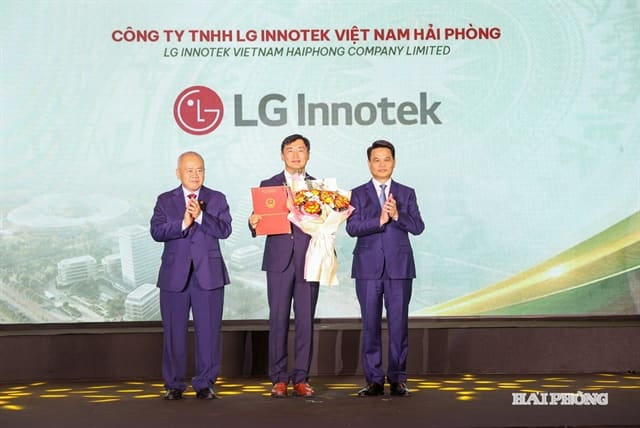
LG Innotek has chosen Hai Phong as the location for a $1 billion semiconductor manufacturing facility, according to the company. The South Korean electronics component maker will occupy roughly 32 hectares within the Hai Phong Free Trade Zone, positioned inside the broader Dinh Vu-Cat Hai Economic Zone that local authorities are currently expanding.
The investment represents one of the larger foreign capital commitments to Vietnam's semiconductor sector in recent years. LG Innotek, a subsidiary of LG Group specializing in electronic components for displays, cameras, and circuit boards, has been diversifying its production footprint across Asia as supply chain pressures and geopolitical tensions reshape manufacturing strategies.
Northern Vietnam's Growing Semiconductor Corridor
Hai Phong has emerged as a preferred destination for electronics and semiconductor projects seeking proximity to Hanoi while maintaining access to deep-water ports. The Dinh Vu-Cat Hai zone already hosts automotive, steel, and consumer electronics plants, and provincial officials have prioritized attracting higher-value technology investments.
The 32-hectare parcel designated for LG Innotek sits within infrastructure currently under development by Hai Phong City. The facility is expected to produce advanced semiconductor components, though LG Innotek has not disclosed specific product lines or technology nodes.
Vietnam's semiconductor ecosystem remains concentrated in assembly, testing, and packaging rather than wafer fabrication. Most foreign chipmakers operating in the country focus on back-end processes that require less capital intensity than front-end fabs but still demand skilled labor and stable power supply.
Regional Competition for Chip Investment
LG Innotek's decision comes as Southeast Asian governments compete for a share of semiconductor investment flowing out of China and Taiwan. Malaysia, Thailand, and Indonesia have all launched incentive packages targeting chip assembly and testing, while Singapore continues to anchor the region's most advanced capabilities.
Vietnam offers lower labor costs than Singapore or Malaysia and a growing pool of engineering graduates, but infrastructure gaps and regulatory complexity remain constraints. The country attracted $2.3 billion in semiconductor-related foreign direct investment in 2025, according to data from the Ministry of Planning and Investment, up from $1.7 billion the previous year.
South Korean firms have been among the most active investors. Samsung Electronics operates large smartphone and consumer electronics complexes in the north, and LG Display runs a panel factory in Hai Phong. LG Innotek's new facility extends this footprint into higher-margin components.
Timeline and Employment Outlook
LG Innotek has not announced a construction start date or production timeline. Semiconductor projects of this scale typically require 18 to 24 months for site preparation and equipment installation, with ramp-up extending another 12 months.
The facility is projected to generate several thousand jobs once operational, though automation in semiconductor manufacturing limits direct employment compared to apparel or consumer electronics assembly. Skilled technician roles and engineering positions will likely account for a significant share of the workforce.
Local authorities in Hai Phong have signaled readiness to fast-track permits and provide infrastructure support, including upgraded power substations and wastewater treatment capacity. The province has set a target of $10 billion in high-tech foreign investment by 2030, with semiconductors and electronics components identified as priority sectors.
Broader Implications for Vietnam's Tech Ambitions
The LG Innotek project aligns with Vietnam's national strategy to move beyond low-cost assembly and build capabilities in intermediate technology manufacturing. Government officials have emphasized workforce training and regulatory streamlining as critical enablers, though progress has been uneven.
Vietnam's inclusion in global semiconductor supply chains remains modest compared to Taiwan, South Korea, or even Malaysia. However, a succession of large-scale commitments from established players could shift the country's position, particularly in packaging and testing segments where capital requirements are more accessible.
For LG Innotek, the Hai Phong site offers a hedge against concentration risk in South Korea and China while tapping a cost-competitive labor market. The facility is expected to serve both regional customers and export markets, leveraging Vietnam's trade agreements with the European Union, Japan, and other partners.
As construction planning advances, the project will test Hai Phong's ability to deliver the power stability, technical workforce, and regulatory predictability that semiconductor manufacturing demands. Success could accelerate similar investments; delays or operational challenges could temper the momentum.
RELATED STORIES
Samsung's Vietnam Operations Post 23% Profit Jump to $2.3 Billion
Tran Quoc Bao · 3 min

Singapore Captures Two-Thirds of Southeast Asian EV Startup Capital
Priyanka V. Rao · 3 min

Vietnam's Trade Turnover Hits $770 Billion as Imports Surge Past Exports
Jun-ho Seo · 2 min

Mixue Shutters 89 Stores Across Southeast Asia Amid Profit Decline
Siti Nuraini · 3 min
Spot something wrong? Email editor@briefasia.com. We log every correction publicly.