Sustainability · Energy
LG Energy Solution Launches Michigan Battery Plant to Meet North American ESS Demand
The Lansing facility marks the South Korean battery maker's seventh North American production site, targeting the region's accelerating energy storage market.
KEY TAKEAWAYS
- ·LG Energy Solution has opened its seventh North American production plant in Lansing, Michigan, dedicated to energy storage system batteries.
- ·The facility targets grid-scale and commercial storage markets, which have sustained double-digit growth even as electric vehicle demand cools.
- ·Federal incentives under the Inflation Reduction Act have improved the economics of US-based battery manufacturing, intensifying competition among Asian suppliers.
Seventh North American Footprint
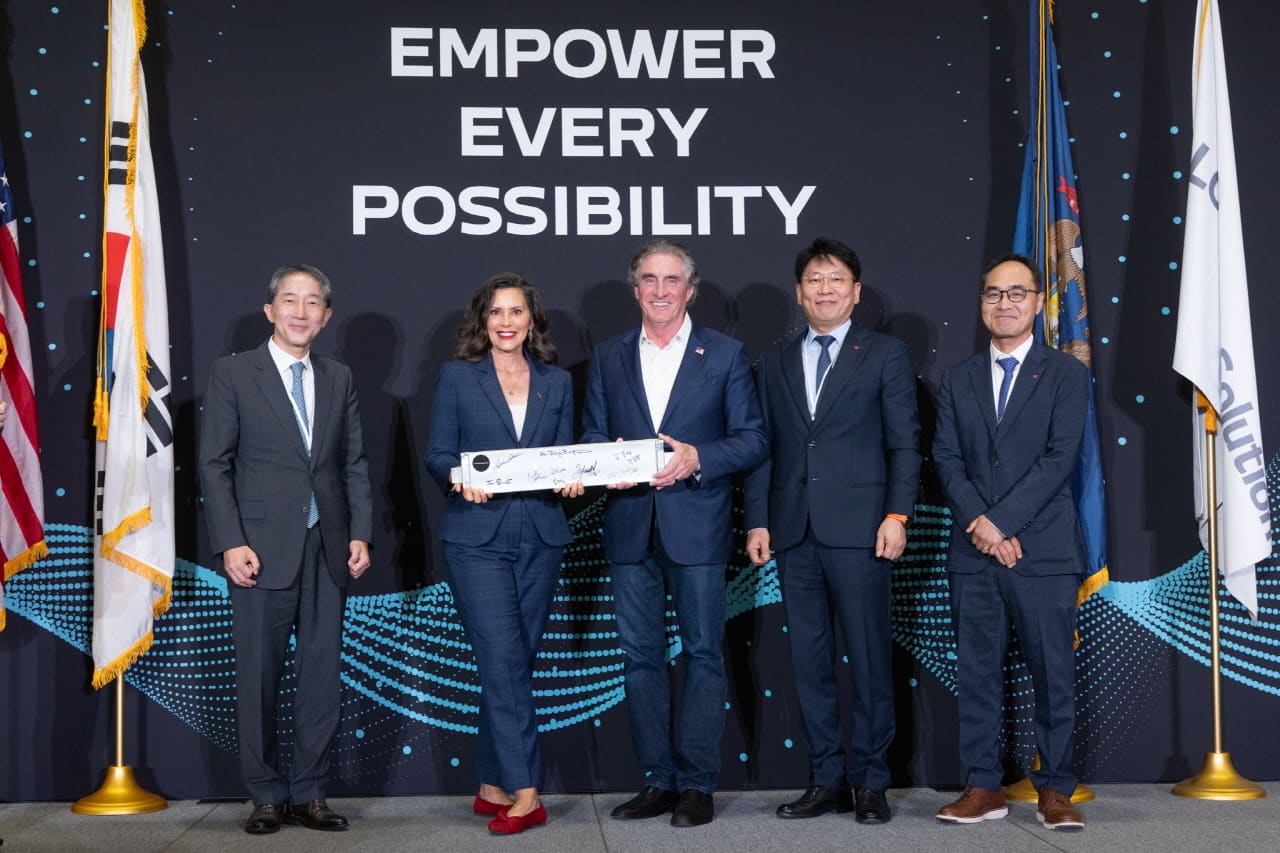
LG Energy Solution has brought its Lansing, Michigan battery manufacturing facility online, expanding the company's production capacity to serve North America's surging energy storage system market. The South Korean battery maker held an opening ceremony on Tuesday for what becomes its seventh production plant in the region.
Michigan Governor Gretchen Whitmer, US Interior Secretary Doug Burgum, and Republican Representative Tom Barrett attended the event, underscoring the facility's significance to both state economic development and federal energy policy. The plant represents a strategic bet on the intersection of two accelerating trends: grid-scale battery storage and industrial AI integration.
Strategic Positioning in a Shifting Market
The timing reflects broader momentum in North American energy infrastructure. Utilities and independent power producers are racing to deploy battery storage to balance intermittent renewable generation and manage peak demand. That buildout has created fierce competition among Asian battery suppliers, with South Korean, Chinese, and Japanese manufacturers all expanding US footprints to capture offtake agreements and qualify for Inflation Reduction Act incentives.
LG Energy Solution's decision to concentrate on energy storage systems rather than purely automotive batteries distinguishes this facility from many of its existing North American plants. While electric vehicle demand has shown signs of cooling in recent quarters, stationary storage deployments have maintained double-digit growth, driven by utility procurement mandates in states like California, Texas, and New York.
Manufacturing and Technology Integration
The Lansing plant will produce lithium-ion battery cells and modules tailored for grid-scale and commercial energy storage applications. According to LG Energy Solution, the facility incorporates AI-driven quality control and predictive maintenance systems designed to optimize yield rates and reduce downtime. These automation layers represent a departure from older production lines, which relied more heavily on manual inspection and reactive troubleshooting.
The company has not disclosed the plant's annual production capacity in gigawatt-hours, nor has it specified the workforce size. However, battery manufacturing at this scale typically requires several hundred employees across production, engineering, and logistics functions, making the facility a meaningful addition to the Lansing regional economy.
Policy Tailwinds and Competitive Dynamics
Federal support under the Inflation Reduction Act and the CHIPS and Science Act has reshaped the economics of domestic battery manufacturing. Tax credits for advanced manufacturing and production credits for domestically produced battery cells have made US-based facilities financially viable even in the face of higher labor costs compared to Asian plants.
LG Energy Solution joins a crowded field. Contemporary Amperex Technology (CATL) has explored US partnerships despite export control concerns, while domestic startups like Eos Energy and Fluence are scaling their own storage platforms. South Korean rival Samsung SDI is also expanding its US presence, creating a competitive landscape where supply chain localization, speed to market, and technology differentiation will determine market share.
What Comes Next
The Michigan plant positions LG Energy Solution to bid on utility-scale storage contracts across the Midwest and Northeast, regions where transmission congestion and aging coal retirements are driving storage procurement. The company's ability to deliver cells that meet increasingly stringent safety and performance standards will shape its success in winning long-term offtake agreements.
As North American battery demand continues to fragment between automotive and stationary applications, manufacturers face a strategic choice: specialize by application or maintain flexible production lines that can pivot between end markets. LG Energy Solution's Lansing facility suggests the company sees enough sustained ESS demand to justify dedicated capacity, a signal that grid storage has matured from niche to core market segment.
RELATED STORIES
South Korean Battery Giants Pour $2.84 Billion Into Capacity Despite EV Demand Slump
Cheng Wei-Lun · 3 min
HD Hyundai Electric Builds Korea's First SF6-Free Circuit Breaker for European Grid Market
Cheng Wei-Lun · 3 min
South Korea's Hanwha Secures First US Army Artillery Contract
Jun-ho Seo · 4 min
Seoul Rejects Chip Investment Reports Amid Washington Trade Talks
Cheng Wei-Lun · 2 min
Spot something wrong? Email editor@briefasia.com. We log every correction publicly.