Finance · Deals
LG Energy Solution Locks in $3.8 Billion LFP Deal with Chinese Supplier
Three-year agreement with Jiangsu Lopal Tech marks major shift as South Korean battery giant scales energy storage business
KEY TAKEAWAYS
- ·LG Energy Solution signed a three-year deal with Jiangsu Lopal Tech worth up to $3.8 billion for LFP cathode materials to support its energy storage business expansion.
- ·The agreement reflects LGES's strategic shift toward LFP chemistry for stationary storage, diverging from its traditional focus on nickel-based cells for electric vehicles.
- ·China controls over 90% of global LFP cathode production, making Chinese suppliers essential partners for Korean battery makers entering the cost-sensitive ESS market.
Major Supply Agreement Inked
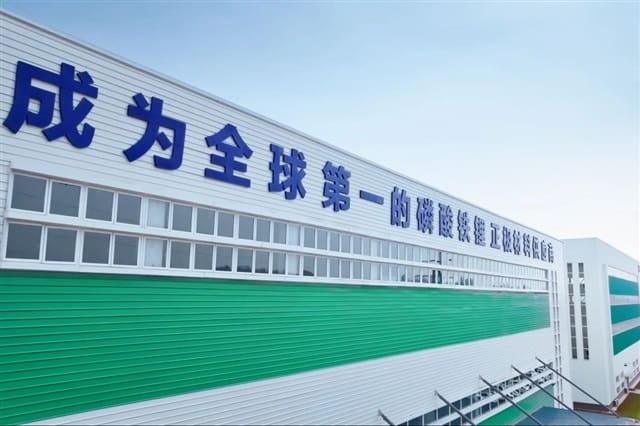
LG Energy Solution has committed to a three-year framework agreement with Jiangsu Lopal Tech valued at up to CNY27 billion, approximately $3.8 billion, according to the company. The deal covers procurement of lithium iron phosphate (LFP) cathode materials, a critical component in the battery cells increasingly favored for stationary energy storage applications.
The agreement represents one of the largest LFP supply contracts disclosed by a major Korean battery manufacturer and underscores LGES's strategic pivot toward chemistry variants that have historically dominated the Chinese market. Jiangsu Lopal Tech, a cathode material specialist based in eastern China, will supply the materials over the contract period beginning this year.
Strategic Shift Toward Energy Storage
LGES has been rapidly expanding its energy storage system business, a segment where LFP batteries have gained significant traction due to their cost advantages and thermal stability compared to nickel-based chemistries. While the company built its reputation on nickel-cobalt-manganese (NCM) cells for electric vehicles, the ESS market demands different performance trade-offs that favor LFP's lower cost per kilowatt-hour and longer cycle life.
The South Korean battery maker has been building out ESS production capacity in North America and Europe to capture demand from grid operators, renewable energy developers, and commercial customers seeking to store solar and wind power. Industry data shows global ESS installations are expected to triple by 2028, driven by renewable energy integration requirements and grid modernization projects across developed markets.
China currently controls more than 90% of global LFP cathode production capacity, according to industry estimates. LGES's decision to secure a multi-billion-dollar supply line from a Chinese producer reflects the practical reality that few alternative sources exist at the required scale and cost structure.
Implications for Korean Battery Industry
The deal marks a notable development in the competitive dynamics of Asia's battery supply chain. Korean battery manufacturers, including LGES, SK On, and Samsung SDI, have traditionally emphasized high-nickel chemistries and vertically integrated supply chains anchored in Korea and allied markets. However, the economics of the ESS segment have pushed these players to engage more directly with Chinese material suppliers.
LGES has not disclosed the specific volume of cathode material covered under the framework agreement, but the contract value suggests substantial offtake commitments. At current market prices for LFP cathode materials, the deal could support production of several hundred gigawatt-hours of battery cells over the three-year period, depending on final cell specifications and utilization rates.
The agreement also provides Jiangsu Lopal Tech with revenue visibility and validation as it competes with larger Chinese cathode producers such as CNGR Advanced Material and Xiamen Tungsten. Lopal has been expanding its production footprint in Jiangsu province and recently completed a new facility targeting the export market.
Market Context
LFP technology has experienced a resurgence over the past three years, reversing earlier industry consensus that nickel-rich chemistries would dominate all battery applications. Chinese automakers led the adoption of LFP in lower-cost electric vehicles, while ESS developers embraced the chemistry for its safety profile and cost efficiency.
LGES's move aligns with broader industry trends. Tesla has increased LFP usage in its standard-range vehicles and Megapack storage units, while Ford and other Western automakers have announced plans to incorporate LFP cells in select models. The chemistry now accounts for approximately 40% of global EV battery installations, up from less than 20% in 2020.
The framework structure of the LGES-Lopal agreement allows for volume adjustments based on actual demand, providing flexibility as the company scales its ESS business. Final purchase orders will be issued under the umbrella contract as production schedules firm up.
For LGES, the deal represents a calculated bet that the ESS market will grow rapidly enough to absorb the contracted material volumes while generating acceptable margins despite the lower selling prices typical of LFP-based products. The company is expected to provide further details on its ESS strategy during its next earnings call.
RELATED STORIES
Renminbi Faces Upward Pressure After US-Japan Yen Intervention
Cheng Wei-Lun · 3 min
Taiwan Reclaims Foreign Investor Flows as AI Stock Volatility Persists
Cheng Wei-Lun · 3 min
South Korea's Economy Holds Steady as Stock Market Volatility Tests Investor Nerves
Cheng Wei-Lun · 3 min
Seoul's Tech Stocks Rally While Wall Street Retreats on Iran Tensions
Cheng Wei-Lun · 5 min
Spot something wrong? Email editor@briefasia.com. We log every correction publicly.